

mausern
to molt
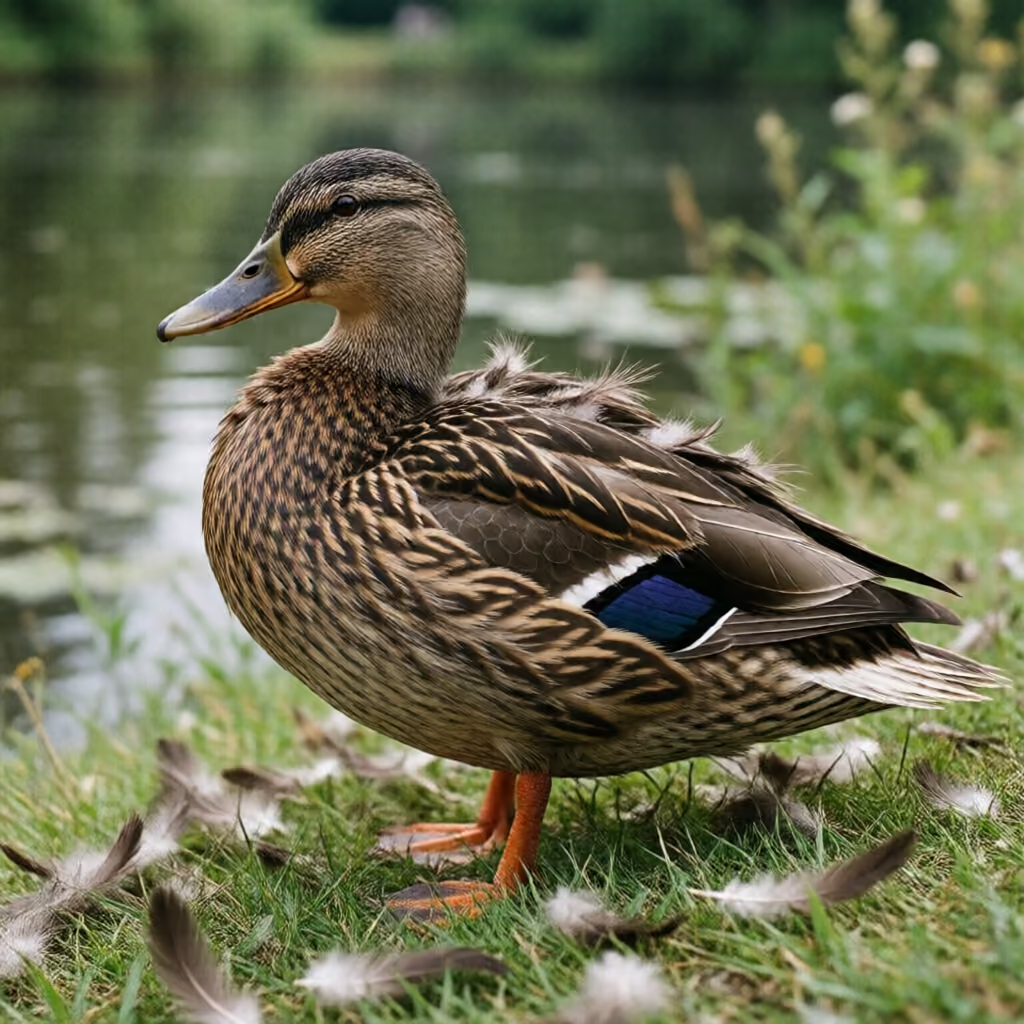
For birds: to shed their old feathers and replace them with new ones.
EXAMPLE
Die Enten mausern im Spätsommer.
The ducks molt in late summer.
to molt
mausern – mauserte – hat gemausert
Loading your saved state.
to molt
For birds: to shed their old feathers and replace them with new ones.
Die Enten mausern im Spätsommer.
The ducks molt in late summer.

to come into one's own
To develop significantly over time, usually becoming better, more skilled, or more successful in the process.
Der schüchterne Junge hat sich zu einem selbstbewussten Redner gemausert.
The shy boy came into his own as a confident speaker.
| ich | mausere mausre |
|---|---|
| du | mauserst |
| er/sie/es | mausert |
| wir | mausern |
| ihr | mausert |
| sie | mausern |
| ich | mauserte |
|---|---|
| du | mausertest |
| er/sie/es | mauserte |
| wir | mauserten |
| ihr | mausertet |
| sie | mauserten |
| ich | habe gemausert |
|---|---|
| du | hast gemausert |
| er/sie/es | hat gemausert |
| wir | haben gemausert |
| ihr | habt gemausert |
| sie | haben gemausert |
| du | mausere! mauser!, mausre! |
|---|---|
| ihr | mausert! |
| Sie | mausern Sie! |
| ich | hatte gemausert |
|---|---|
| du | hattest gemausert |
| er/sie/es | hatte gemausert |
| wir | hatten gemausert |
| ihr | hattet gemausert |
| sie | hatten gemausert |
| ich | werde mausern |
|---|---|
| du | wirst mausern |
| er/sie/es | wird mausern |
| wir | werden mausern |
| ihr | werdet mausern |
| sie | werden mausern |
| ich | mausere mausre |
|---|---|
| du | mauserst |
| er/sie/es | mausere mausre |
| wir | mausern |
| ihr | mausert |
| sie | mausern |
Used for reported speech.
| ich | mauserte |
|---|---|
| du | mausertest |
| er/sie/es | mauserte |
| wir | mauserten |
| ihr | mausertet |
| sie | mauserten |
Used for wishes and “would”.
| infinitive | mausern |
|---|---|
| with zu | zu mausern |
| present participle | mausernd |
| past participle | gemausert |
For birds, 'mausern' (to molt) can be used without a reflexive pronoun. For personal or professional development, however, German uses 'sich mausern' (to come into one's own); the reflexive pronoun must not be omitted.
Unser Papagei mausert gerade und verliert viele Federn.
Our parrot is molting and losing a lot of feathers.
Du hast dich in den letzten Monaten wirklich gemausert.
You have really come into your own over the past few months.
The phrase 'sich zu etwas mausern' (to develop into something) names the result of a development. After 'zu' (to / into), the dative is used; this is often followed by a role or a positive quality describing the person or thing.
Das kleine Café hat sich zu einem beliebten Treffpunkt gemausert.
The small café has developed into a popular meeting place.
'Sich mausern' (to come into one's own) is colloquial in this figurative sense. The expression often conveys approval and can show that the positive development was surprising.
Unsere neue Kollegin hat sich erstaunlich schnell zur besten Verkäuferin im Team gemausert.
Our new colleague has remarkably quickly developed into the best salesperson on the team.