

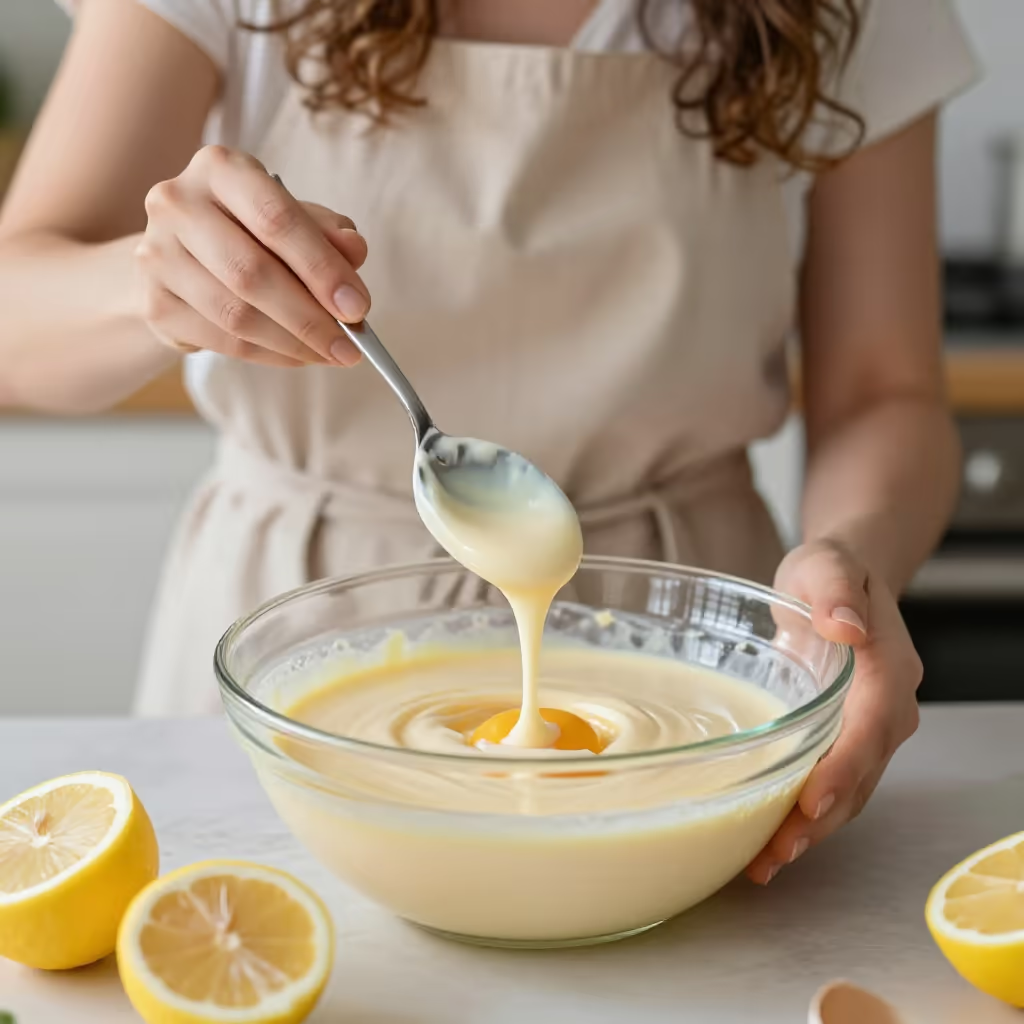
die Mayonnaise
mayonnaise
A thick, creamy cold sauce made mainly from egg yolk, oil, and an acid such as vinegar or lemon juice.
EXAMPLE
Zu den Pommes frites isst er am liebsten Mayonnaise.
He likes mayonnaise best with French fries.
mayonnaise
die Mayonnaise, die Mayonnaisen
Loading your saved state.
mayonnaise
A thick, creamy cold sauce made mainly from egg yolk, oil, and an acid such as vinegar or lemon juice.
Zu den Pommes frites isst er am liebsten Mayonnaise.
He likes mayonnaise best with French fries.
| gender | feminine die |
|---|---|
| plural | die Mayonnaisen |
| genitive | der Mayonnaise |
| singular | plural | |
|---|---|---|
| nominative | die Mayonnaise | die Mayonnaisen |
| accusative | die Mayonnaise | die Mayonnaisen |
| dative | der Mayonnaise | den Mayonnaisen |
| genitive | der Mayonnaise | der Mayonnaisen |
The article changes with the case; it is shown in colour.
In spoken language and informal situations, 'Mayonnaise' (mayonnaise) is very often shortened to 'die Mayo' (mayo).
Eine Portion Pommes mit Ketchup und Mayo, bitte!
One portion of fries with ketchup and mayo, please!
As an uncountable ingredient, 'Mayonnaise' (mayonnaise) is often used without an article when talking about the substance in general. You ask: 'Möchtest du Mayonnaise?' (Would you like mayonnaise?)
Für den Kartoffelsalat brauchen wir noch Mayonnaise.
We still need mayonnaise for the potato salad.
In Germany, the combination of French fries with ketchup and mayonnaise is very popular. This order is often called 'Pommes rot-weiß' (fries red-white).
Am Imbiss bestelle ich immer eine Currywurst mit Pommes rot-weiß.
At the snack stand, I always order a currywurst with fries red-white.