

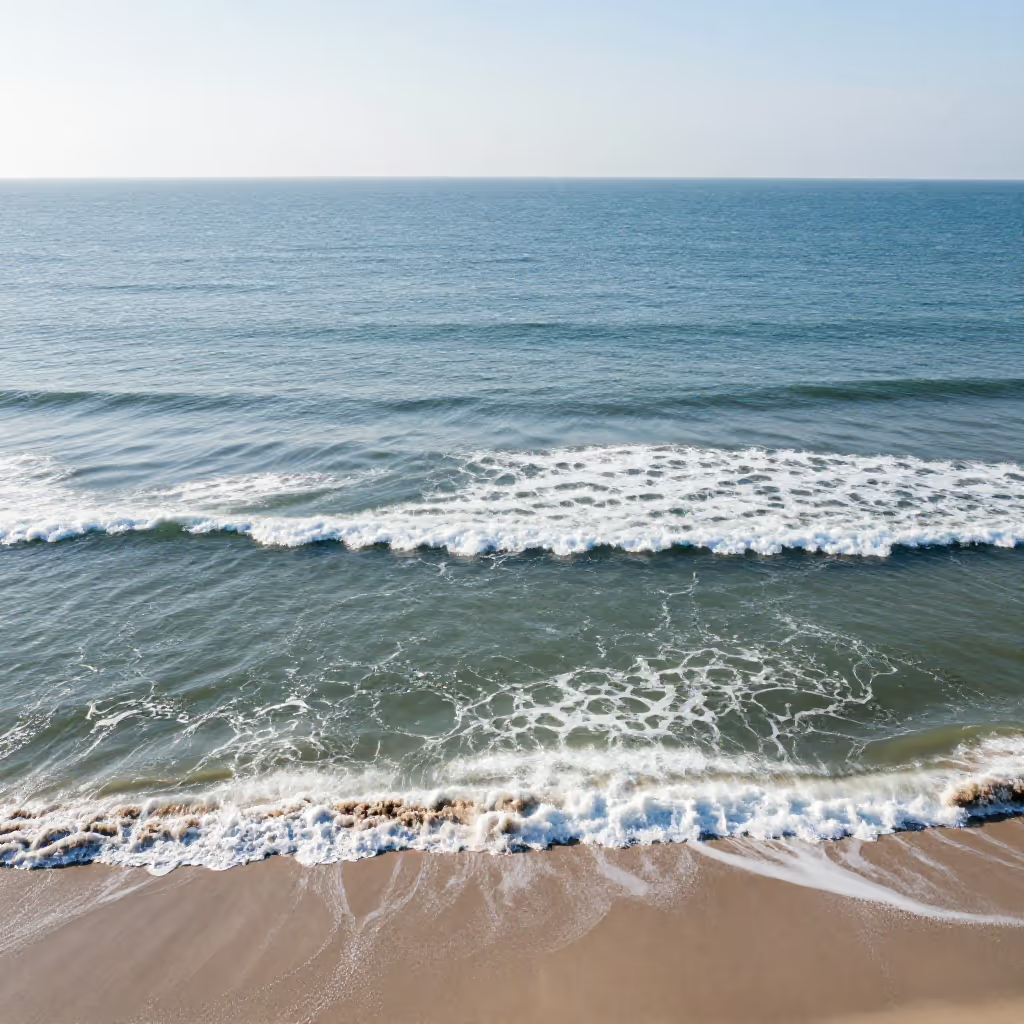
das Meer
sea
The large, connected body of salt water that covers a large part of the Earth's surface.
EXAMPLE
Im Urlaub fahren wir jedes Jahr ans Meer.
On vacation, we go to the sea every year.
sea
Loading your saved state.
sea
The large, connected body of salt water that covers a large part of the Earth's surface.
Im Urlaub fahren wir jedes Jahr ans Meer.
On vacation, we go to the sea every year.

sea
A very large, overwhelming amount of something.
Von dem Hügel aus blickte er auf ein Meer von Lichtern.
From the hill, he looked out over a sea of lights.
The word element 'Meer-' (sea) is a very productive part of many compound nouns that have to do with the sea. If you see 'Meer-' at the beginning of a word, it probably has to do with the ocean.
Der Meeresspiegel steigt aufgrund des Klimawandels an.
Sea level is rising due to climate change.
Pay attention to the prepositions: You go 'ans Meer' (to the sea; direction, accusative), you are 'am Meer' (by/at the sea; location, dative), and you swim 'im Meer' (in the sea; in the water, dative).
Wir fahren nächste Woche für ein paar Tage ans Meer.
We're going to the sea for a few days next week.
In the figurative meaning, 'Meer' (sea) is almost always used in the structure 'ein Meer von + plural noun' (a sea of + plural noun). It describes a huge, overwhelming amount.
Die Band spielte vor einem Meer von begeisterten Fans.
The band played in front of a sea of enthusiastic fans.
sea
The German nouns Meer and See both refer to a large body of salt water. Meer is the general term, while See is used especially in maritime expressions and when describing wave conditions. In neutral statements, Meer is usually the better choice; in fixed expressions or when talking about sea conditions, See is often used.
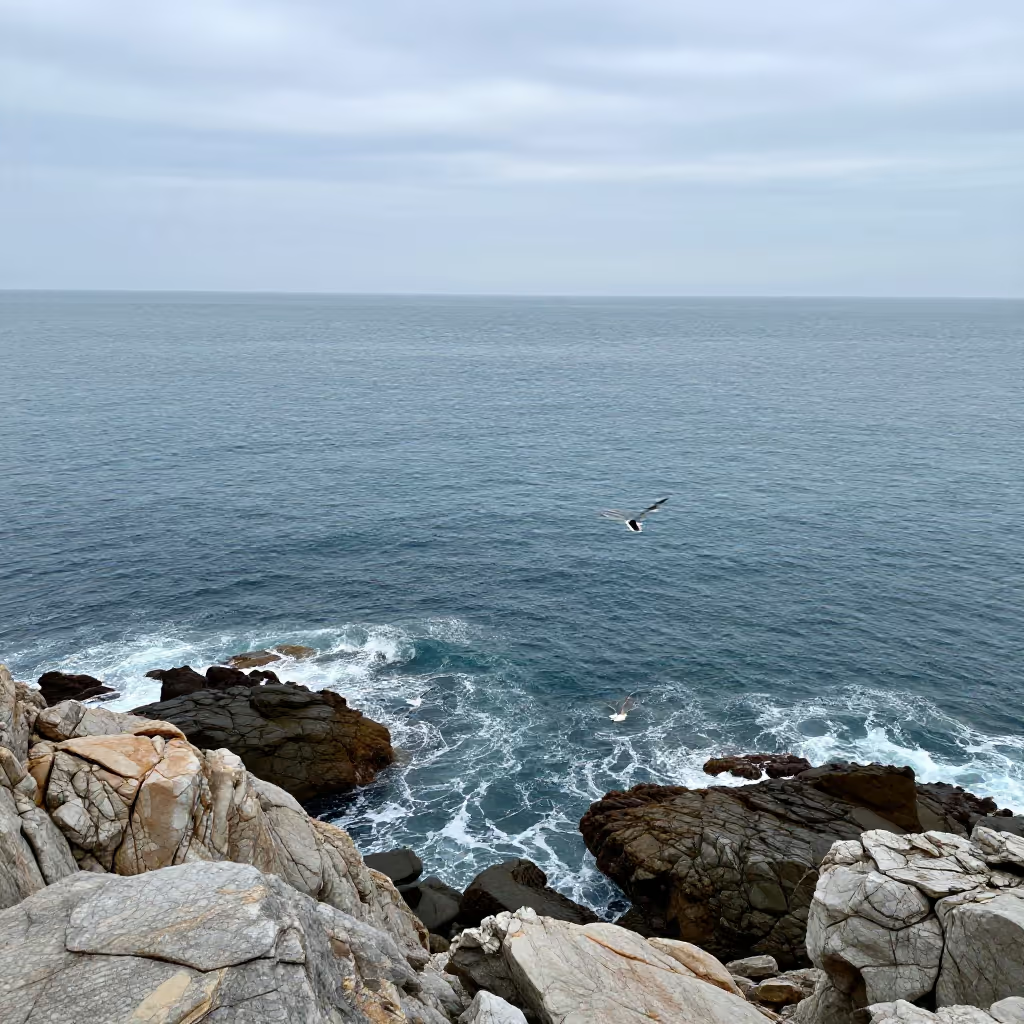
Im Sommer schwimmen viele Familien im Meer.
In summer, many families swim in the sea.
Wegen des starken Wellengangs blieb das Schiff auf der See.
Because of the heavy waves, the ship stayed at sea.