

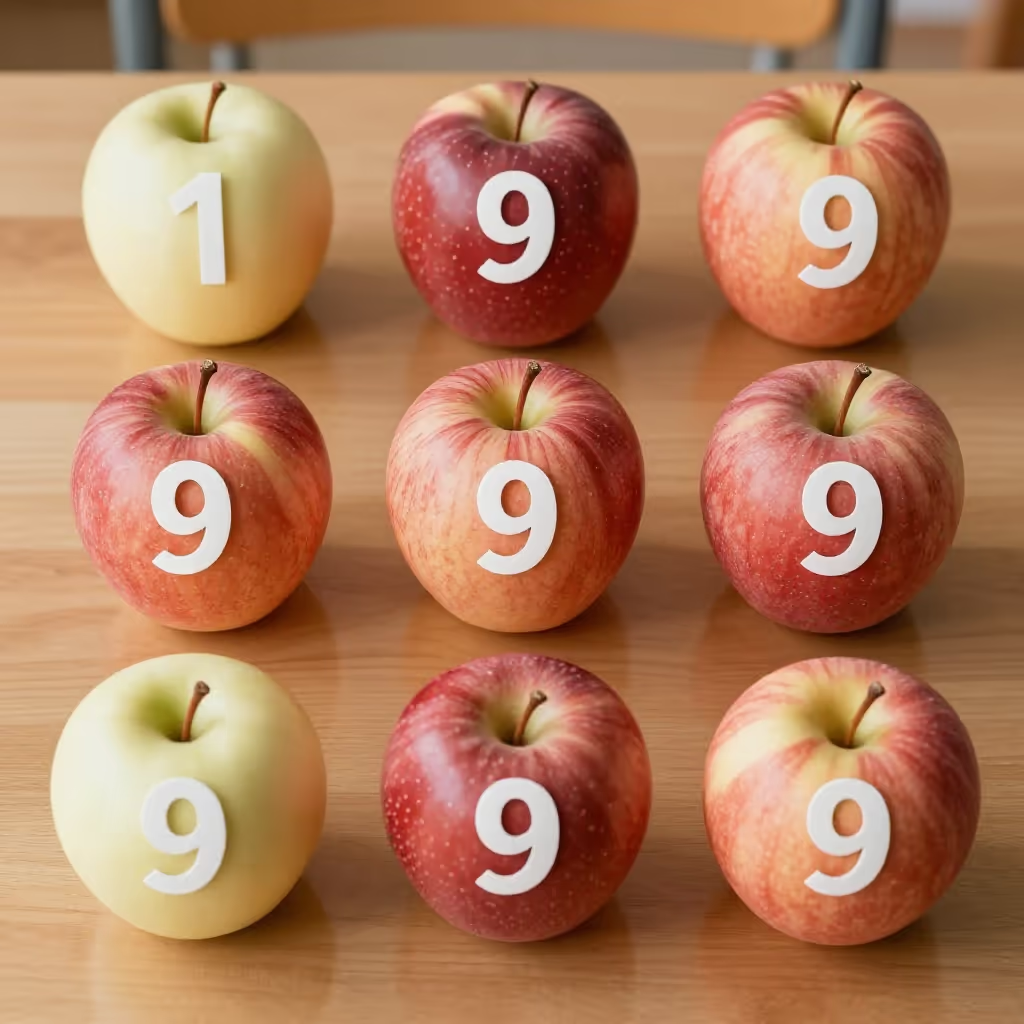
neun
nine
The cardinal number that comes between eight and ten; the digit 9.
EXAMPLE
Das Buch hat neun Kapitel.
The book has nine chapters.
nine
Loading your saved state.
nine
The cardinal number that comes between eight and ten; the digit 9.
Das Buch hat neun Kapitel.
The book has nine chapters.

nine o'clock
Indicates the time nine o'clock.
Der Zug fährt um neun am Hauptbahnhof ab.
The train leaves the main station at nine.
The adjective 'neunmalklug' (know-it-all) describes a person who thinks they know everything better than everyone else. It is derived from the number nine and is a common colloquial term.
Sei nicht so neunmalklug, du warst doch gar nicht dabei!
Don't be such a know-it-all; you weren't even there!
When describing a group of people, you can use the construction 'zu' + number + 't'. With 'neun' (nine), the form is 'zu neunt' (as a group of nine).
Wir waren gestern zu neunt im Kino.
There were nine of us at the cinema yesterday.
When 'neun' (nine) indicates a time, it is often used with prepositions such as 'um' (at), 'gegen' (around), or 'nach' (after). In spoken language, 'Uhr' (o'clock) is often left out.
Können wir uns morgen um neun treffen?
Can we meet tomorrow at nine?