


die Melodie
melody
A sequence of notes that forms a recognizable musical unit and is often the catchiest part of a piece of music.
EXAMPLE
Dieses Lied hat eine sehr schöne und eingängige Melodie.
This song has a very beautiful and catchy melody.
melody
Loading your saved state.
melody
A sequence of notes that forms a recognizable musical unit and is often the catchiest part of a piece of music.
Dieses Lied hat eine sehr schöne und eingängige Melodie.
This song has a very beautiful and catchy melody.
'Melodie' is an international word. It is very similar in many languages (e.g. English 'melody', French 'mélodie') and is therefore easy to recognize and understand.
Sogar ohne den Text zu verstehen, erkannte ich die Melodie sofort.
Even without understanding the lyrics, I recognized the melody immediately.
You can not only hear or play a melody. In everyday language, it is often combined with verbs like 'summen' (to hum), 'pfeifen' (to whistle), or 'erkennen' (to recognize).
Er pfeift immer eine fröhliche Melodie, wenn er gute Laune hat.
He always whistles a cheerful melody when he's in a good mood.
Common adjectives that describe a melody are 'eingängig' (catchy/easy to remember), 'einfach' (simple), 'bekannt' (well-known), 'traurig' (sad), or 'fröhlich' (cheerful).
Das Kinderlied hat eine sehr einfache Melodie.
The children's song has a very simple melody.
topic / theme
A Melodie is a recognizable sequence of notes that forms an audible musical unit. A Thema is a melody or musical idea with a central function in the piece: it returns and is developed. For the sound itself, Melodie is the right word; when referring to this structural role, Thema is the better choice.
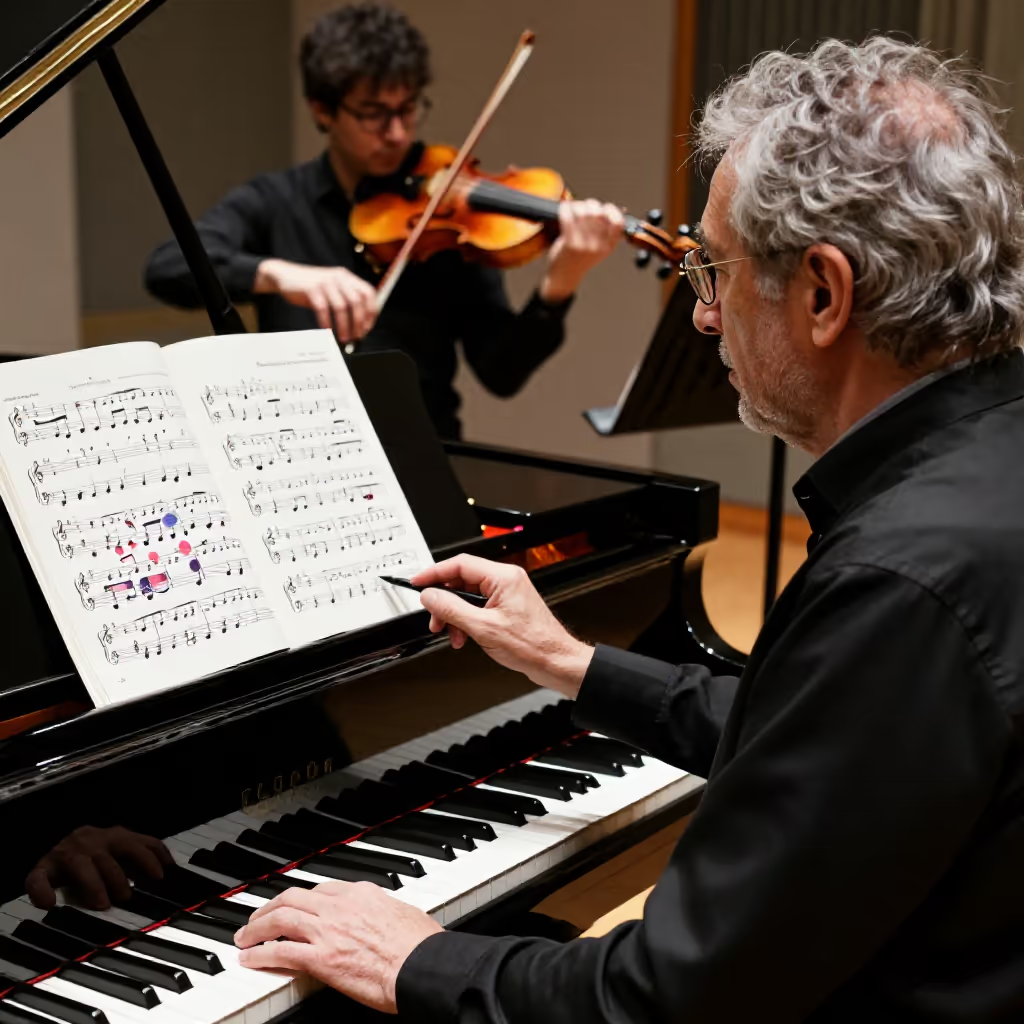
Das Orchester spielt eine ruhige Melodie, die sofort erkennbar ist.
The orchestra plays a calm melody that is immediately recognizable.
Das Orchester spielt das Thema, das später verändert wiederkehrt.
The orchestra plays the theme, which returns later in an altered form.