

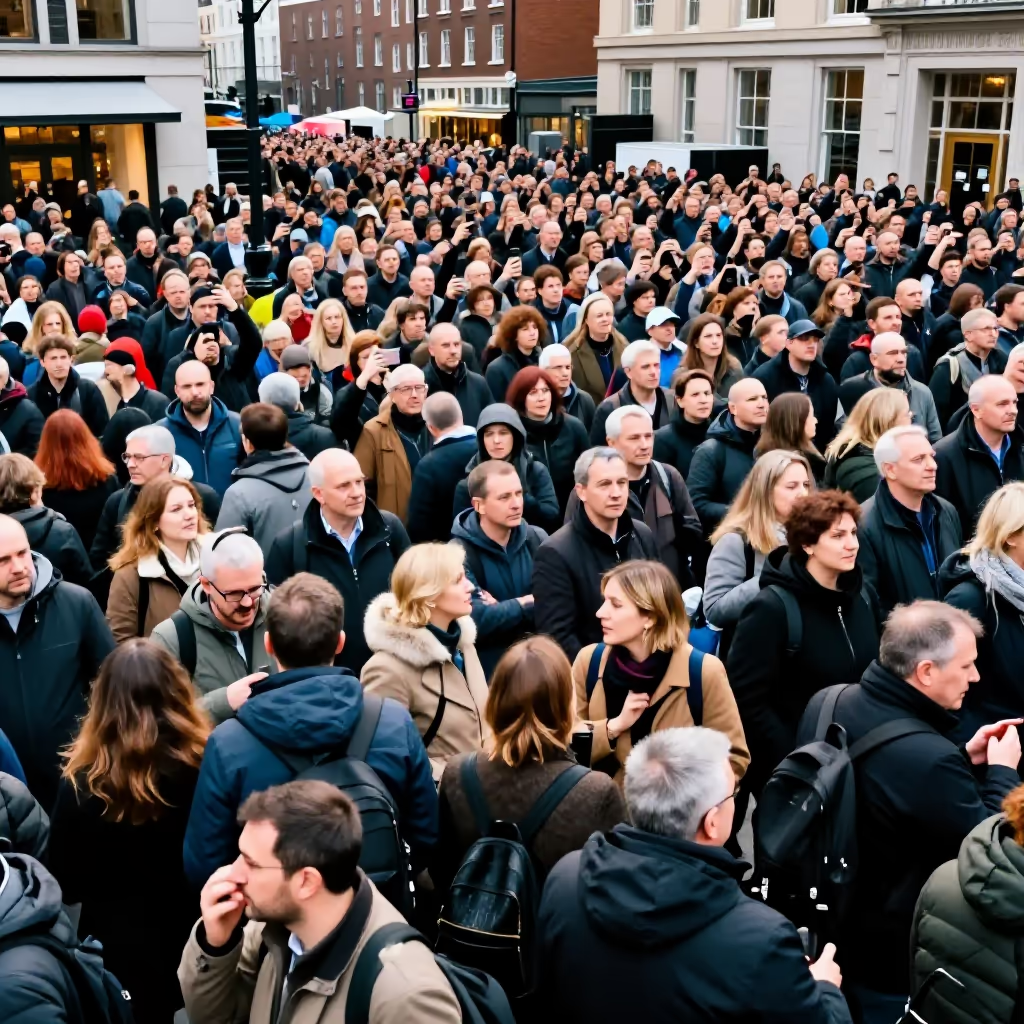
die Menschenmenge
crowd
A large, hard-to-overview gathering of people in one place.
EXAMPLE
Nach dem Konzert strömte eine riesige Menschenmenge aus dem Stadion.
After the concert, a huge crowd streamed out of the stadium.
crowd
Loading your saved state.
crowd
A large, hard-to-overview gathering of people in one place.
Nach dem Konzert strömte eine riesige Menschenmenge aus dem Stadion.
After the concert, a huge crowd streamed out of the stadium.
The word is made up of 'Menschen' (plural of 'Mensch', person/human being) and 'Menge' (amount/crowd). So it literally means a 'Menge von Menschen' (crowd of people).
Eine dichte Menschenmenge wartete vor dem Eingang.
A dense crowd waited in front of the entrance.
Although 'die Menschenmenge' (the crowd) consists of many people, the noun is grammatically singular. The verb in the sentence therefore agrees with the singular and is in the third person.
Die Menschenmenge auf dem Platz wird immer größer.
The crowd in the square is getting bigger and bigger.
To describe movement through a crowd, you use the preposition 'durch' (+ accusative). To describe position within the crowd, you use 'in' (+ dative).
Er kämpfte sich durch die Menschenmenge zum Ausgang.
He fought his way through the crowd to the exit.
people / nation
Volk and Menschenmenge can both refer to a large gathering of people. Menschenmenge describes it neutrally and concretely, while Volk is stylistically marked in this use and can sound evaluative. For a factual description, Menschenmenge is therefore usually the better choice.
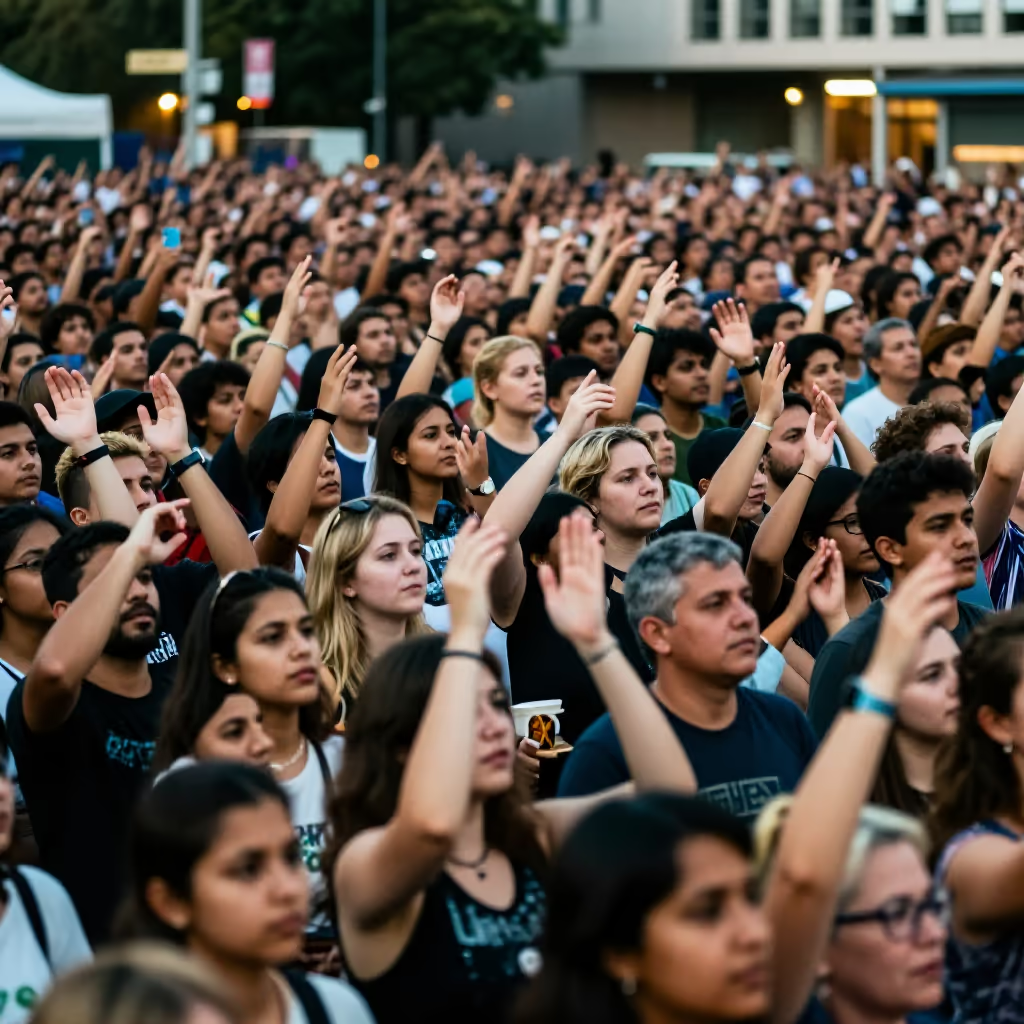
Nach dem Konzert drängte eine große Menschenmenge zum Ausgang.
After the concert, a large crowd pushed toward the exit.
Nach dem Konzert drängte das unruhige Volk zum Ausgang.
After the concert, the restless crowd pushed toward the exit.