

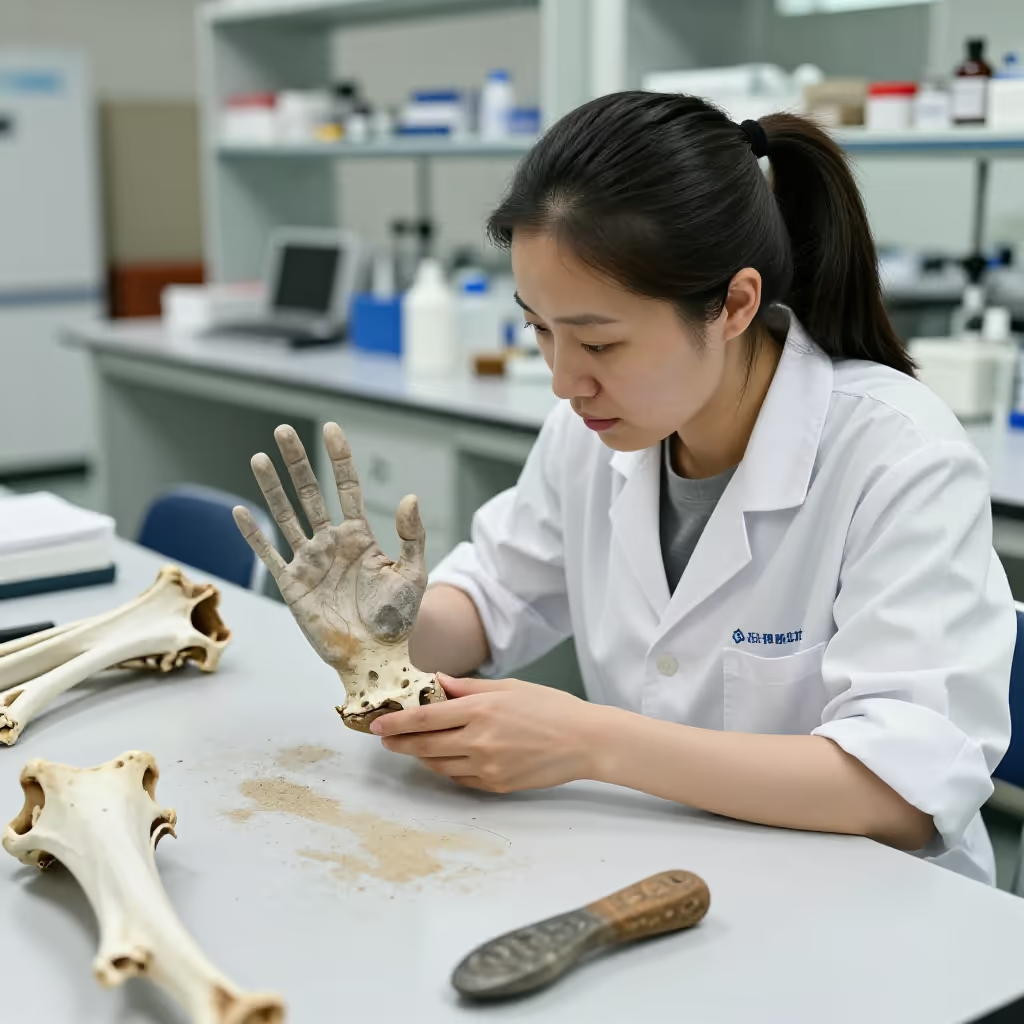
menschlich
human
Related to humans, originating from humans, or characteristic of them.
EXAMPLE
Fehler zu machen ist zutiefst menschlich.
Making mistakes is deeply human.
human
Loading your saved state.
human
Related to humans, originating from humans, or characteristic of them.
Fehler zu machen ist zutiefst menschlich.
Making mistakes is deeply human.

humane
Compassionate, understanding, and kind in dealing with others; humane.
Sie ist eine sehr faire Chefin, die ihre Mitarbeiter stets menschlich behandelt.
She is a very fair boss who always treats her employees humanely.
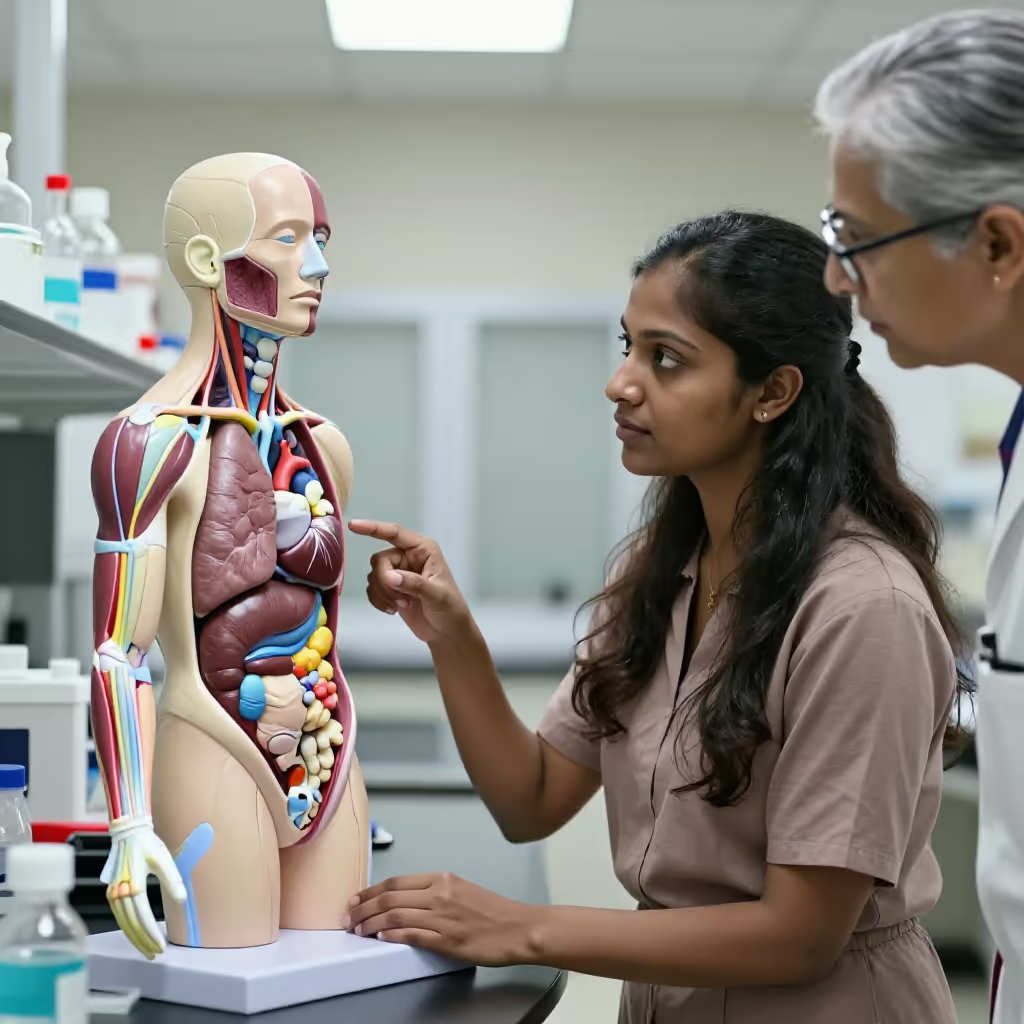
human
Relating to the human body or organism.
Die Ausstellung zeigt die Komplexität des menschlichen Gehirns.
The exhibition shows the complexity of the human brain.
The adjective 'menschlich' (human) is derived directly from the noun 'der Mensch' (human being/person). The ending '-lich' turns the noun into an adjective meaning 'like a human' or 'belonging to humans'.
Es ist eine zutiefst menschliche Eigenschaft, neugierig zu sein.
It is a deeply human quality to be curious.
Be careful not to confuse 'menschlich' (human) with 'männlich' (male). 'Menschlich' refers to all humans, while 'männlich' describes biological sex.
Sein Verhalten war nicht sehr menschlich.
His behavior was not very humane.
You can recognize the meaning of 'menschlich' (human/humane) from the context. In a biological context, it is about the body ('menschliche Zellen' — human cells). In a social context, it describes compassionate behavior ('ein menschlicher Chef' — a humane boss). In philosophical contexts, it refers to human nature ('menschliche Schwächen' — human weaknesses).
Die Ärzte studieren die Reaktion menschlicher Zellen auf das Medikament.
The doctors are studying the reaction of human cells to the medication.
In the meaning 'characteristic of humans', 'menschlich' (human) is often used with abstract nouns, such as 'menschliches Versagen' (human error), 'menschliche Schwächen' (human weaknesses), or 'die menschliche Natur' (human nature).
Der Unfall wurde auf menschliches Versagen zurückgeführt.
The accident was attributed to human error.
When 'menschlich' means 'compassionate' or 'humane', it often describes a person or their behavior. Typical phrases are 'jemanden menschlich behandeln' (to treat someone humanely) or 'eine menschliche Geste' (a humane gesture).
Es war eine sehr menschliche Geste, ihm in dieser schweren Zeit zu helfen.
It was a very humane gesture to help him during this difficult time.
In scientific or medical texts, 'menschlich' (human) refers to the body. Common combinations are 'der menschliche Körper' (the human body), 'das menschliche Skelett' (the human skeleton), or 'menschliche Organe' (human organs).
Das menschliche Herz schlägt in Ruhe etwa 60 bis 80 Mal pro Minute.
The human heart beats about 60 to 80 times per minute at rest.
humane / human
Menschlich and human can describe a compassionate and kind attitude. Menschlich usually sounds more personal and can also suggest human warmth or fallibility, while human is more formal and emphasizes dignified treatment. Use menschlich in personal interactions and human more for an attitude or measure.

Die menschliche Reaktion der Ärztin beruhigte den nervösen Patienten.
The doctor’s humane reaction calmed the nervous patient.
Die Ärztin suchte nach einer humanen Lösung für den nervösen Patienten.
The doctor looked for a humane solution for the nervous patient.