
The central statement, lesson, or message that a work such as a film, book, or speech wants to convey.
example
Die Message des Films ist, dass man seine Träume niemals aufgeben sollte.
The message of the film is that you should never give up on your dreams.
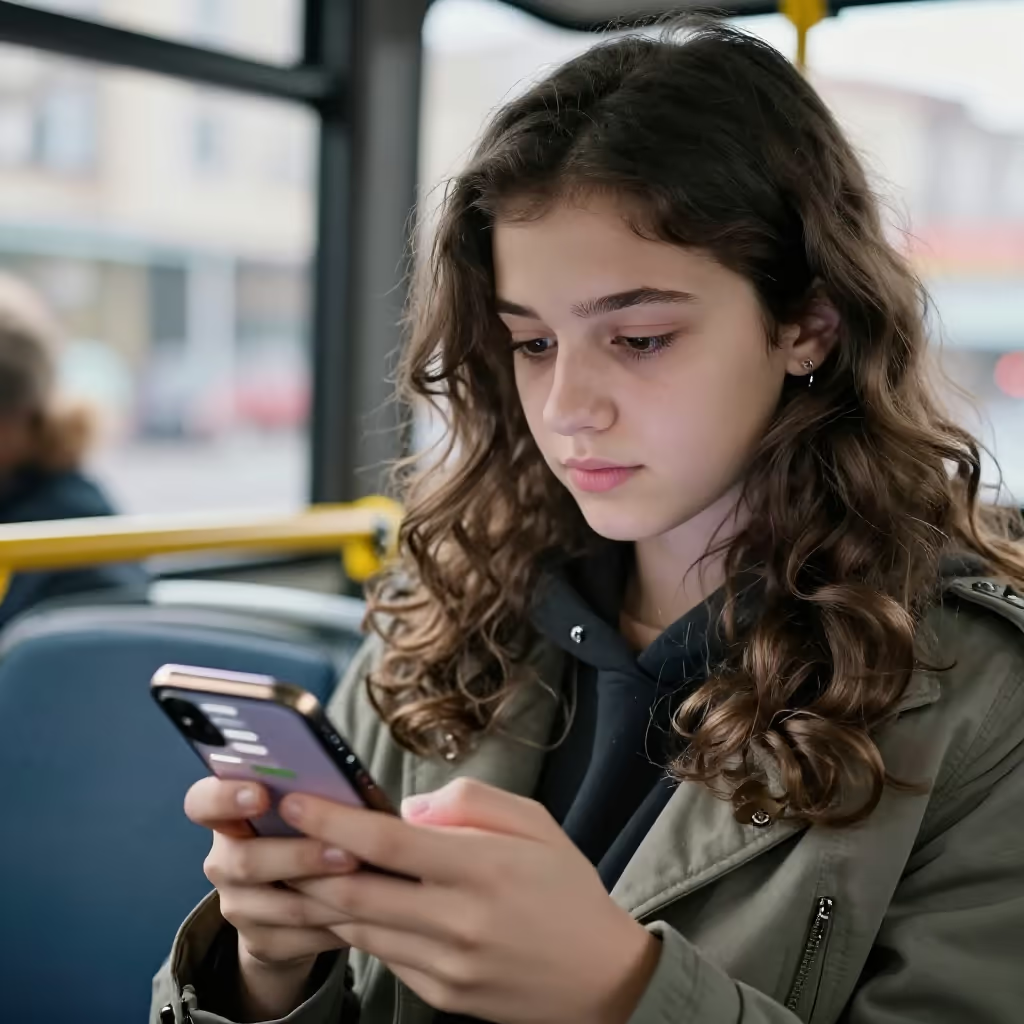
Usage tips
English loanword
The word 'Message' is borrowed directly from English and is also pronounced similarly. It has become established especially in digital communication and colloquial language.
EXAMPLE
Kannst du mir die Adresse per Message schicken?
Can you send me the address by message?
Context clue
You can easily recognize the meaning from context. If it is about a phone or computer, it means an electronic message. If people are talking about art, a film, or a speech, it means the central message.
EXAMPLE
Ich habe deine Message auf dem Handy nicht gesehen.
I didn't see your message on my phone.
Typical collocations
When 'Message' means the central statement, it is often combined with verbs like 'haben' (to have), 'vermitteln' (to convey), or 'verstehen' (to understand).
EXAMPLE
Jeder gute Vortrag sollte eine klare Message haben.
Every good presentation should have a clear message.
Colloquial use
Especially in the meaning of 'elektronische Nachricht' (electronic message), 'Message' is very common in everyday and youth language.
EXAMPLE
Schick mir später einfach eine Message, wann du da bist.
Just send me a message later when you're there.
Compare with
synonym · confusable
Message vs Nachricht
message / news
'die Nachricht' and 'die Message' can both mean a short message, especially on a phone or online. 'Nachricht' is the normal German word and fits in almost all situations. 'Message' is more colloquial and sounds more modern or digital. Learners may confuse the words because 'Message' is often used like 'Nachricht'. But you have to be careful: 'Message' can also mean the central message of a film, book, or speech. If you simply mean a message, 'Nachricht' is more neutral. 'Message' fits better in casual language or with digital media.
Message
Vor dem Gespräch schreibt Sofia ihrem Kollegen noch schnell eine Message.
Before the conversation, Sofia quickly writes her colleague a message.
Nachricht
Kannst du mir eine Nachricht schicken, wenn der Zug später kommt?
Can you send me a message if the train is delayed?