

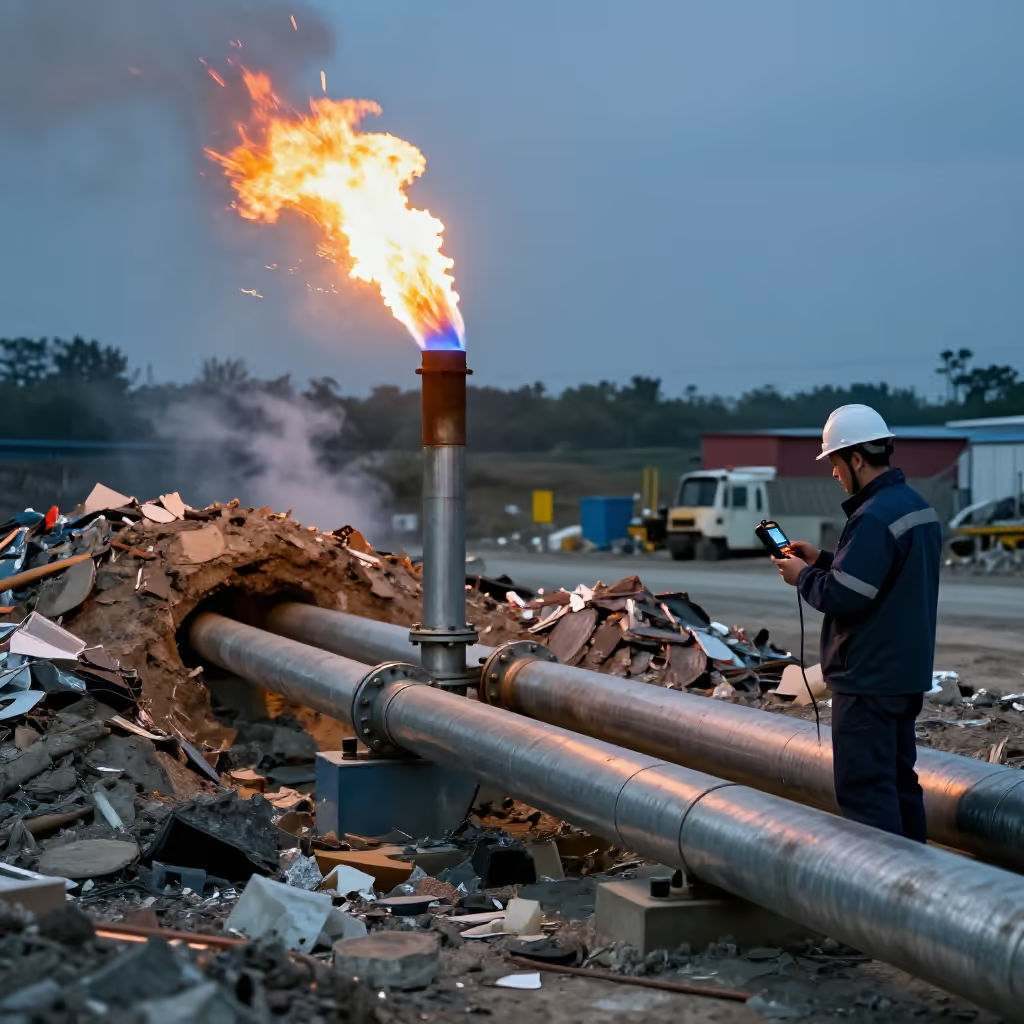
A colorless and odorless flammable gas with the chemical formula CH₄. It is the main component of natural gas and an effective greenhouse gas.
example
Bei der Viehzucht, insbesondere bei Rindern, wird eine erhebliche Menge Methan freigesetzt.
In livestock farming, especially with cattle, a considerable amount of methane is released.
Usage tips
Word structure
'Methan' (methane) is an international term from chemistry. The ending '-an' is typical for a group of hydrocarbons that also includes ethane and propane.
EXAMPLE
Methan ist der einfachste Kohlenwasserstoff.
Methane is the simplest hydrocarbon.
Typical collocations
The word is mostly used in scientific or ecological contexts. Common combinations are 'Methan freisetzen' (to release methane), 'Methan-Emissionen' (methane emissions), or describing it as a 'Treibhausgas' (greenhouse gas).
EXAMPLE
Moore speichern große Mengen an Methan.
Bogs store large amounts of methane.
Use as a substance name
As the name of a substance, 'Methan' (methane) is normally used as an uncountable noun. Therefore, it almost always appears in the singular and without an article when meant in a general sense.
EXAMPLE
Erdgas besteht hauptsächlich aus Methan.
Natural gas consists mainly of methane.
Compare with
confusable
Methan vs Erdgas
natural gas
'das Erdgas' and 'das Methan' are closely connected, but they are not the same thing. Natural gas is a naturally occurring gas mixture that is extracted from the earth and used as an energy source. Methane is a specific gas with the chemical formula CH₄. It is the main component of natural gas, but it can also occur in other contexts, for example as a greenhouse gas. Learners may confuse the words because natural gas contains a lot of methane. To be precise: methane is a substance, while natural gas is a mixture.
Methan
Im Chemieunterricht erklärt Daniel, dass Methan leicht brennt.
In chemistry class, Daniel explains that methane burns easily.