

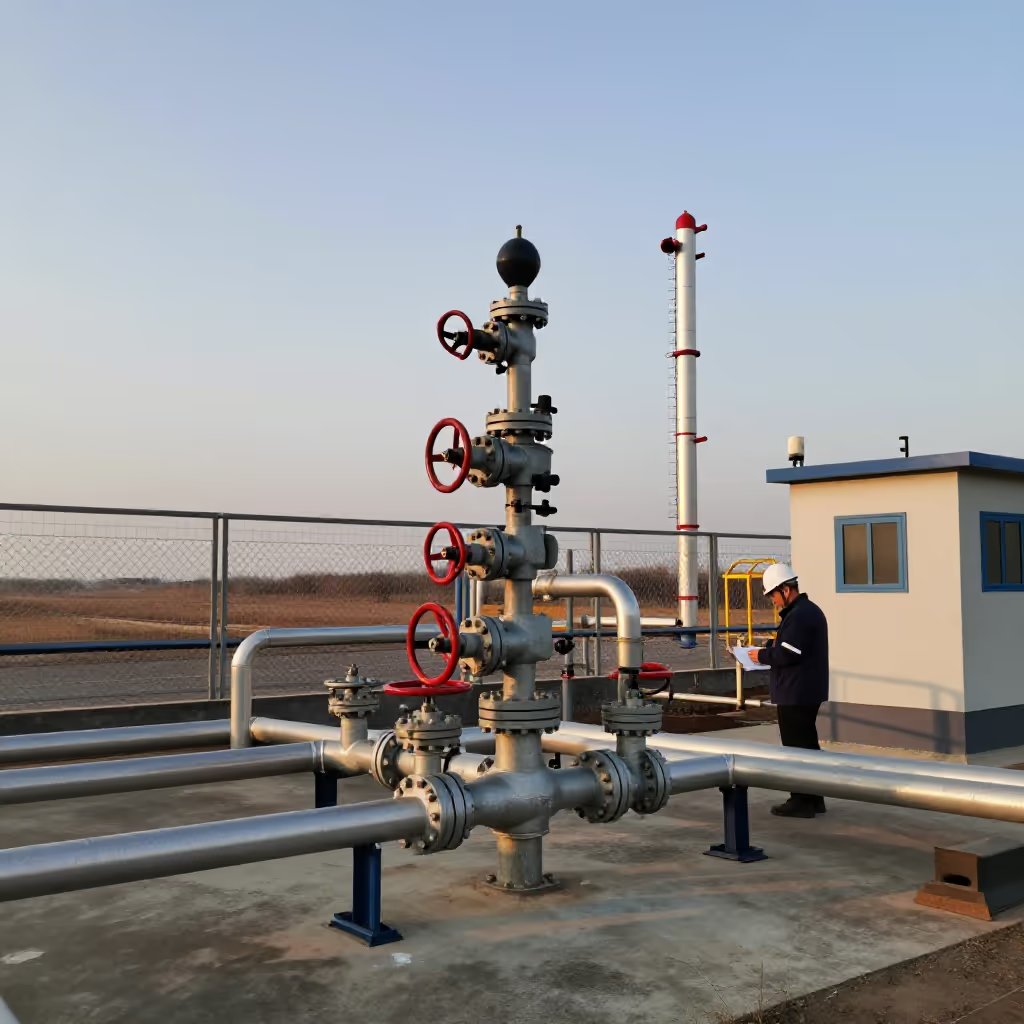
A flammable, naturally occurring gas mixture that is extracted from underground deposits. It is used mainly as an energy source for heating, electricity generation, and in industry.
example
Unsere neue Heizung wird mit Erdgas betrieben.
Our new heating system runs on natural gas.
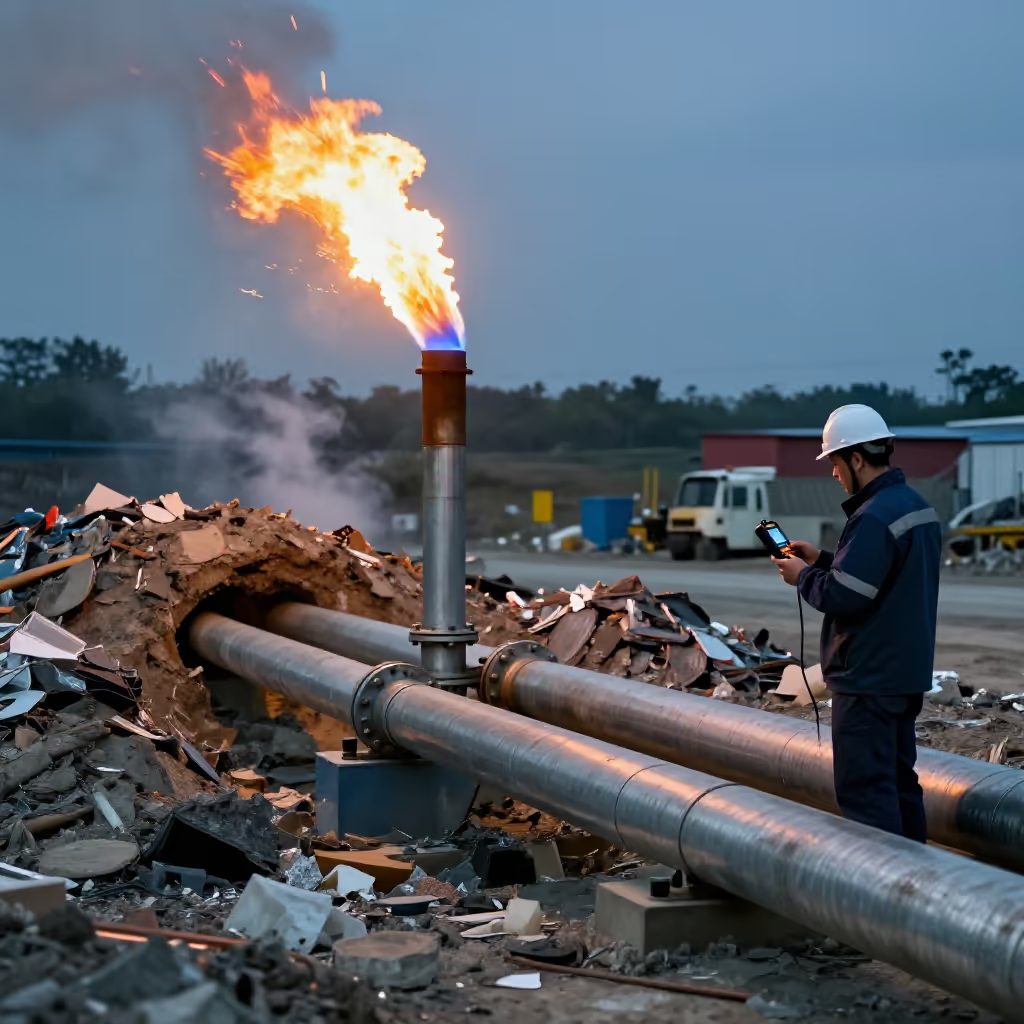
Usage tips
Compound structure
The word is made up of 'Erde' (earth) and 'Gas' (gas). So it literally describes a gas that is obtained from the earth.
EXAMPLE
Die größten Erdgas-Reserven liegen tief unter der Erde.
The largest natural gas reserves are located deep underground.
Use without an article
As a substance name, 'Erdgas' (natural gas) is often used without an article, especially when referring generally to the type of energy. This is common after prepositions such as 'mit' (with).
EXAMPLE
Immer mehr Kraftwerke werden mit Erdgas betrieben.
More and more power plants are being operated with natural gas.
Typical collocations
Common verbs used in connection with natural gas are 'fördern' (to extract), 'liefern' (to supply), 'verbrauchen' (to consume), and 'sparen' (to save). People also often talk about the 'Preis für Erdgas' (price of natural gas).
EXAMPLE
Aufgrund der hohen Preise versuchen viele Menschen, Erdgas zu sparen.
Because of the high prices, many people are trying to save natural gas.
Compare with
near_synonym · confusable
Erdgas vs Gas
gas
'das Gas' and 'das Erdgas' can both refer to a combustible substance used for heating or cooking. However, 'Gas' is more general. It can mean natural gas, but also other gaseous substances. 'Erdgas' is more specific: it is a naturally occurring gas mixture from the earth and is used as an energy source. Learners may confuse the words because in everyday language people often simply say 'Gas' when they actually mean natural gas. When the exact energy source is important, 'Erdgas' is clearer.
Erdgas
Viele Familien heizen ihre Wohnung mit Erdgas.
Many families heat their apartment with natural gas.