

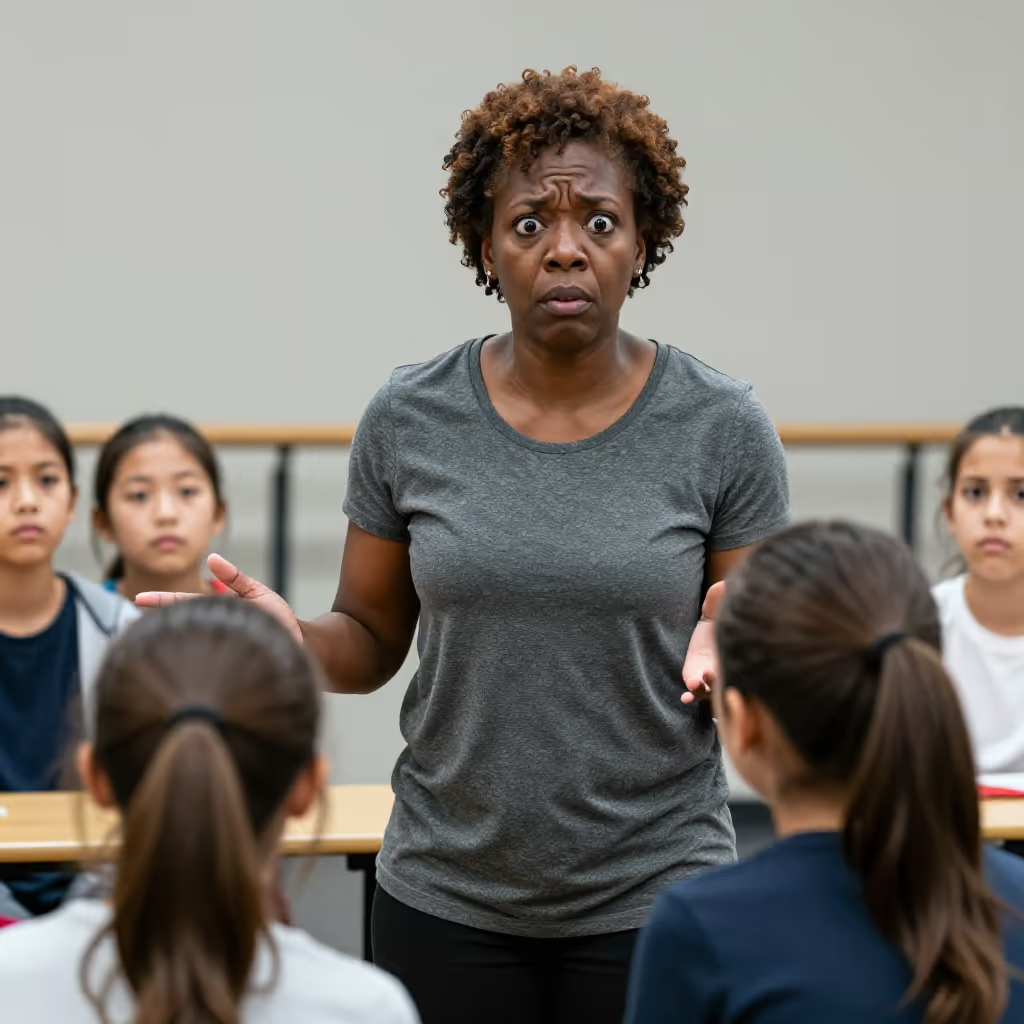
The entirety of the visible movements of the facial muscles that express feelings, thoughts, and reactions.
example
An seiner erstarrten Mimik konnte man den Schock erkennen.
You could recognize the shock from his frozen facial expression.

Usage tips
A collective term
The word 'Mimik' (facial expression) is a collective term and describes the entirety of facial movements. That is why it is almost always used in the singular, even when talking about many different expressions.
EXAMPLE
Die Mimik des Schauspielers war beeindruckend.
The actor's facial expressions were impressive.
Typical collocation
The word 'Mimik' (facial expression) is very often used together with 'Gestik' (gestures/body movements). The fixed phrase 'Mimik und Gestik' (facial expressions and gestures) describes all nonverbal communication through the body and face.
EXAMPLE
Bei einer Präsentation sind Mimik und Gestik genauso wichtig wie der Inhalt.
In a presentation, facial expressions and gestures are just as important as the content.
Typical adjectives
'Mimik' (facial expression) is often described with adjectives that evaluate the expression. Common combinations are 'lebhafte Mimik' (lively facial expressions), 'starre Mimik' (rigid/frozen facial expression), or 'ausdrucksstarke Mimik' (expressive facial expressions).
EXAMPLE
Trotz der ernsten Lage behielt er eine ruhige Mimik.
Despite the serious situation, he kept a calm facial expression.
Compare with
near_synonym · confusable
Mimik vs Ausdruck
expression / printout
'der Ausdruck' and 'die Mimik' both have to do with the face and with visible feelings. 'Ausdruck' refers more to the impression a face shows at a particular moment, for example friendly, sad, or strict. 'Mimik' refers more to the movements of the face, that is, how the eyes, mouth, and facial muscles show feelings. They can be confused because both are visible in the face. If you mean the whole visible behavior of the face, 'Mimik' fits. If you mean the momentary impression in the face, 'Ausdruck' works well.
Mimik
Im Theaterkurs übt Selma ihre Mimik, damit man ihre Gefühle besser erkennt.
In the theater course, Selma practices her facial expressions so that her feelings are easier to recognize.
Ausdruck
Sein Ausdruck war so ernst, dass alle im Raum still wurden.
His expression was so serious that everyone in the room fell silent.