A word, phrase, or particular way of formulating something linguistically.
example
„Jemandem die Daumen drücken“ ist ein gebräuchlicher deutscher Ausdruck.
'Jemandem die Daumen drücken' (to keep one's fingers crossed for someone) is a common German expression.

Usage tips
Word family
'Der Ausdruck' (expression / printout) is derived from the separable verb 'ausdrücken' (to express). The basic idea is that something internal (a thought, a feeling) is 'pressed' outward and thus becomes visible or audible.
EXAMPLE
Er konnte seine Gedanken nur schwer in einen klaren Ausdruck fassen.
He found it difficult to put his thoughts into a clear expression.
Fixed expression
The phrase 'etwas zum Ausdruck bringen' (to express something) is a formal way of saying that you show or state something. It is formed with the verb 'bringen' (to bring) and an accusative object.
EXAMPLE
Mit diesem Brief möchte ich meine tiefe Dankbarkeit zum Ausdruck bringen.
With this letter, I would like to express my deep gratitude.
Context clue: face
When an 'Ausdruck' (expression) is mentioned in connection with people and feelings, it usually means facial expression. This is often made clear by phrases such as 'ein Ausdruck im Gesicht' (an expression on one's face) or adjectives like 'traurig' (sad) or 'glücklich' (happy).
EXAMPLE
Sein überraschter Ausdruck zeigte, dass er nichts davon wusste.
His surprised expression showed that he knew nothing about it.
Context clue: office
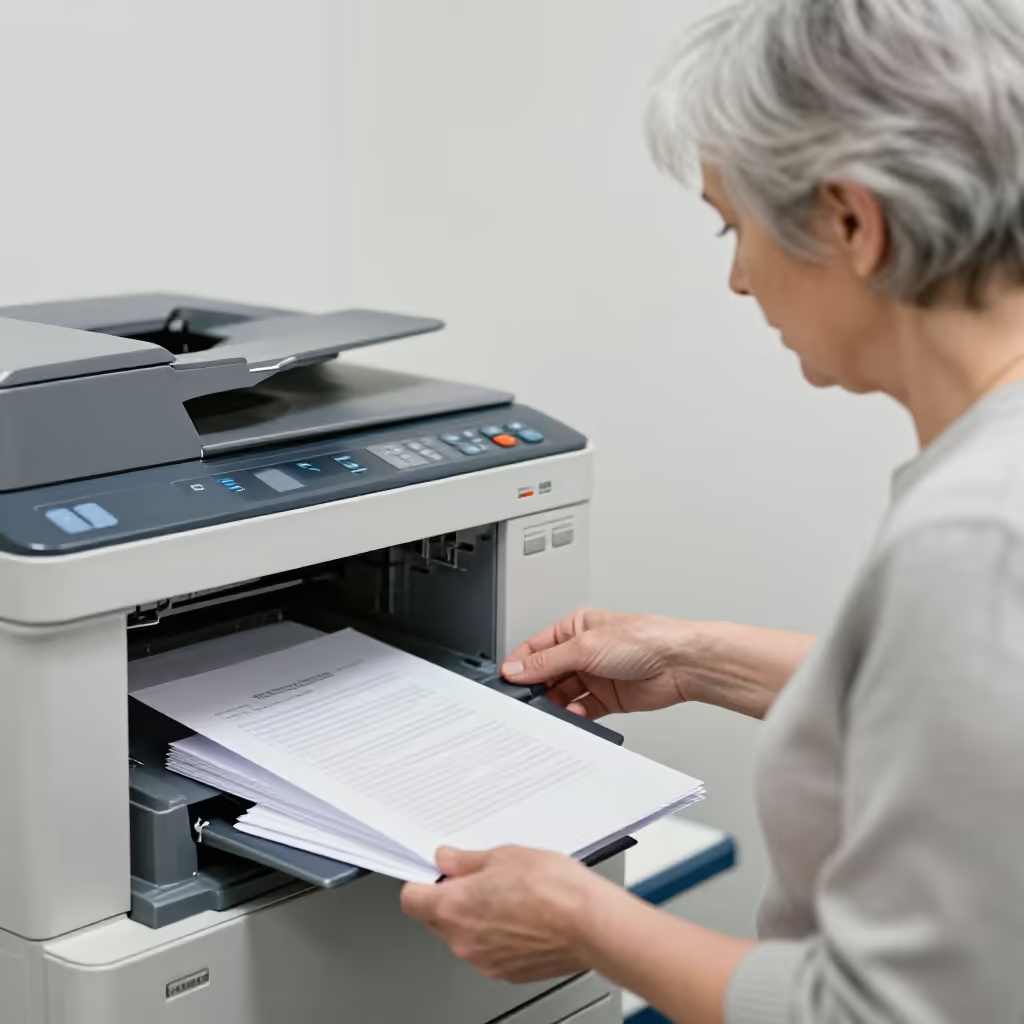
In everyday office or university life, 'ein Ausdruck' (a printout) usually means a document printed on paper. Typical verbs in this context are 'machen' (to make), 'drucken' (to print), or 'brauchen' (to need).
EXAMPLE
Bring bitte einen Ausdruck der Präsentation zur Besprechung mit.
Please bring a printout of the presentation to the meeting.
Abstract meaning
In an abstract, often formal meaning, 'Ausdruck' (expression) frequently appears with 'von' + dative or with a genitive. It then describes the manifestation of something, e.g. 'ein Ausdruck des Mitgefühls' (an expression of sympathy) or 'der Ausdruck seines Talents' (the expression of his talent).
EXAMPLE
Die Demonstration war ein Ausdruck des öffentlichen Protests.
The demonstration was an expression of public protest.
Context clue: language
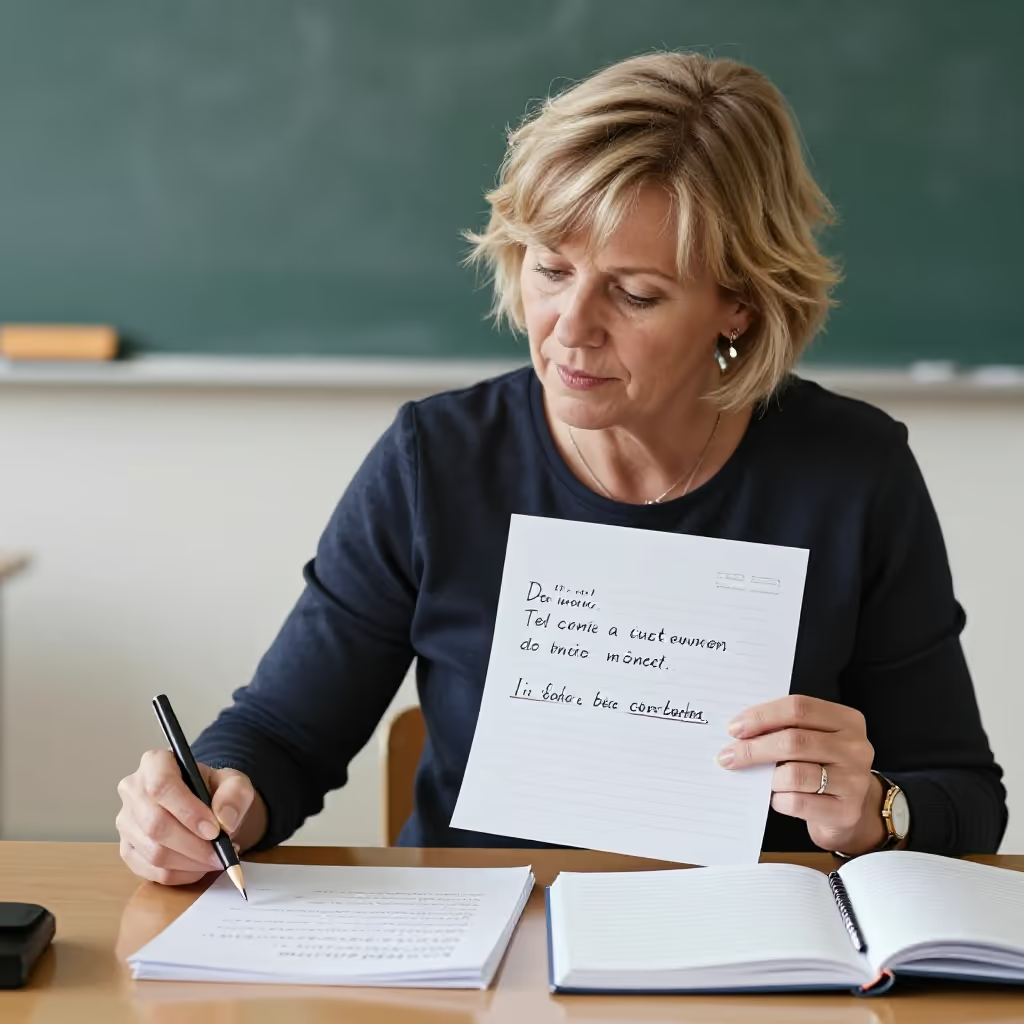
When the topic is language, words, or grammar, 'Ausdruck' (expression) refers to a formulation or phrase. Adjectives like 'fest' (fixed), 'idiomatisch' (idiomatic), or 'veraltet' (outdated) point to this meaning.
EXAMPLE
„Den Nagel auf den Kopf treffen“ ist ein idiomatischer Ausdruck.
'Den Nagel auf den Kopf treffen' (to hit the nail on the head) is an idiomatic expression.
Compare with
near_synonym · confusable
Ausdruck vs Wort
word
'das Wort' and 'der Ausdruck' can both refer to something linguistic. 'Wort' usually means a single linguistic unit, for example 'Haus' or 'gehen'. 'Ausdruck' is a bit broader: it can be a single word, but also a fixed phrase or a particular formulation. Learners may confuse the words because an expression sometimes consists of only one word. But if you are talking about a single element of language, 'Wort' often fits better. If it is about the right wording or an idiom, 'Ausdruck' is more natural.
Ausdruck
Der Ausdruck klingt höflicher, wenn man ihn in einer E-Mail benutzt.
The expression sounds more polite when you use it in an email.
Wort
Im Bus erklärt mir meine Kollegin ein deutsches Wort.
On the bus, my colleague explains a German word to me.