

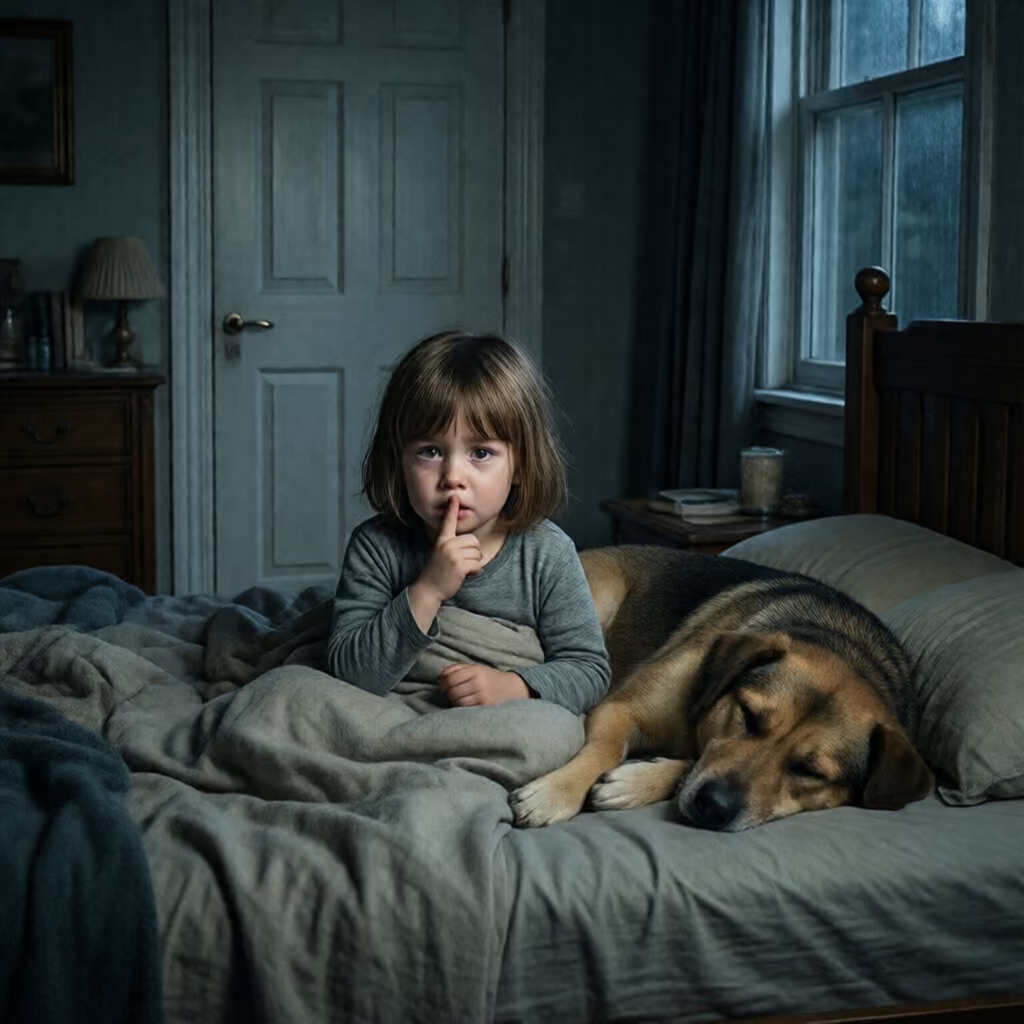
der Mucks
sound
A slight sound or brief utterance, especially from a person or animal.
EXAMPLE
Aus dem dunklen Zimmer war kein Mucks zu hören.
Not a sound could be heard from the dark room.
sound
der Mucks, die Muckse
Loading your saved state.
sound
A slight sound or brief utterance, especially from a person or animal.
Aus dem dunklen Zimmer war kein Mucks zu hören.
Not a sound could be heard from the dark room.

not make a sound
To make no sound and remain quiet; this expression is usually used in an explicit prohibition or instruction.
Sei während der Prüfung still und mach keinen Mucks!
Be quiet during the exam and don't make a sound!
| gender | masculine der |
|---|---|
| plural | die Muckse |
| genitive | des Muckses |
| singular | plural | |
|---|---|---|
| nominative | der Mucks | die Muckse |
| accusative | den Mucks | die Muckse |
| dative | dem Mucks | den Mucksen |
| genitive | des Muckses | der Muckse |
The article changes with the case; it is shown in colour.
'Mucks' (sound) is colloquial and typical of everyday conversation. In a direct instruction, the word can sound stern or threatening.
Keinen Mucks, sonst fliegen wir auf!
Not a sound, or we'll be found out!
'Mucks' (sound) almost always appears in negative expressions, especially with 'kein' (no). Using 'nicht einen Mucks' (not a single sound) emphasizes particularly strongly that no sound at all can be heard.
Das Baby schlief und gab keinen Mucks von sich.
The baby was asleep and didn't make a sound.
Obwohl wir direkt vor der Tür standen, hörten wir nicht einen Mucks.
Although we were standing right outside the door, we didn't hear a single sound.
A prohibition can be expressed using the pattern 'keinen Mucks machen dürfen' (to not be allowed to make a sound). In a main clause, the conjugated form of 'dürfen' (to be allowed to) appears alongside the subject, and the infinitive 'machen' (to make) goes at the end of the sentence.
Ihr dürft während der Aufnahme keinen Mucks machen.
You must not make a sound during the recording.