

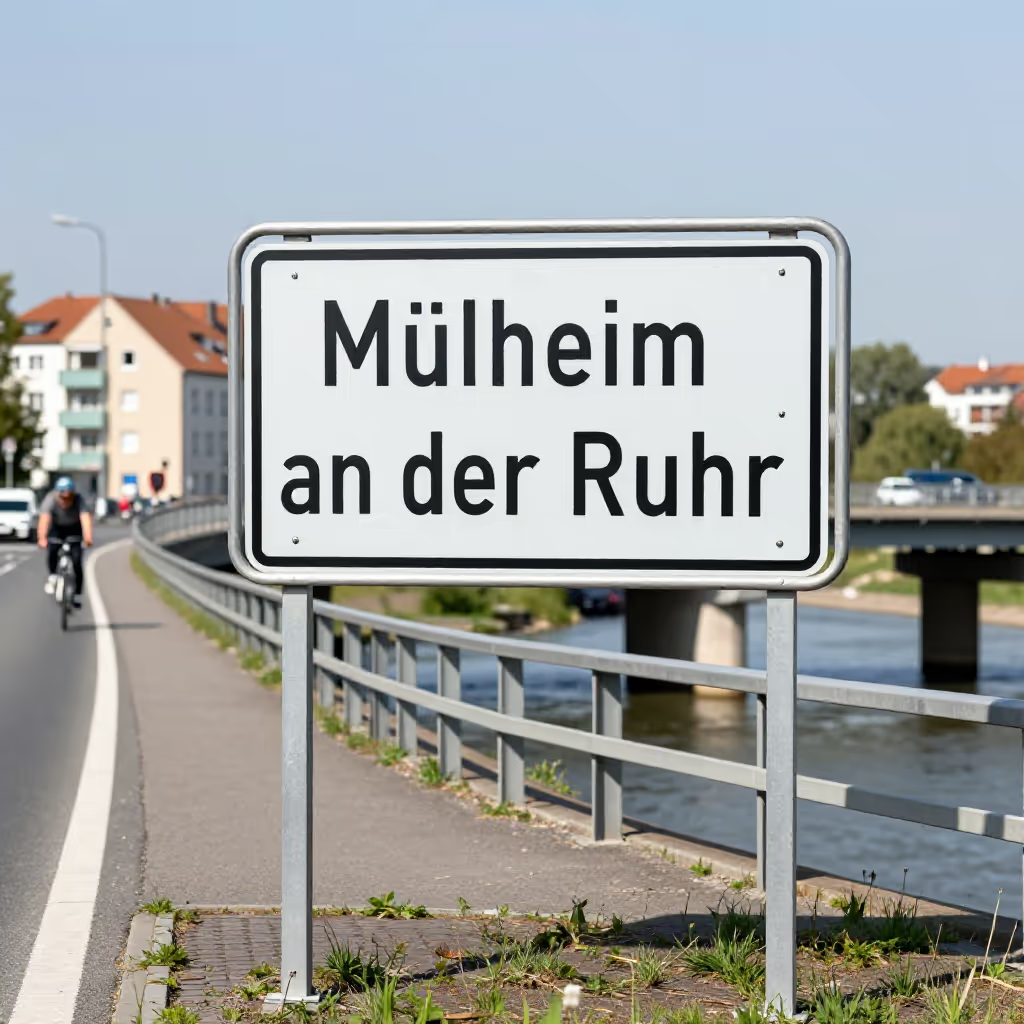
Refers to the city of Mülheim (e.g., Mülheim an der Ruhr) or one of its districts. It is an indeclinable adjective formed from a place name.
example
Die Mülheimer Brücke in Köln ist eine wichtige Verkehrsverbindung über den Rhein.
The Mülheim Bridge in Cologne is an important transport link across the Rhine.
Usage tips
Indeclinable adjective
Adjectives that are derived from a place name and end in '-er' are indeclinable. This means that 'Mülheimer' does not take a declension ending, no matter which case or gender follows.
EXAMPLE
Wir treffen uns am Mülheimer Bahnhof.
We are meeting at the Mülheim train station.
Always capitalized
Because 'Mülheimer' is derived from a proper noun (the city of Mülheim), it is always capitalized, even when it stands before a noun like a normal adjective.
EXAMPLE
Das ist ein typisches Mülheimer Gericht.
That is a typical Mülheim dish.
Word formation
This pattern of word formation (place name + '-er') is very common in German. You can find it with many cities, for example 'Kölner Dom' (Cologne Cathedral), 'Hamburger Hafen' (Hamburg harbor), or 'Berliner Mauer' (Berlin Wall).
EXAMPLE
Die Mülheimer Stadtverwaltung hat neue Parkregeln eingeführt.
The Mülheim city administration has introduced new parking rules.