

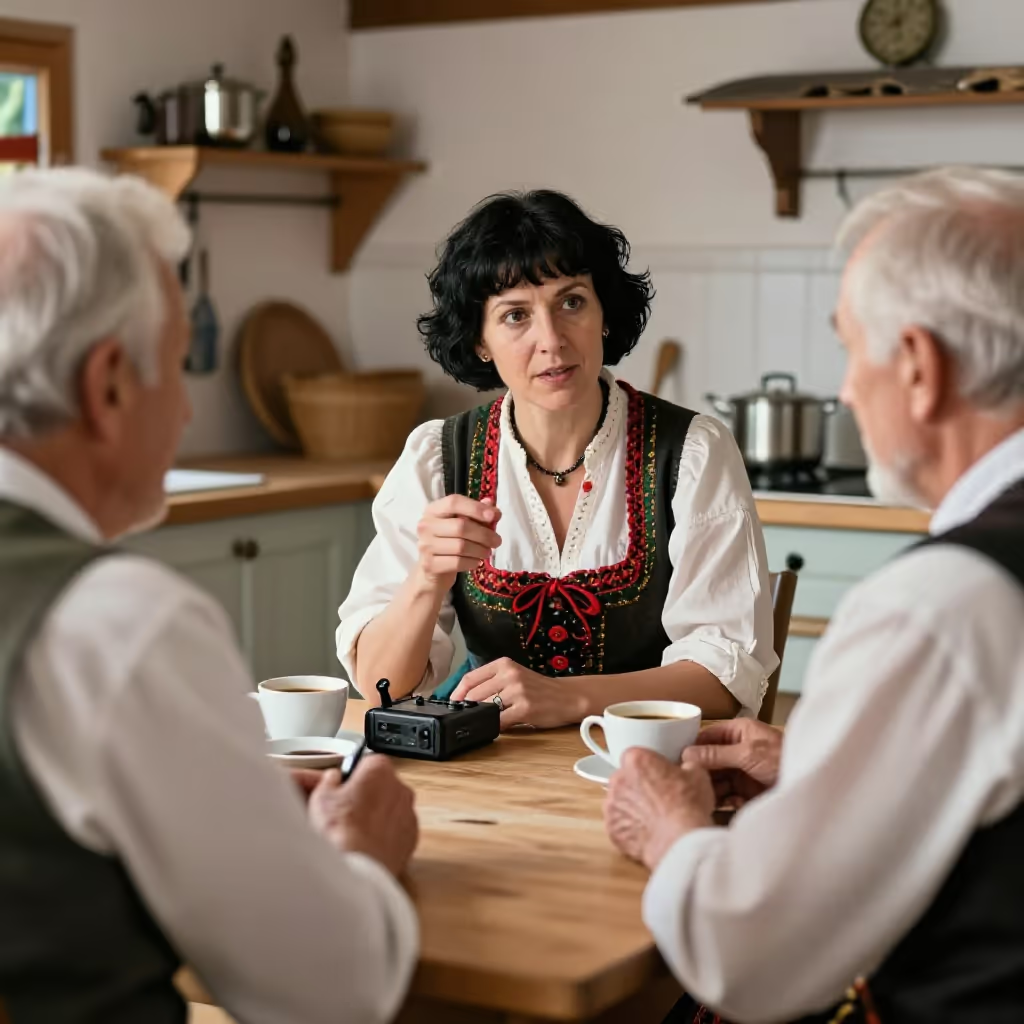
A form of language that is spoken only in a particular region and differs from the standard language in pronunciation, vocabulary, and grammar.
example
Obwohl er lange in Berlin lebt, spricht er immer noch die Mundart seiner Heimat.
Although he has lived in Berlin for a long time, he still speaks the dialect of his home region.
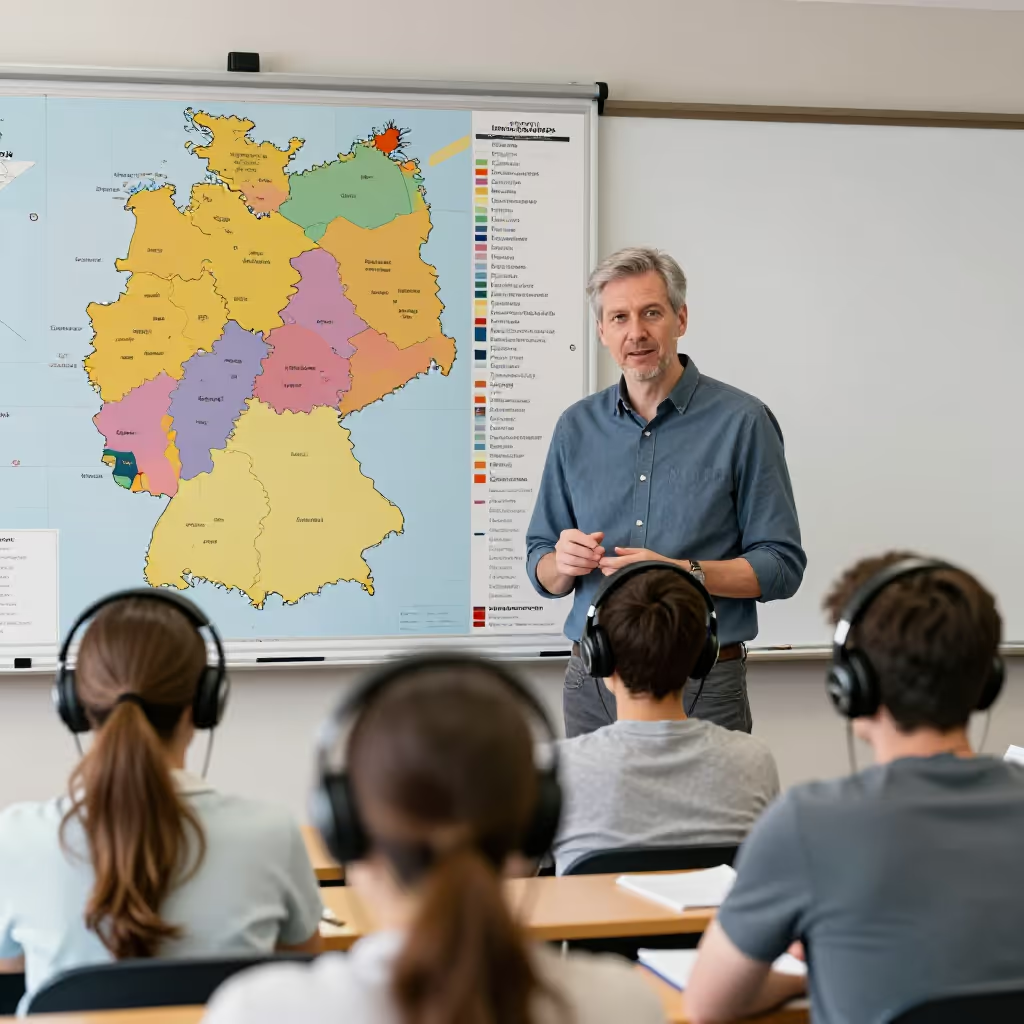
Usage tips
Word composition
The word is made up of 'Mund' (mouth) and 'Art' (kind/way). So it literally describes the special 'Art' (way) in which people speak with the 'Mund' (mouth) in a particular region.
EXAMPLE
Die sächsische Mundart hat einen ganz eigenen Klang.
The Saxon dialect has a sound all its own.
Typical verbs
Common verbs used together with 'Mundart' (dialect) are 'sprechen' (to speak), 'verstehen' (to understand), 'pflegen' (to cultivate/maintain), or 'beibehalten' (to keep/retain).
EXAMPLE
Mein Großvater pflegt seine Mundart und spricht sie mit Stolz.
My grandfather maintains his dialect and speaks it with pride.
Use with 'in'
When you want to express that something is written or performed in a dialect, you often use the preposition 'in'. Typical phrases are 'in Mundart schreiben' (to write in dialect) or 'ein Gedicht in Mundart' (a poem in dialect).
EXAMPLE
Der lokale Dichter trägt seine Werke immer in Mundart vor.
The local poet always recites his works in dialect.
Compare with
near_synonym · confusable
Mundart vs Sprache
language
'die Sprache' and 'die Mundart' both belong to the area of communication. 'Sprache' is the general term for a whole system like German or Spanish. 'Mundart' is a regional spoken form of a language and is very close to 'Dialekt' (dialect). You may confuse the words when a Mundart sounds very different. Even so, a Mundart is normally not a separate language, but a regional variant of one.
Mundart
Im Urlaub hören wir oft die Mundart der Menschen aus dem Dorf.
On vacation, we often hear the dialect spoken by the people from the village.
Sprache
Für den neuen Job lernt sie eine weitere Sprache.
For her new job, she is learning another language.