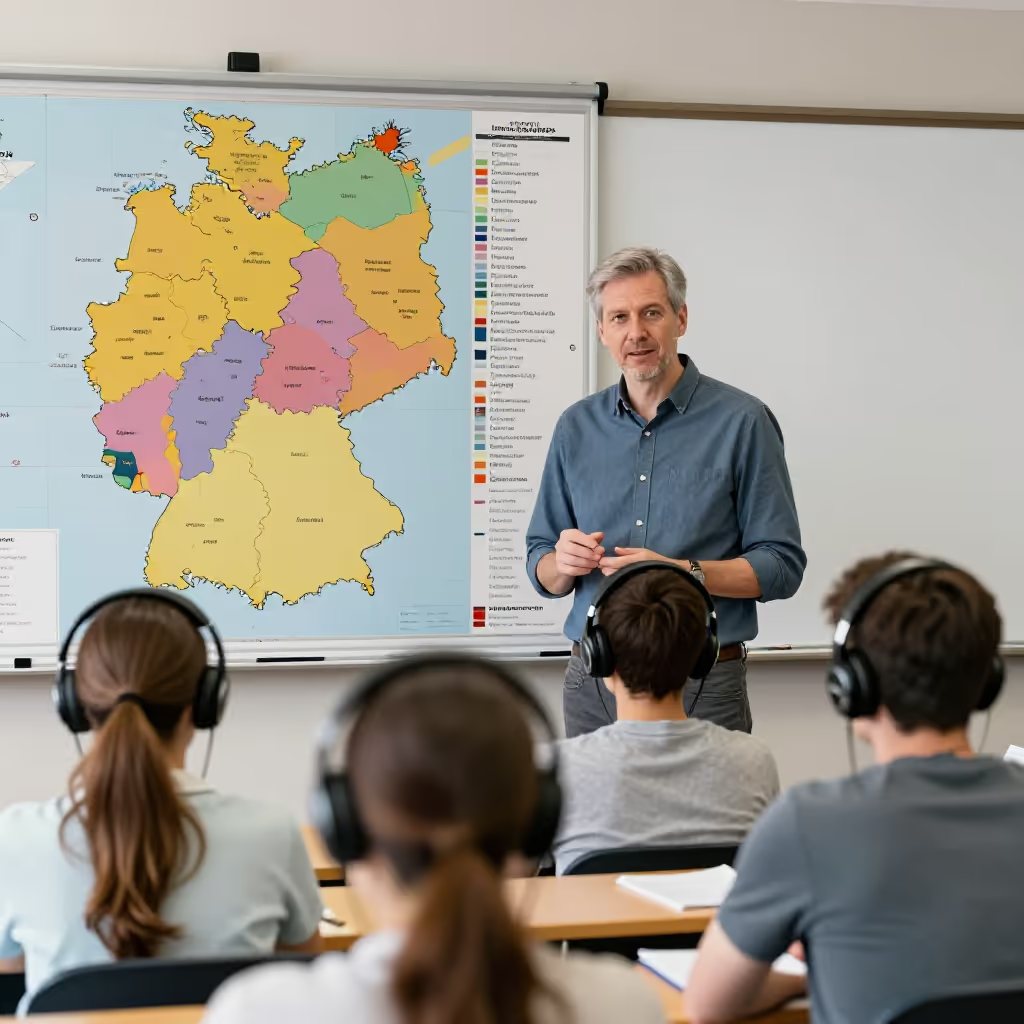
A regional or local variant of a language that differs from the standard language in pronunciation, grammar, and vocabulary.
example
Obwohl er seit zwanzig Jahren in Hamburg lebt, hört man seinen bayerischen Dialekt immer noch deutlich.
Although he has lived in Hamburg for twenty years, you can still clearly hear his Bavarian dialect.
Usage tips
Sentence structure with 'hören'
When you notice a person's dialect, you often use the construction 'jemandem den Dialekt anmerken' (to notice someone's dialect) or 'bei jemandem den Dialekt hören' (to hear someone's dialect).
EXAMPLE
Man merkt ihr den Dialekt kaum noch an.
You can hardly notice her dialect anymore.
Typical collocations
In connection with regional language variants, 'Dialekt' (dialect) is often used with the verbs 'sprechen' (to speak) or 'haben' (to have). You can also say that someone speaks 'im Dialekt' (in dialect).
EXAMPLE
Mein Großvater spricht einen starken schwäbischen Dialekt.
My grandfather speaks a strong Swabian dialect.
Typical adjectives
To describe the strength of a regional coloring, adjectives like 'stark' (strong), 'leicht' (slight), 'deutlich' (clear), or 'kaum hörbar' (barely audible) are combined with 'Dialekt' (dialect).
EXAMPLE
Sie hat nur noch einen leichten Dialekt, den man kaum hört.
She only has a slight dialect now, which you can hardly hear.
Context clue
You can often recognize the figurative meaning by additions like 'persönlich' (personal) or 'ganz eigen' (very own). Here it is not about a region, but about a person's individual way of expressing themselves.
EXAMPLE
Ihre direkte Art ist einfach ihr persönlicher Dialekt, sie meint es nicht böse.
Her direct manner is simply her personal dialect; she doesn't mean anything bad by it.
Compare with
near_synonym · confusable
Dialekt vs Sprache
language
'die Sprache' and 'der Dialekt' both have to do with how a group of people speaks. 'Sprache' means the whole system, for example German, Turkish, or French. 'Dialekt' means a regional form of a language, for example a particular pronunciation or special words in one area. Learners may confuse the words because both can feel like a distinct way of speaking. In practical terms: one language can have many dialects.
Dialekt
Im Gespräch verstehe ich seinen Dialekt nicht immer sofort.
In conversation, I do not always understand his dialect right away.
Sprache
Deutsch ist die Sprache, die wir im Kurs lernen.
German is the language we are learning in the course.