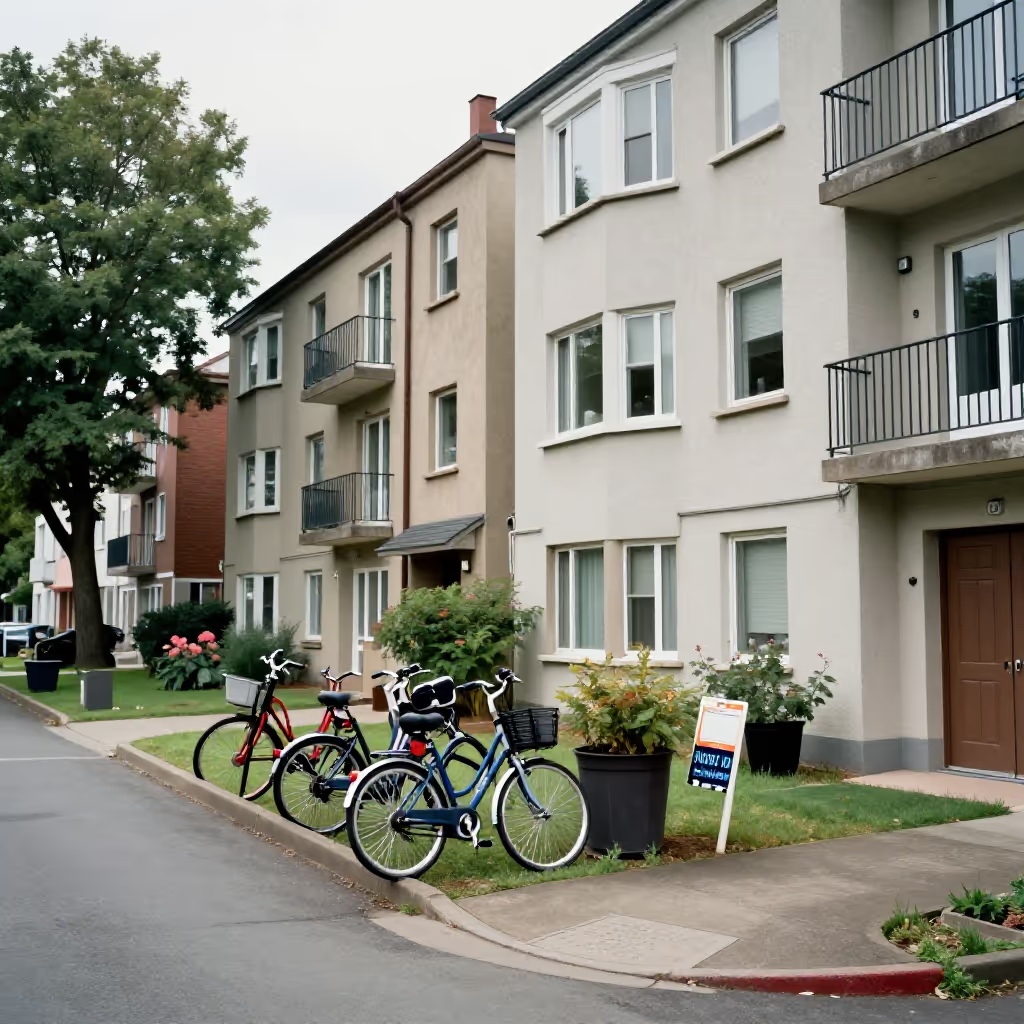
The immediate geographic surroundings of a place of residence; the district or neighborhood.
example
In unserer Nachbarschaft gibt es einen neuen Spielplatz und einen kleinen Park.
In our neighborhood, there is a new playground and a small park.
Usage tips
Word structure
The word consists of 'Nachbar' (neighbor) and the ending '-schaft'. This ending forms feminine nouns and can refer to a group (the neighbors), a state (the relationship), or an area (the neighborhood).
EXAMPLE
Die Freundschaft zwischen den beiden Familien ist sehr eng.
The friendship between the two families is very close.
Context clue: place
When it is about the place, 'Nachbarschaft' (neighborhood) is often used with prepositions like 'in der' (in the), 'aus der' (from the), or 'durch die' (through the). It then describes the geographic surroundings.
EXAMPLE
In dieser Nachbarschaft wohnen viele junge Familien.
Many young families live in this neighborhood.
Context clue: people
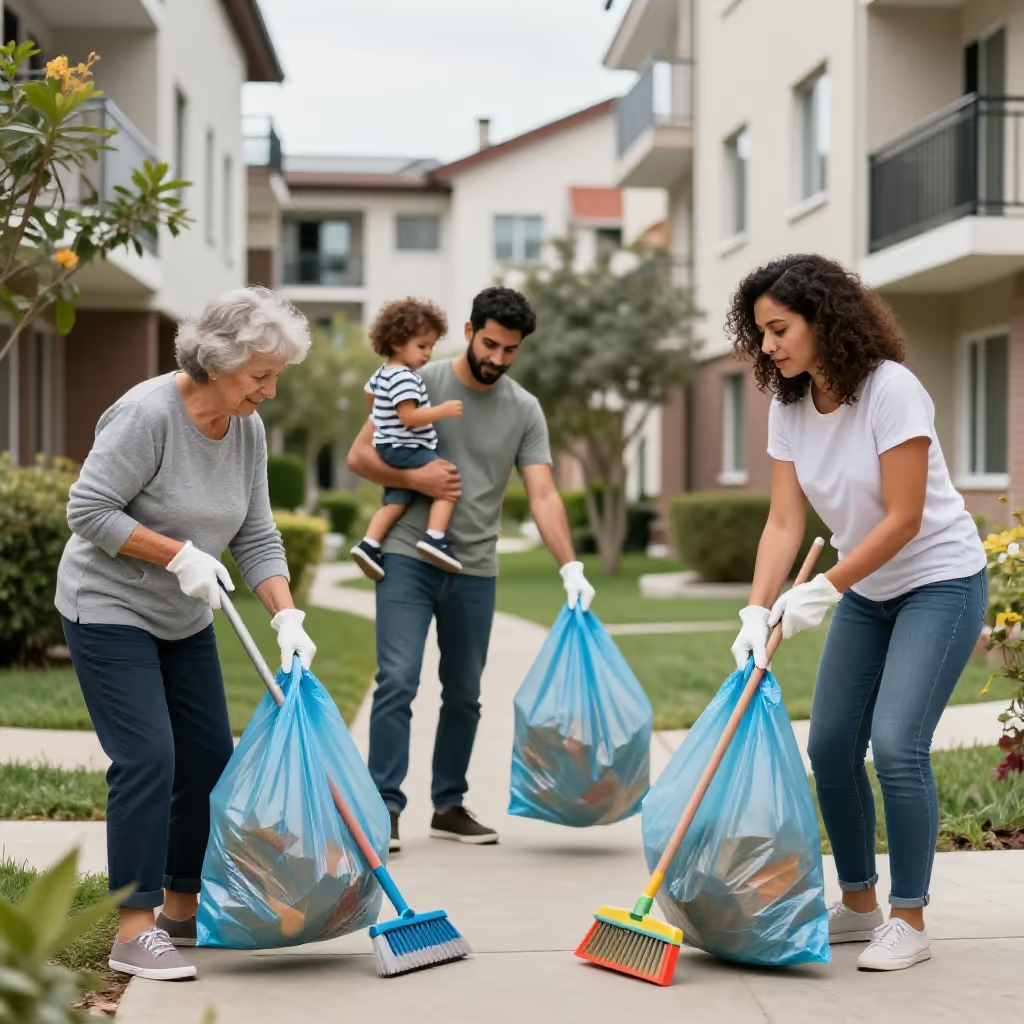
When the people are meant, 'die Nachbarschaft' (the neighborhood) behaves like a group of people. It can, for example, organize, celebrate, or help with something.
EXAMPLE
Die Nachbarschaft hat für das neue Spielgerät gespendet.
The neighborhood donated money for the new playground equipment.
Typical collocations
When it is about the relationship between neighbors, typical expressions are 'eine gute/schlechte Nachbarschaft haben' (to have good/bad neighborly relations) or 'gute Nachbarschaft pflegen' (to maintain good neighborly relations).
EXAMPLE
Wir legen Wert auf eine gute Nachbarschaft.
We value good neighborly relations.
Compare with
near_synonym · confusable
Nachbarschaft vs Nähe
closeness / proximity
'die Nähe' and 'die Nachbarschaft' can both have to do with a place in the surrounding area. 'die Nähe' generally means that something is not far away. This can be a shop, a train station, or a person. 'die Nachbarschaft' usually means the immediate surroundings of where someone lives, or the people who live there. That is why you say 'in der Nähe vom Supermarkt' (near the supermarket), but 'in unserer Nachbarschaft wohnen viele Familien' (many families live in our neighborhood). They can be confused because both sound geographically close. However, 'Nachbarschaft' is more strongly connected with living, a district or neighborhood, and neighbors.
Nachbarschaft
In unserer Nachbarschaft kennen sich viele Leute und helfen einander.
In our neighborhood, many people know each other and help one another.