

einer Sache nachgehen
to pursue
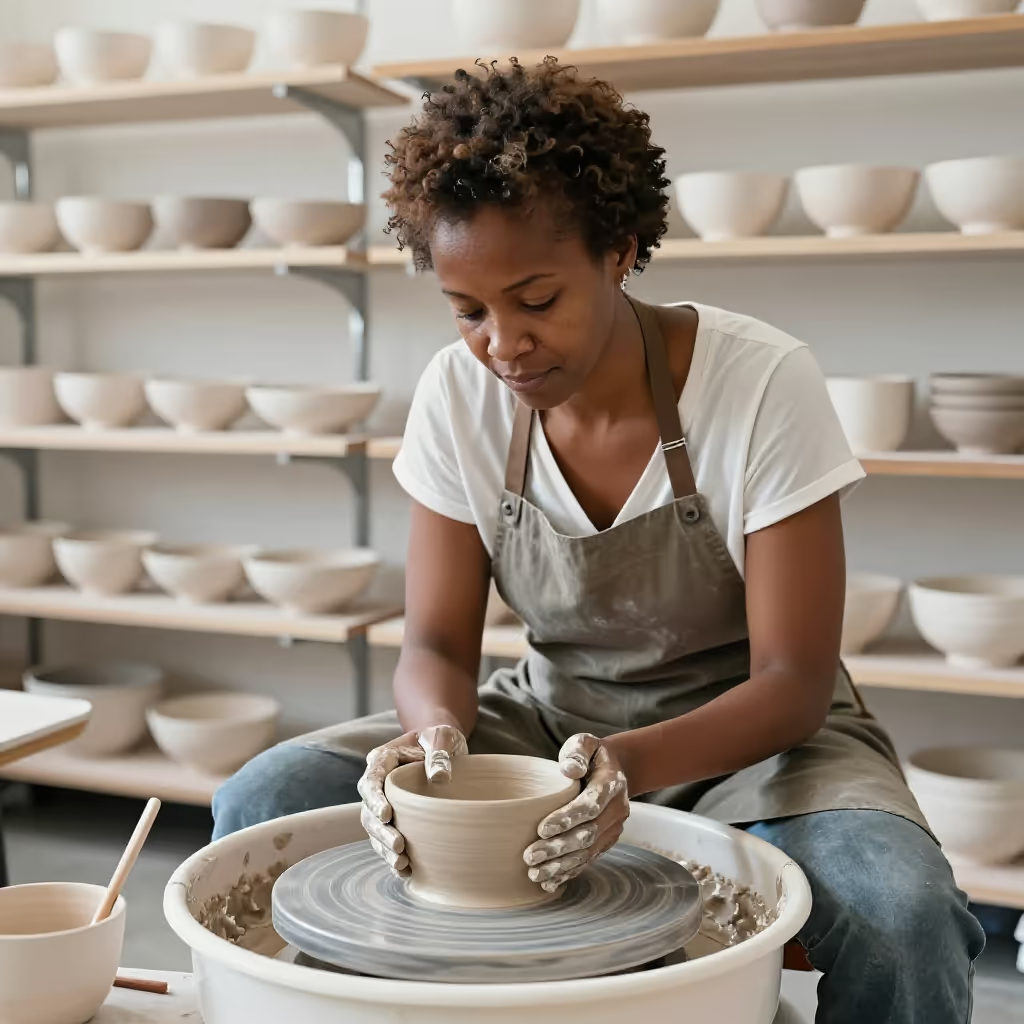
To engage in a particular activity, hobby, or profession.
EXAMPLE
In seiner Freizeit geht er dem Angeln nach.
In his free time, he pursues fishing.
to pursue / follow up
Loading your saved state.
to pursue
To engage in a particular activity, hobby, or profession.
In seiner Freizeit geht er dem Angeln nach.
In his free time, he pursues fishing.
to follow up
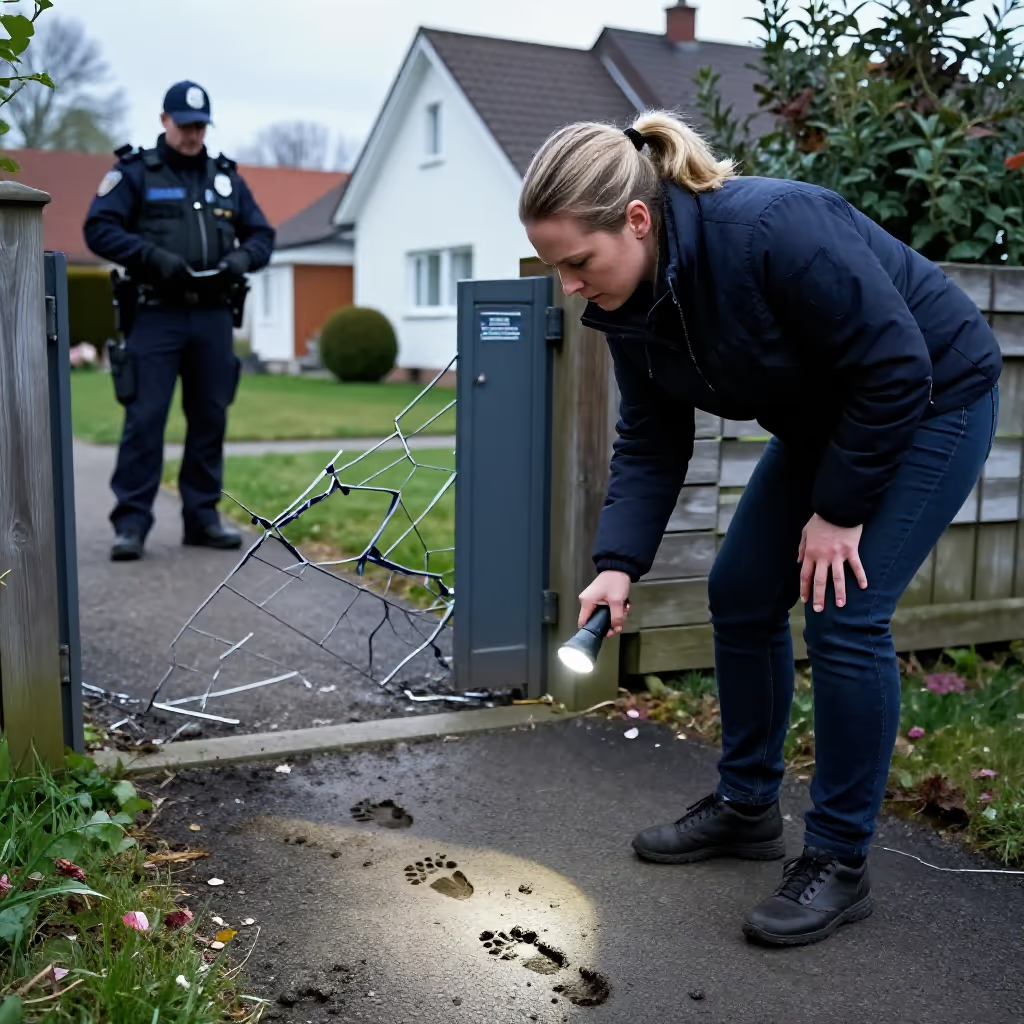
To investigate something or follow a lead in order to clarify it.
Die Polizei geht jedem Hinweis nach.
The police follow up every lead.
to run slow
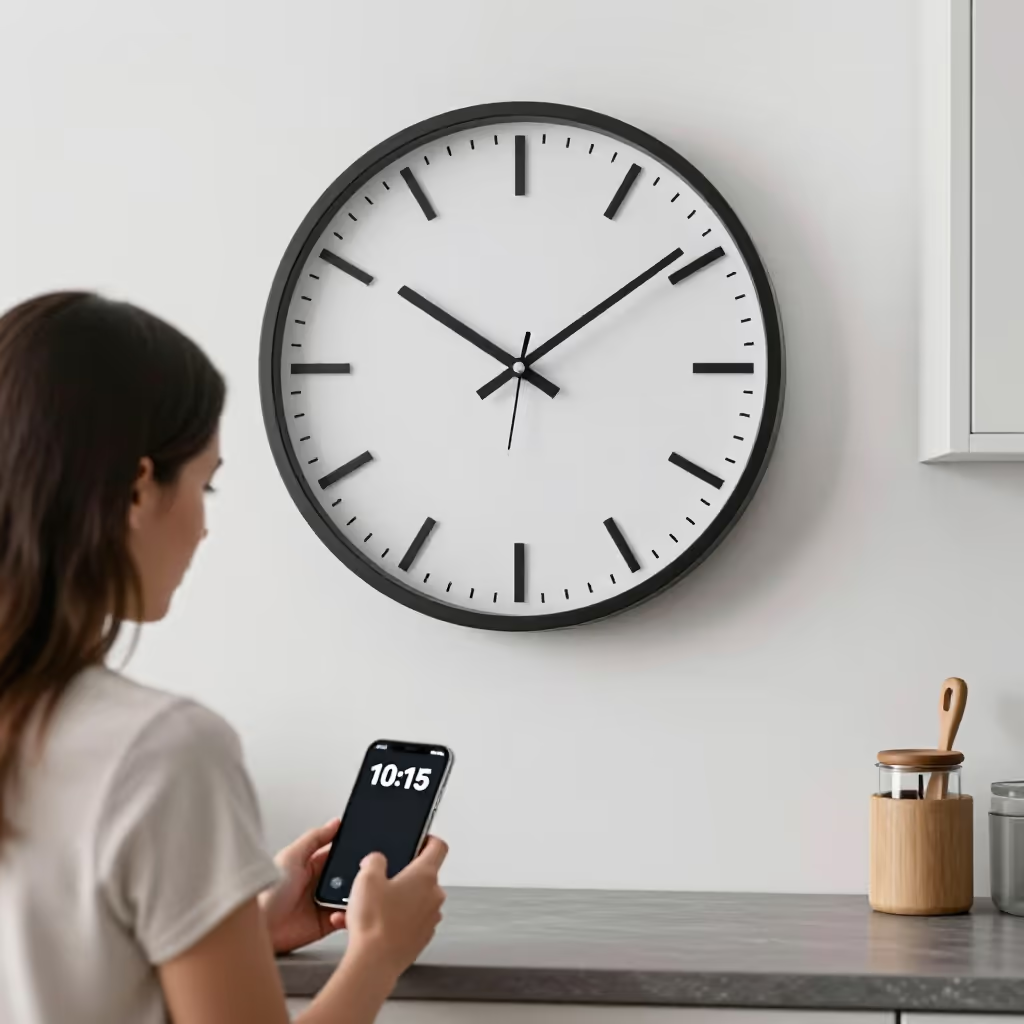
(referring to a clock or watch) To run slower than the correct time; to show a later time.
Meine Armbanduhr geht pro Tag fünf Minuten nach.
My wristwatch runs five minutes slow per day.

to follow someone
To walk after someone or follow them.
Er ging ihr bis zur Haustür nach, um sicherzugehen, dass sie gut ankommt.
He followed her to the front door to make sure she arrived safely.
'Nachgehen' (to pursue / follow up) is a separable verb. The prefix 'nach-' comes at the end in a main clause. In subordinate clauses and infinitive constructions, the verb stays together.
Er geht seiner Leidenschaft für die Fotografie nach.
He pursues his passion for photography.
In most meanings, 'nachgehen' (to pursue / follow up) requires the dative. You go after 'einer Sache' (a thing) or 'jemandem' (someone), not 'eine Sache' or 'jemanden'.
Der Detektiv geht einer neuen Spur nach.
The detective is following up a new lead.
When it is about activities, 'nachgehen' (to pursue) is often combined with 'einem Hobby' (a hobby), 'einer Tätigkeit' (an activity), 'einer Leidenschaft' (a passion), or 'seinem Beruf' (one's profession).
Nach der Arbeit geht sie ihrer Leidenschaft, dem Malen, nach.
After work, she pursues her passion, painting.
In the context of investigations, 'nachgehen' (to follow up) is often used with 'einem Hinweis' (a lead), 'einer Spur' (a trail/lead), 'einem Verdacht' (a suspicion), or 'einer Frage' (a question).
Die Journalistin will der Sache weiter nachgehen.
The journalist wants to follow up the matter further.
You can recognize this meaning by the fact that the subject of the sentence is a clock, watch, or another timekeeping device. Here the verb is used without an object.
Die alte Bahnhofsuhr geht schon seit Jahren nach.
The old station clock has been running slow for years.
In the meaning 'folgen' (to follow), 'nachgehen' (to follow someone) always appears with a person (or an animal) in the dative. It describes concrete, physical movement.
Der Hund ging seinem Besitzer überallhin nach.
The dog followed its owner everywhere.
to follow
When walking behind someone, folgen and nachgehen can both be used. Folgen neutrally describes moving behind someone and can also be used for vehicles. Jemandem nachgehen places more emphasis on physically walking after someone.

Das Kind ging seiner Mutter in die Küche nach.
The child walked after its mother into the kitchen.
Das Kind folgte seiner Mutter in die Küche.
The child followed its mother into the kitchen.