

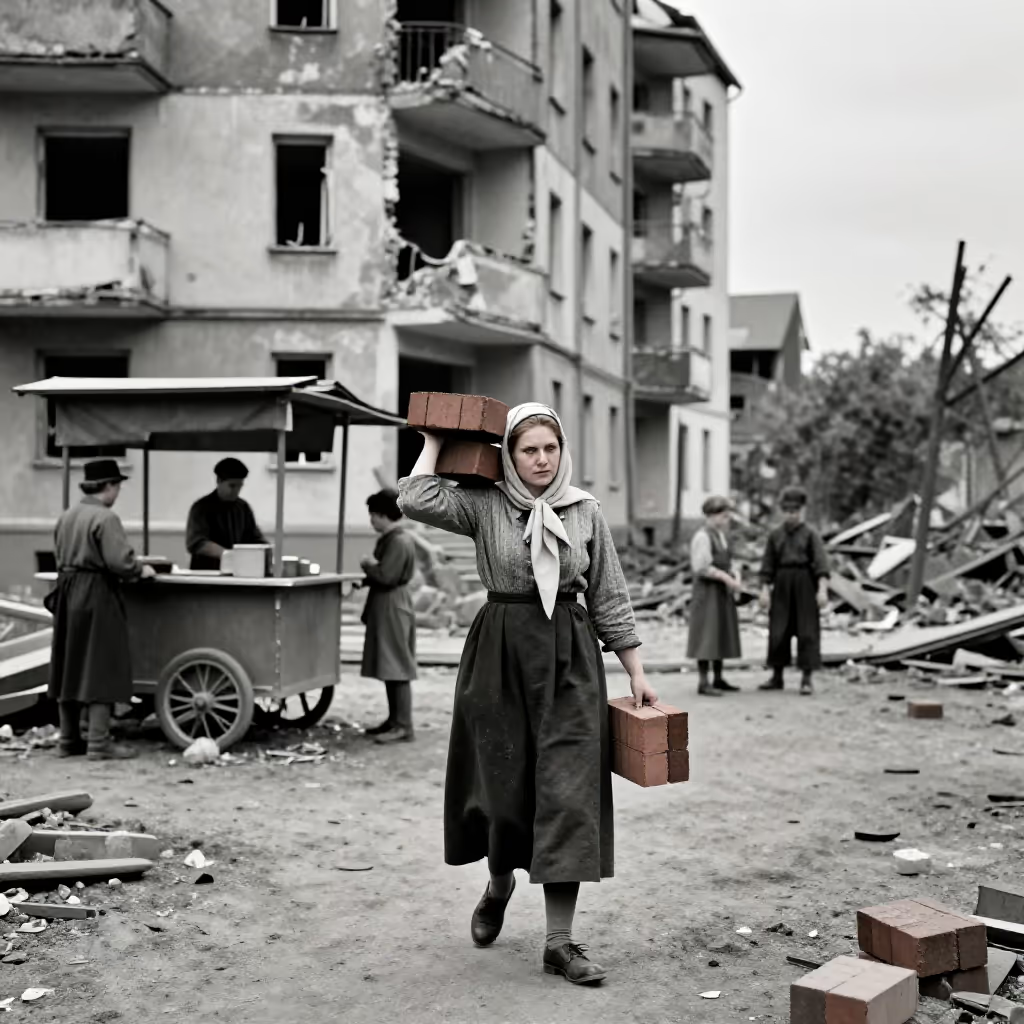
The era immediately following a war, especially the period in Germany and Europe after the end of the Second World War in 1945.
example
In der deutschen Nachkriegszeit war der Wiederaufbau die größte Herausforderung.
In the German postwar period, reconstruction was the greatest challenge.
Usage tips
Word composition
The word is made up of the preposition 'nach' (after), the noun 'der Krieg' (war) in the genitive form 'Kriegs', and 'die Zeit' (time/period). So it literally means 'the time after the war.'
EXAMPLE
Meine Großeltern erzählen oft Geschichten aus der Nachkriegszeit.
My grandparents often tell stories from the postwar period.
Cultural context
When 'die Nachkriegszeit' (the postwar period) is mentioned in a German context without further explanation, it almost always means the period after the Second World War, starting in 1945. This period strongly shaped modern German history and society.
EXAMPLE
Die Literatur der Nachkriegszeit thematisierte oft die Kriegserlebnisse.
The literature of the postwar period often dealt with wartime experiences.
Typical preposition
The word is almost always used with the preposition 'in' and the dative to describe events or conditions in this era. The typical phrase is 'in der Nachkriegszeit' (in the postwar period).
EXAMPLE
In der Nachkriegszeit herrschte in vielen Städten große Wohnungsnot.
In the postwar period, there was a severe housing shortage in many cities.
General use
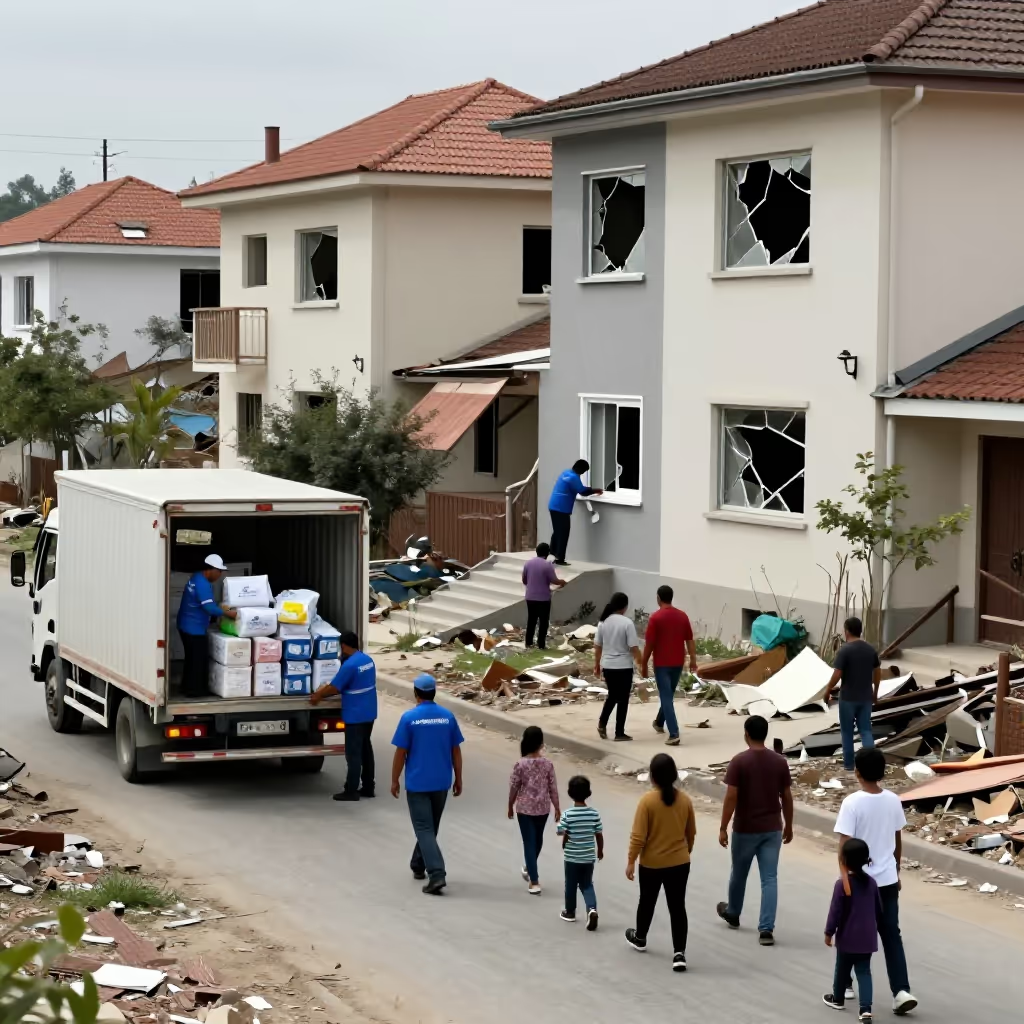
To refer to the time after another war, that war must be named explicitly. For example, you would say: 'die Nachkriegszeit des Vietnamkriegs' (the postwar period after the Vietnam War).
EXAMPLE
Die Nachkriegszeit nach dem Bürgerkrieg war für das Land eine große Belastung.
The postwar period after the civil war was a great burden for the country.
Compare with
confusable
Nachkriegszeit vs Kriegsende
end of war
'das Kriegsende' and 'die Nachkriegszeit' both belong to the topic of war and peace, but they refer to different times. 'Das Kriegsende' is the exact point in time when a war ends, for example through surrender or a treaty. 'Die Nachkriegszeit' is the period after that, often involving reconstruction, shortages, or political changes. The words can be confused because the postwar period begins directly after the end of the war. The important point is: 'Kriegsende' is a moment, while 'Nachkriegszeit' is a longer period of time.
Nachkriegszeit
Viele Familien hatten in der Nachkriegszeit nur wenig zu essen.
Many families had very little to eat during the postwar period.
Kriegsende
Im Geschichtsunterricht sprechen wir heute über das Kriegsende im Jahr 1945.
In history class today, we are talking about the end of the war in 1945.