

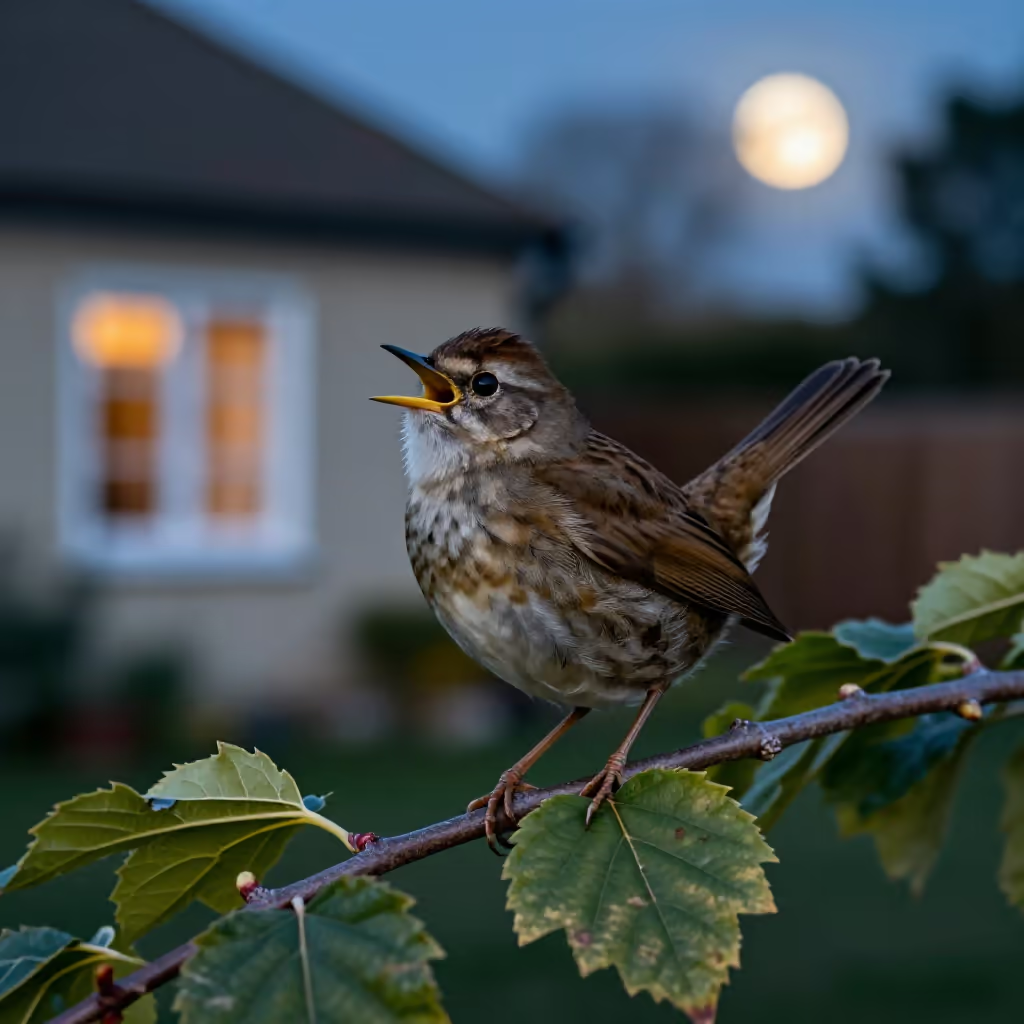
die Nachtigall
nightingale
A small songbird known for its melodic and complex song, which is often heard at night.
EXAMPLE
Im Frühling kann man im Park die Nachtigall singen hören.
In spring, you can hear the nightingale singing in the park.
nightingale
Loading your saved state.
nightingale
A small songbird known for its melodic and complex song, which is often heard at night.
Im Frühling kann man im Park die Nachtigall singen hören.
In spring, you can hear the nightingale singing in the park.

nightingale
A person, especially a female singer, with an exceptionally beautiful and clear singing voice.
Wegen ihrer wunderbaren Stimme wurde die Sopranistin als die „schwedische Nachtigall“ bezeichnet.
Because of her wonderful voice, the soprano was called the “Swedish Nightingale.”
The name 'Nachtigall' (nightingale) comes from Old High German. It is made up of 'Nacht' (night) and 'galan', which means 'to sing'. So a Nachtigall is literally a 'night singer'.
Der Gesang der Nachtigall ist besonders schön.
The song of the nightingale is especially beautiful.
When describing the song of the nightingale, you don't only say that it 'singt' (sings). A very typical and poetic verb for this is 'schlagen' (to sing/trill). The song itself is also called 'Nachtigallenschlag' (nightingale song).
Hör mal, im Garten schlägt eine Nachtigall!
Listen, there's a nightingale singing in the garden!
The term 'Nachtigall' (nightingale) is often used as an honorary nickname for female singers with an exceptional voice. It is a great compliment.
Die Kritiker feierten die junge Sängerin als die neue „Nachtigall“ der Oper.
The critics celebrated the young singer as the new “nightingale” of opera.
Whether the bird or a person is meant can be recognized from context. If people are talking about nature, birds, or spring, the bird is meant. If it is about music, singing, and a person, the metaphorical meaning is likely.
Man nennt sie wegen ihrer klaren Stimme die „Nachtigall von Berlin“.
Because of her clear voice, she is called the “Nightingale of Berlin.”