

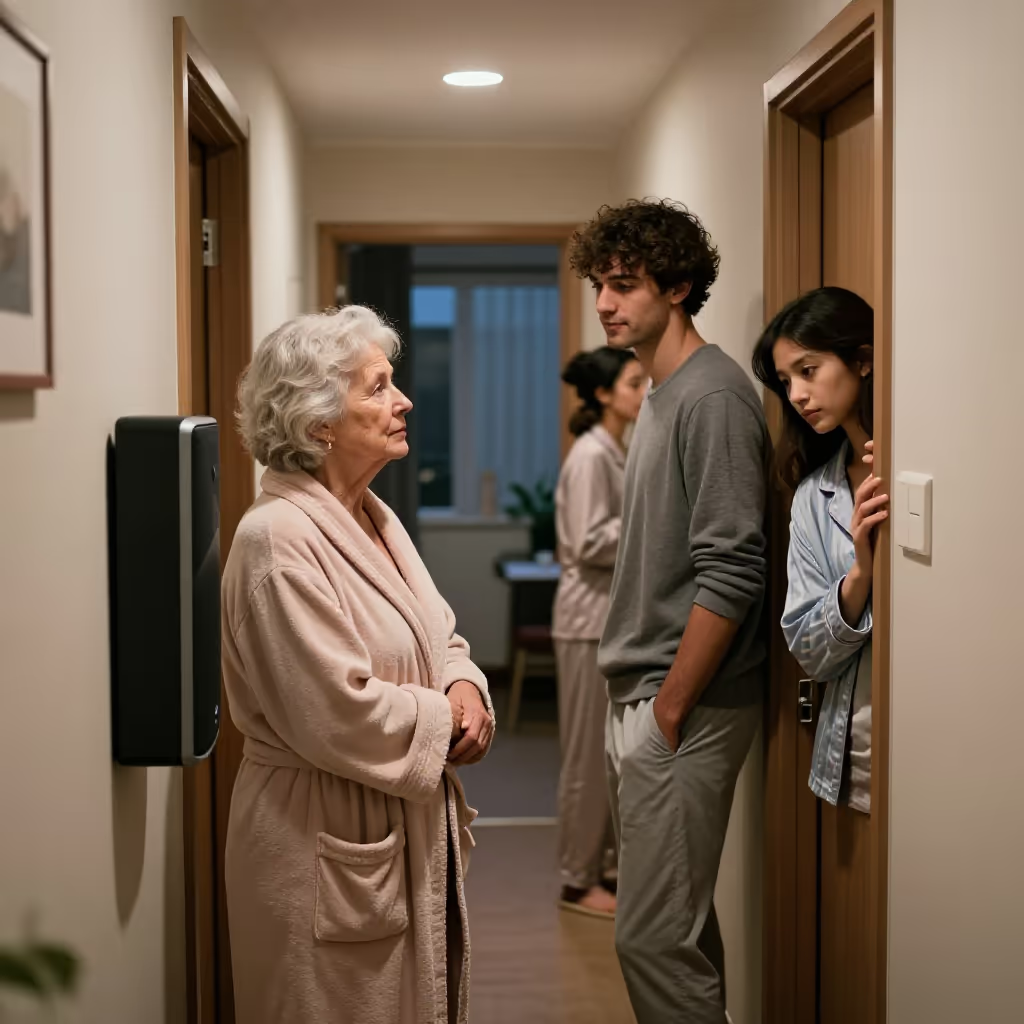
The time at night when noise should be avoided so as not to disturb residents' sleep. In many house rules and municipalities, it is often legally set between 10 p.m. and 6 a.m.
example
Bitte respektieren Sie die Nachtruhe und machen Sie nach 22 Uhr keine laute Musik mehr.
Please respect the quiet hours and do not play loud music after 10 p.m.
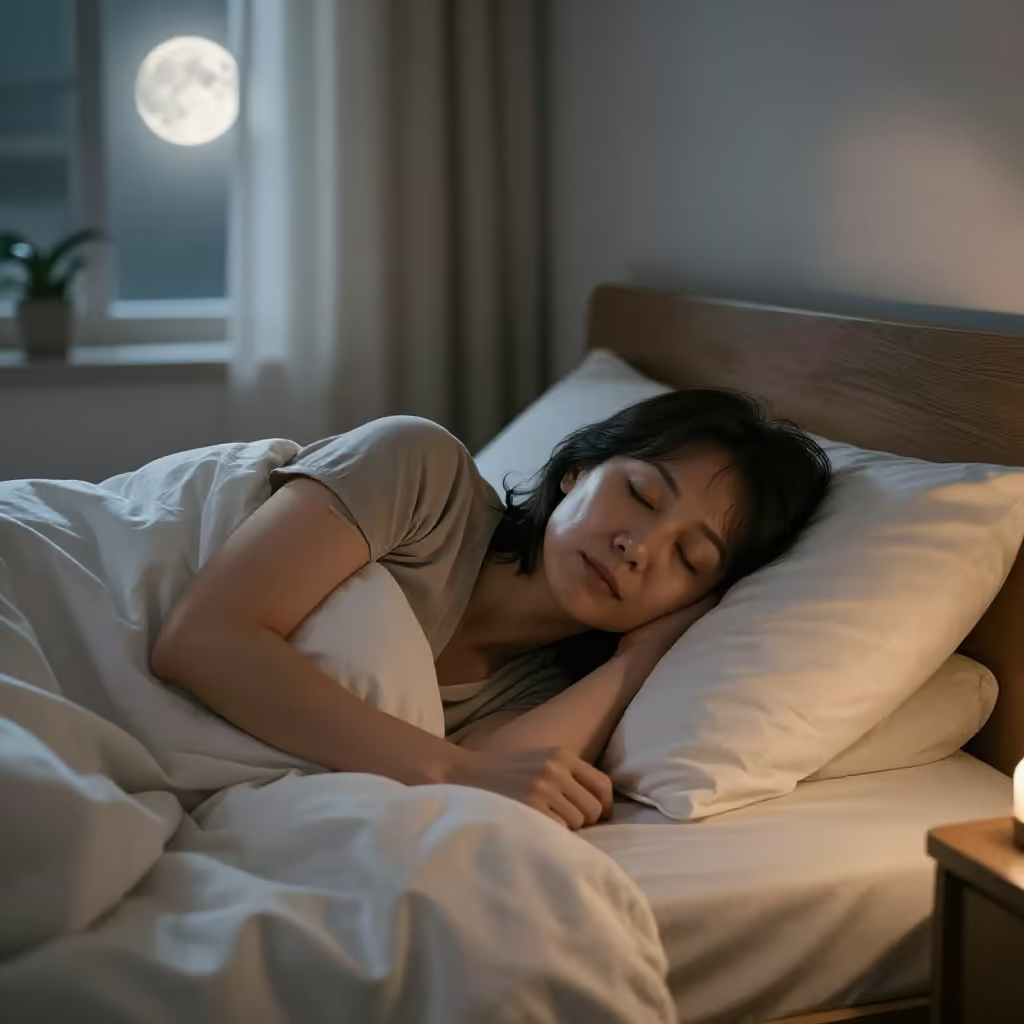
Usage tips
Word composition
The word is made up of 'Nacht' (night) and 'Ruhe' (quiet/rest). So it literally describes the quiet or silence that should prevail at night.
EXAMPLE
Die laute Party hat die Nachtruhe der gesamten Nachbarschaft gestört.
The loud party disturbed the quiet hours of the entire neighborhood.
Typical collocations
In the sense of the legally regulated quiet period, the word is often used with verbs such as 'stören' (to disturb), 'einhalten' (to observe/comply with), or 'respektieren' (to respect). It is often found in house rules or on official signs.
EXAMPLE
Die gesetzliche Nachtruhe beginnt um 22 Uhr.
The legal quiet hours begin at 10 p.m.
Register and style
In the meaning 'nächtlicher Schlaf' (nighttime sleep), 'Nachtruhe' (night's rest) is used more in elevated or slightly formal language. In normal everyday speech, you would usually simply say 'Schlaf' (sleep) or 'gut schlafen' (to sleep well).
EXAMPLE
Ein Glas warme Milch kann bei der Nachtruhe helfen.
A glass of warm milk can help with a good night's rest.
Context clue
If it is about rules, noise, and times (e.g., 10 p.m. to 6 a.m.), it refers to the legally defined quiet period. If it is about personal well-being or recovery, it refers to a person's sleep.
EXAMPLE
Ab 22 Uhr ist Nachtruhe auf dem Campingplatz.
From 10 p.m. onward, quiet hours apply at the campsite.
Compare with
near_synonym · confusable
Nachtruhe vs Schlaf
sleep
'der Schlaf' and 'die Nachtruhe' can both have to do with sleeping at night. 'Schlaf' is the general word for the state in which you are asleep. 'Nachtruhe' often means the quiet time at night when you should not make noise so that others can sleep. But it can also mean nighttime sleep itself. The words can be confused because both are connected with resting and nighttime. In practice: for the personal state, you usually say 'Schlaf'; for rules about noise or quiet hours, you are more likely to say 'Nachtruhe'.
Nachtruhe
Am Wochenende beginnt die Nachtruhe in unserem Haus um 22 Uhr.
On weekends, quiet hours in our building begin at 10 p.m.
Schlaf
Vor dem wichtigen Termin braucht die Chefin genug Schlaf.
Before the important appointment, the boss needs enough sleep.