

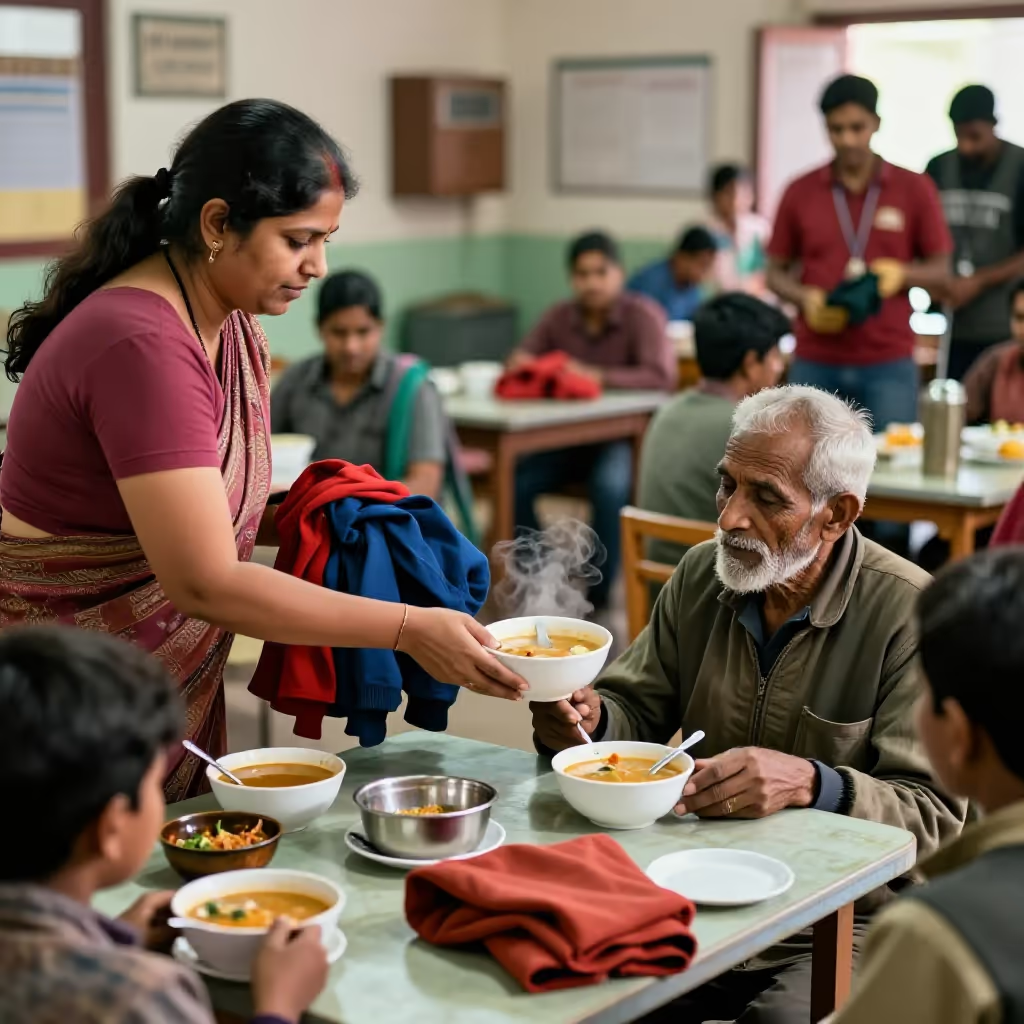
A selfless, active love and willingness to help other people, regardless of their relationship to oneself. It is a central concept in many religions and ethical systems.
example
Aus Nächstenliebe engagiert sie sich ehrenamtlich in der Obdachlosenhilfe.
Out of charity, she volunteers in homeless assistance.

Usage tips
Word composition
'Nächstenliebe' (charity / love of neighbor) is made up of 'der Nächste' (one's fellow human being) and 'die Liebe' (love). So it literally means 'love for one's fellow human being.'
EXAMPLE
Die Organisation handelt aus dem Prinzip der Nächstenliebe.
The organization acts according to the principle of charity.
Typical collocation
'Nächstenliebe' (charity) is very often used with the preposition 'aus' (out of) to indicate the reason for an action. The phrase is then 'aus Nächstenliebe handeln' (to act out of charity) or 'etwas aus Nächstenliebe tun' (to do something out of charity).
EXAMPLE
Er half dem Fremden aus reiner Nächstenliebe.
He helped the stranger out of pure charity.
Register and context
The word has a strong connection to religious and ethical topics, especially in Christianity. It describes an important moral principle of selfless help.
EXAMPLE
In seiner Predigt sprach der Pfarrer über die Bedeutung der Nächstenliebe.
In his sermon, the priest spoke about the importance of charity.
Compare with
near_synonym · confusable
Nächstenliebe vs Mitleid
pity / compassion
'Mitleid' and 'Nächstenliebe' can both have to do with looking kindly on people in need. 'Mitleid' is first of all a feeling: you see that someone is suffering, and you feel sorry for them. 'Nächstenliebe' goes further. It means an attitude in which you help other people selflessly, even if you do not know them. The word is often used in religious or ethical contexts. The words can be confused because help can arise from 'Mitleid'. But 'Mitleid' describes more the act of feeling compassion, while 'Nächstenliebe' describes more an active and fundamental willingness to help.
Nächstenliebe
Aus Nächstenliebe bringt Maria dem alten Mann jede Woche Einkäufe vorbei.
Out of charity, Maria brings groceries to the old man every week.
Mitleid
Simon hat Mitleid mit seinem Freund, der beim Arzt schlechte Nachrichten bekommen hat.
Simon feels pity for his friend, who received bad news at the doctor's office.