

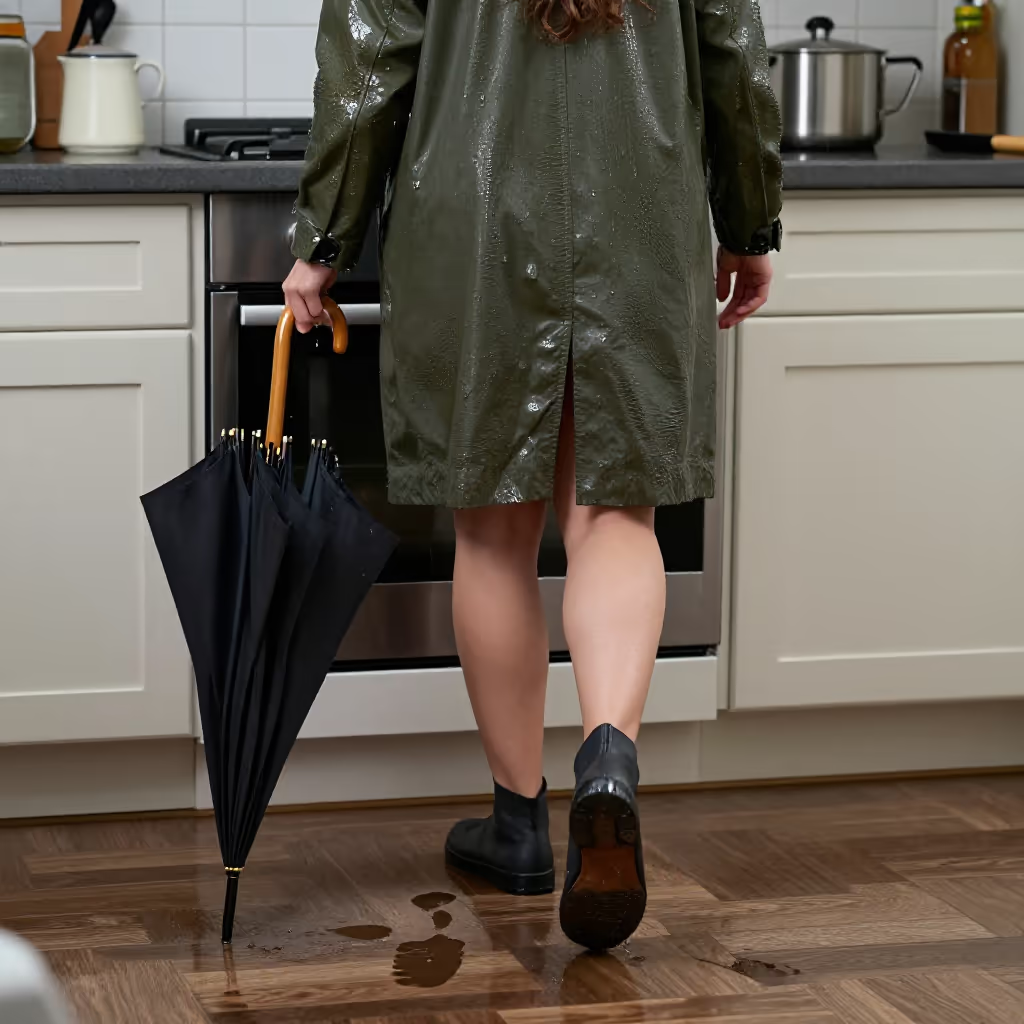
The state of being damp or wet; moisture. Often used to describe unpleasant wetness caused by rain, dew, or spilled liquids.
example
Wegen der Nässe auf der Straße müssen Autofahrer besonders vorsichtig sein.
Because of the wetness on the road, drivers need to be especially careful.
Usage tips
Word family
'Die Nässe' (wetness) is the noun formed from the adjective 'nass' (wet). Many nouns that describe a state are derived from adjectives in this way, for example 'kalt' (cold) → 'die Kälte' (the cold/coldness).
EXAMPLE
Zieh dir Gummistiefel an, damit du keine nassen Füße bekommst.
Put on rubber boots so you don't get wet feet.
Use in the singular
Since 'Nässe' (wetness) describes an uncountable state, the word is used almost exclusively in the singular.
EXAMPLE
Die Nässe zog langsam durch seine Schuhe.
The wetness slowly seeped through his shoes.
Negative emphasis
The word 'Nässe' (wetness) often has a negative connotation. It describes unpleasant moisture, for example from rain, dirt, or cold.
EXAMPLE
Ich mag den Herbst nicht wegen der ständigen Kälte und Nässe.
I don't like autumn because of the constant cold and wetness.
Typical collocations
Common expressions are 'sich vor Nässe schützen' (to protect oneself from wetness), 'empfindlich gegen Nässe sein' (to be sensitive to dampness), or the warning about 'Nässe auf der Fahrbahn' (wetness on the roadway).
EXAMPLE
Diese Jacke bietet guten Schutz vor Wind und Nässe.
This jacket offers good protection against wind and wetness.
Compare with
near_synonym · confusable
Nässe vs Feuchtigkeit
moisture
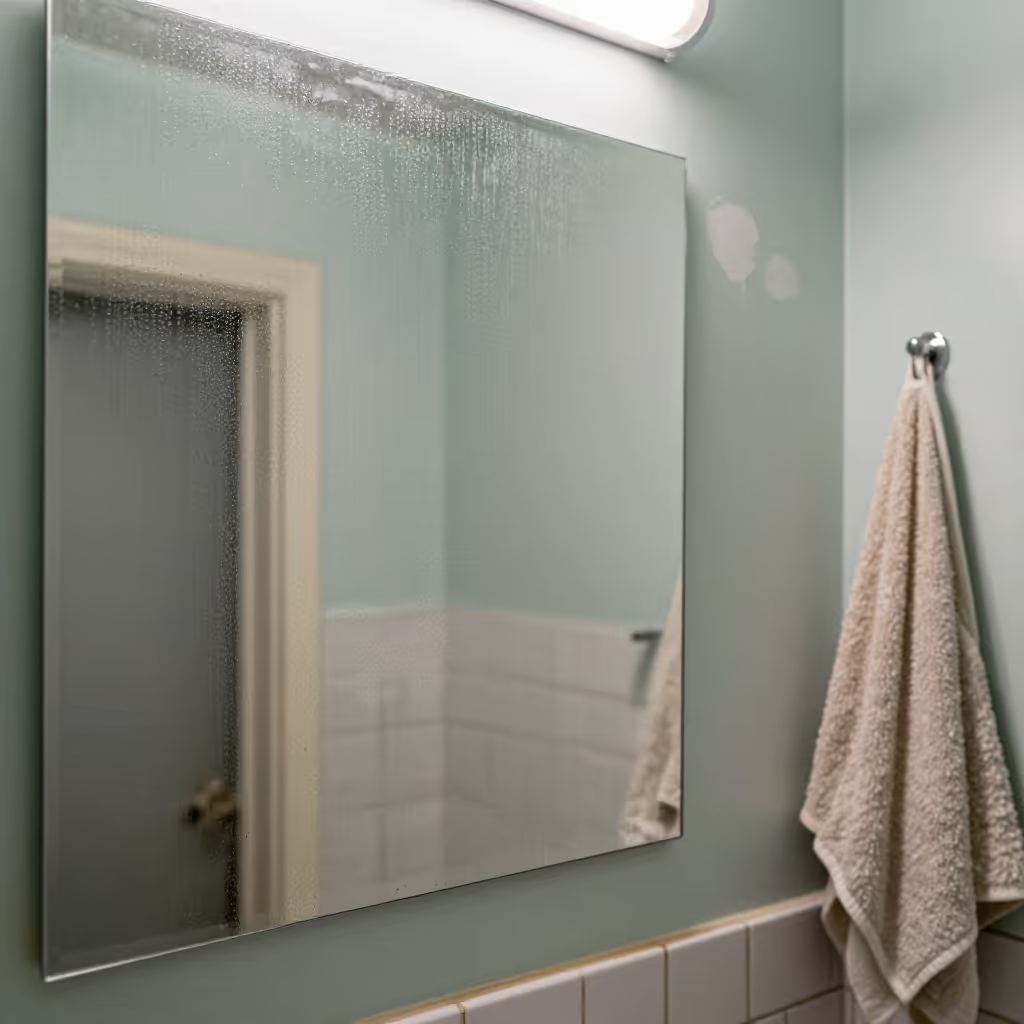
'die Feuchtigkeit' and 'die Nässe' both mean that water or liquid is present. 'Feuchtigkeit' often sounds lighter and more neutral: something is damp, the air is humid, or a wall contains some water. 'Nässe' feels stronger and more concrete; you are more likely to think of rain, wet clothes, puddles, or an unpleasantly wet surface. The words can be confused because both mean not completely dry. As a guide: a small or general amount of water is more likely 'Feuchtigkeit'; clearly wet and often unpleasant is more likely 'Nässe'.
Nässe
Nach dem Spaziergang stellte Anna die Schuhe wegen der Nässe vor die Tür.
After the walk, Anna put the shoes outside the door because of the wetness.
Feuchtigkeit
Im Schrank riecht es nach Feuchtigkeit, obwohl nichts richtig nass ist.
The cupboard smells of moisture, even though nothing is actually wet.