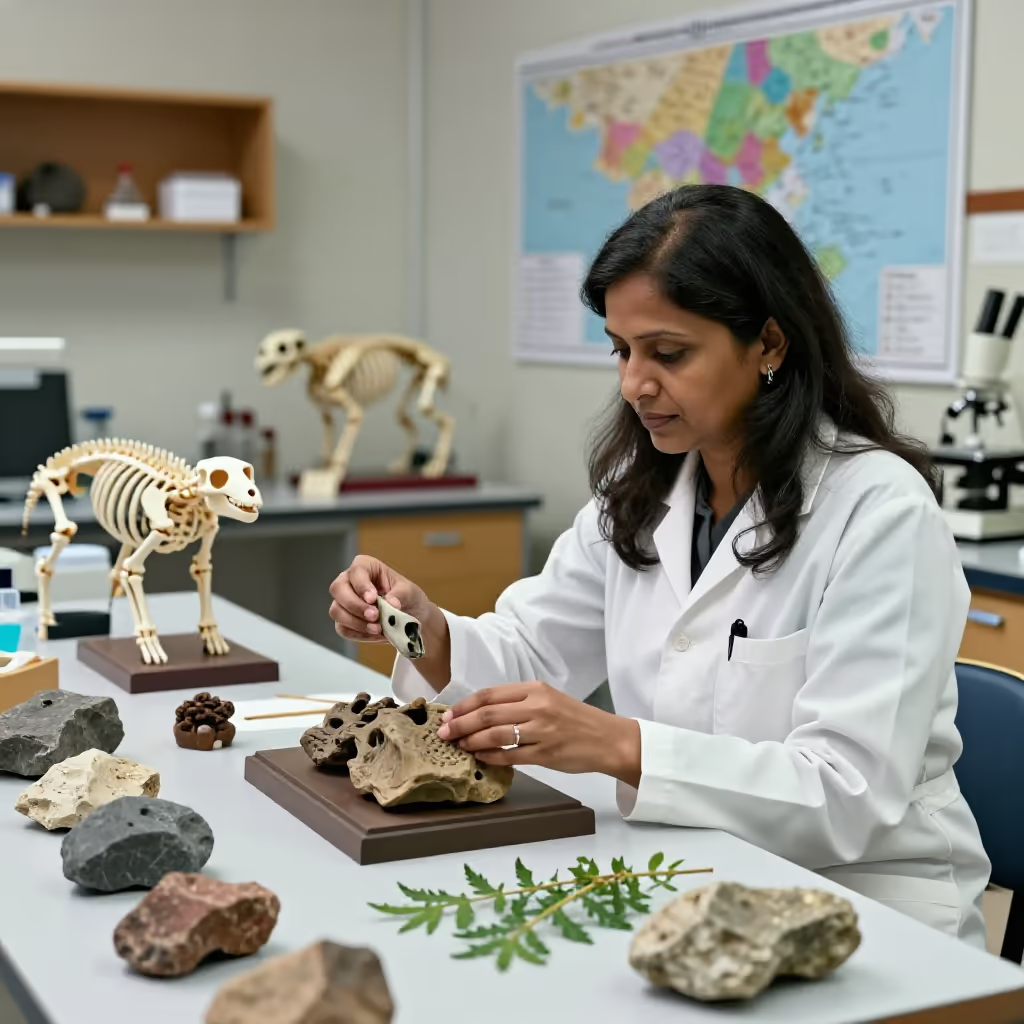
The scientific discipline concerned with the origin and development of nature, including geology, flora, and fauna.
example
Das Museum für Naturgeschichte hat eine beeindruckende Sammlung von Dinosaurierskeletten.
The Museum of Natural History has an impressive collection of dinosaur skeletons.

Usage tips
Compound word
The word is made up of 'die Natur' (nature) and 'die Geschichte' (history/story). Depending on the context, it can mean the 'history of nature' (scientific) or a long 'Geschichte/Erzählung' (story/narrative) in colloquial speech.
EXAMPLE
Die Entstehung der Arten ist ein zentrales Thema der Naturgeschichte.
The origin of species is a central topic of natural history.
Typical expression
In its scientific meaning, the word is very often part of the name 'Museum für Naturgeschichte' (Museum of Natural History). This combination is a fixed expression.
EXAMPLE
Das Museum für Naturgeschichte in Wien ist weltberühmt.
The Museum of Natural History in Vienna is world-famous.
Context clue
You can often recognize the colloquial meaning from the word 'ganze' ('die ganze Naturgeschichte' - the whole story). This refers to a long and complicated personal story, usually with a slightly annoyed or humorous undertone.
EXAMPLE
Ich wollte nur wissen, ob der Bus pünktlich war, und er erzählte mir die ganze Naturgeschichte seiner Fahrt.
I only wanted to know whether the bus was on time, and he told me the whole story of his journey.
Register and style
This meaning of 'Naturgeschichte' (whole story) is purely colloquial. It is used in informal conversations to describe a story as overly long and detailed.
EXAMPLE
Bitte erspar mir die Naturgeschichte, sag einfach, was passiert ist!
Please spare me the whole story; just tell me what happened!
Compare with
near_synonym · confusable
Naturgeschichte vs Geschichte
story / history
'die Geschichte' and 'die Naturgeschichte' can both talk about developments in the past. 'die Geschichte' is much more general and often means the past of people, countries, or events. 'die Naturgeschichte' is more specific: it deals with the development of nature, for example animals, plants, or rocks. Colloquially, 'Naturgeschichte' can also jokingly mean a very long and complicated matter. In that case, it sounds stronger and more ironic than 'Geschichte'. The words can be confused because both contain 'Geschichte', but 'Naturgeschichte' only fits in certain contexts.
Naturgeschichte
Nach der Arbeit erzählt sie wieder eine ganze Naturgeschichte, nur weil der Termin verschoben wurde.
After work, she tells another whole long story, just because the appointment was postponed.
Geschichte
Mein Nachbar interessiert sich sehr für die Geschichte unserer Stadt.
My neighbor is very interested in the history of our city.