

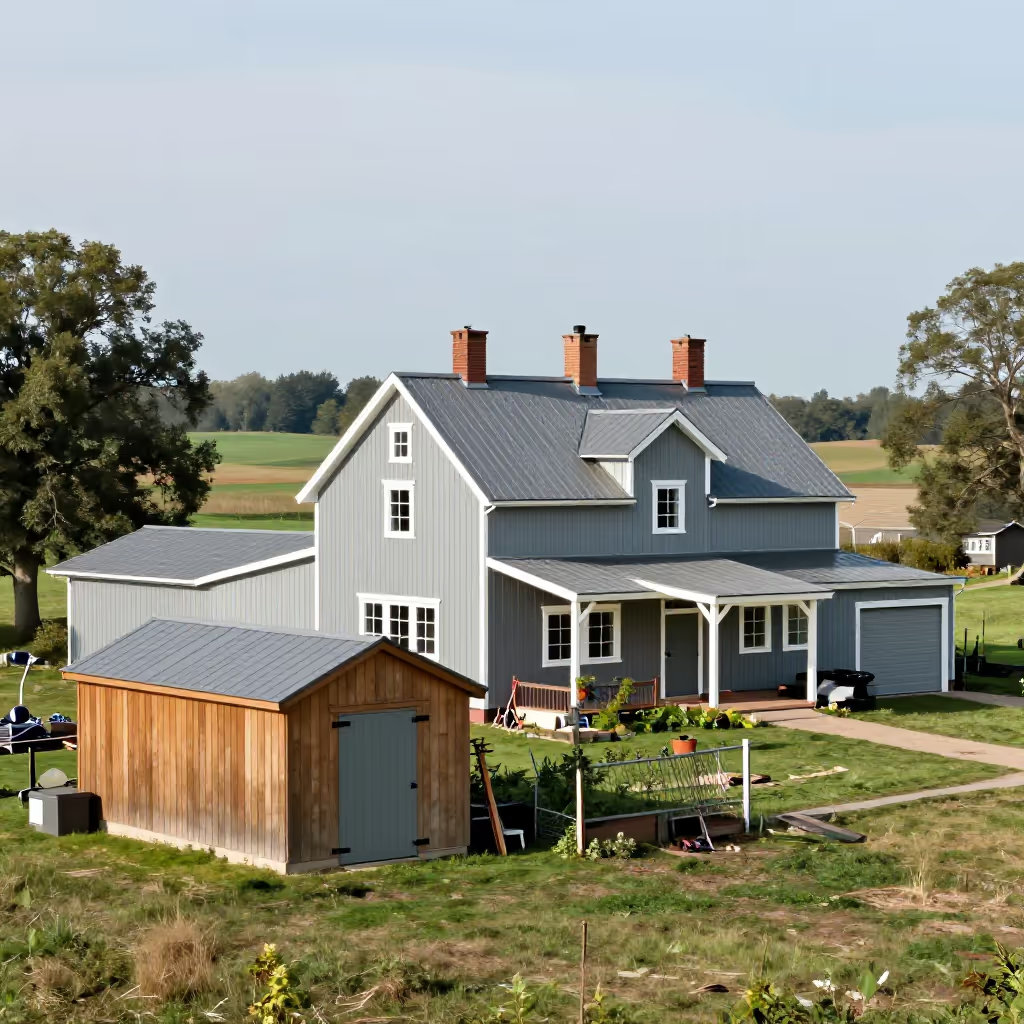
A building located on the same property as a larger main building and subordinate to it, such as a garage, shed, or garden house.
example
Die Werkstatt ist in einem separaten Nebengebäude untergebracht.
The workshop is housed in a separate outbuilding.
Usage tips
Word composition
The word is made up of 'neben' (beside/next to) and 'Gebäude' (building). So it literally describes a building that stands next to another, more important building.
EXAMPLE
Hinter dem Haus gibt es ein kleines Nebengebäude, das als Werkstatt dient.
Behind the house there is a small outbuilding that serves as a workshop.
The prefix 'Neben-'
The prefix 'Neben-' expresses that something is subordinate or additional. An 'Nebengebäude' (outbuilding) therefore always exists in relation to a main building.
EXAMPLE
Das Anwesen besteht aus einem Haupt- und zwei Nebengebäuden.
The estate consists of one main building and two outbuildings.
Typical preposition
To describe the location, the preposition 'in' with the dative is almost always used: 'im Nebengebäude' (in the outbuilding).
EXAMPLE
Die Gästezimmer sind im Nebengebäude untergebracht.
The guest rooms are housed in the outbuilding.
Compare with
near_synonym · confusable
Nebengebäude vs Anbau
cultivation / extension
'der Anbau' and 'das Nebengebäude' both have to do with buildings next to or near a main building. The most important difference is: an 'Anbau' is directly connected to the main building and was added later. A 'Nebengebäude' stands on the same property, but is a separate building, for example a garage or a shed. The words can be confused because both create additional space. A simple rule is: if it is attached to the house, it is an 'Anbau'; if it stands separately next to it, it is a 'Nebengebäude'.
Nebengebäude
Die Fahrräder stehen im Nebengebäude hinter dem Haus.
The bicycles are in the outbuilding behind the house.
Anbau
Im Anbau hat die Familie eine kleine Küche eingerichtet.
The family has set up a small kitchen in the extension.