

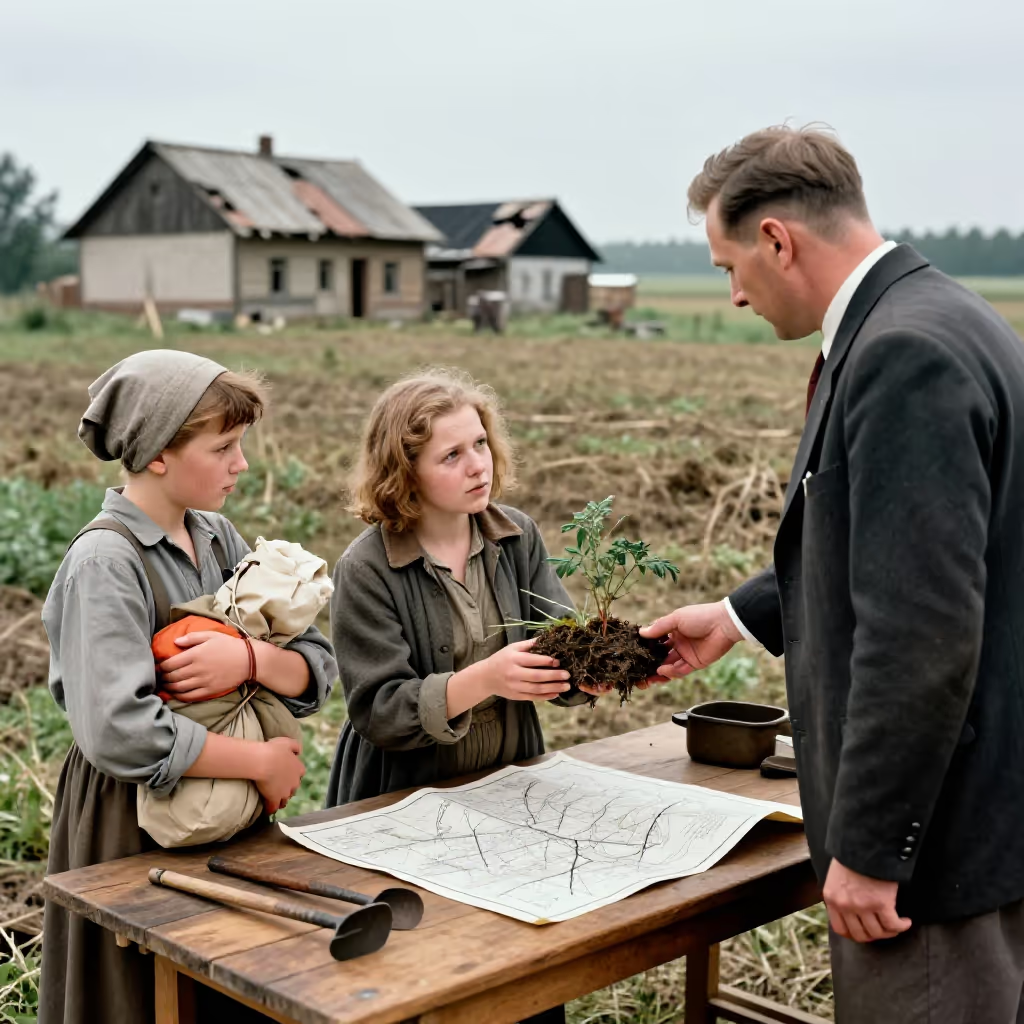
A person, usually a refugee or displaced person, who received land to cultivate after 1945 as part of the land reform in the Soviet Occupation Zone and later in East Germany.
example
Als Neubauer bekam sein Großvater nach dem Krieg ein kleines Stück Land zugewiesen.
As a new farmer, his grandfather was allocated a small piece of land after the war.
Usage tips
Compound structure
The word is made up of 'neu' (new) and 'Bauer'. Depending on the context, 'Bauer' can mean a person who farms land or a person who builds something.
EXAMPLE
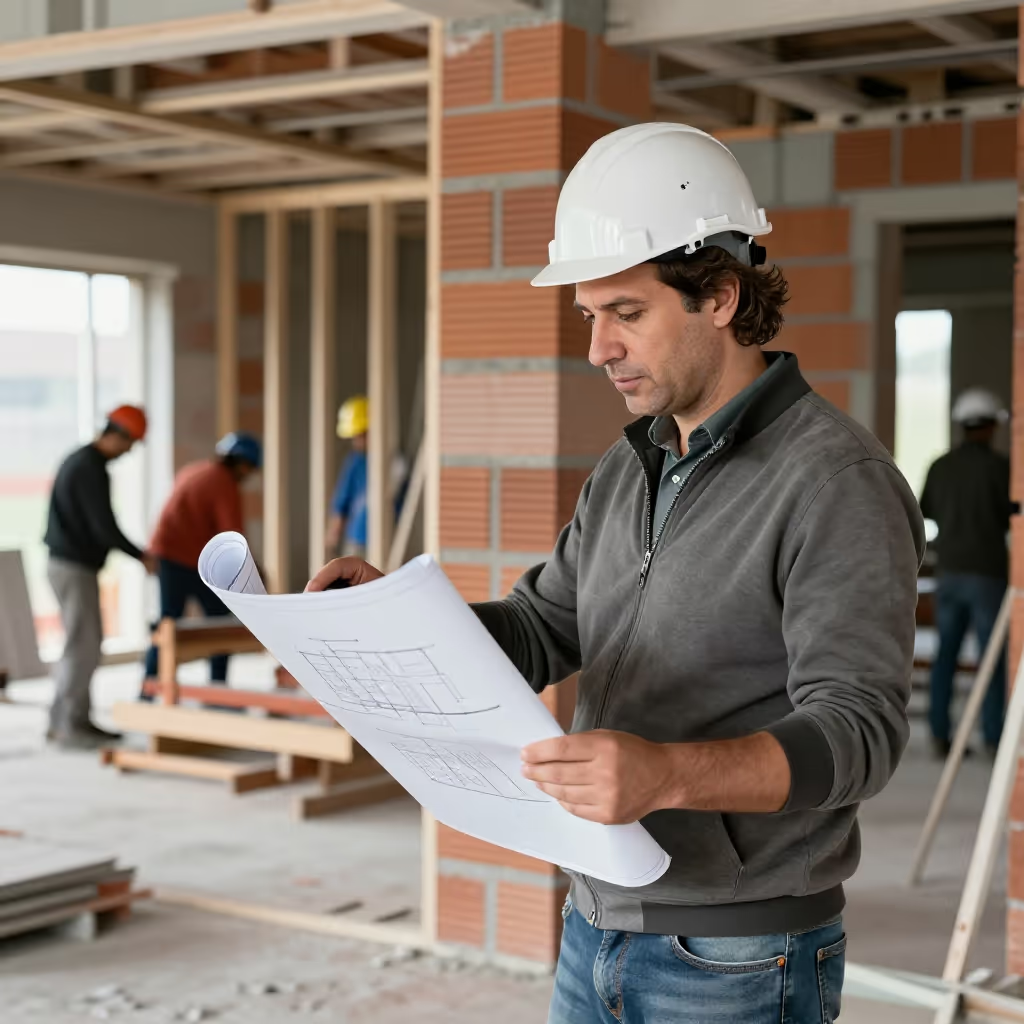
Der Neubauer hofft, dass sein Haus bald fertig ist.
The home builder hopes that his house will be finished soon.
Context clue
You can tell which meaning is intended from the topic. If people are talking about the period after 1945, East Germany, or agriculture, the historical farmer is meant. If it is about house construction or architecture, the person building a house is meant.
EXAMPLE
Sein Großvater war Neubauer in Mecklenburg und bekam damals Land.
His grandfather was a new farmer in Mecklenburg and received land at the time.
Historical term
This meaning is a fixed historical term referring to the land reform in the Soviet Occupation Zone and East Germany. It is used almost exclusively in this historical context.
EXAMPLE
Viele Neubauern waren Flüchtlinge aus den ehemaligen deutschen Ostgebieten.
Many new farmers were refugees from the former eastern German territories.
Typical collocations
When referring to a person who is building a house, the word is often connected with typical house-building activities. These include 'das Richtfest feiern' (to celebrate the topping-out ceremony), 'den Grundriss planen' (to plan the floor plan), or 'eine Hypothek aufnehmen' (to take out a mortgage).
EXAMPLE
Die Neubauer feiern heute mit Freunden und Familie das Richtfest.
The home builders are celebrating the topping-out ceremony with friends and family today.
Compare with
near_synonym · confusable
Neubauer vs Bauer
farmer / pawn
'der Bauer' and 'der Neubauer' can both mean a person who cultivates land. 'Bauer' is the normal general word for a farmer. 'Neubauer' is much more specific: it usually refers to a person who received land in eastern Germany after 1945 and cultivated it. That is why 'Neubauer' is mainly used in historical texts. Learners might confuse the words because 'Neu-' sounds as if it simply means a new farmer. In everyday German today, however, you would normally not say 'Neubauer' for that, but 'neuer Bauer' or simply 'Bauer'.
Neubauer
Im Geschichtsbuch steht, wie ein Neubauer nach dem Krieg ein kleines Stück Land erhielt.
The history book describes how a new farmer received a small piece of land after the war.
Bauer
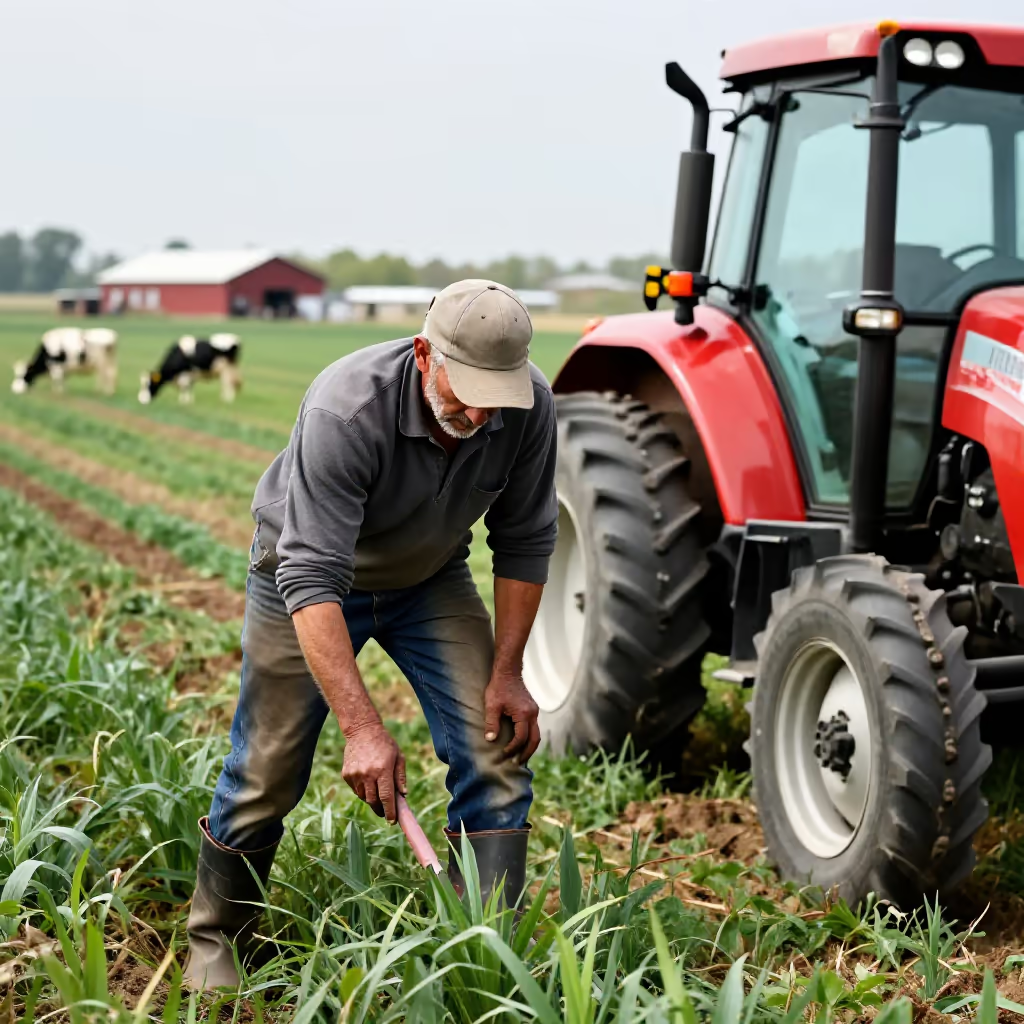
Ein Bauer aus dem Dorf verkauft Kartoffeln direkt vom Hof.
A farmer from the village sells potatoes directly from the farm.