

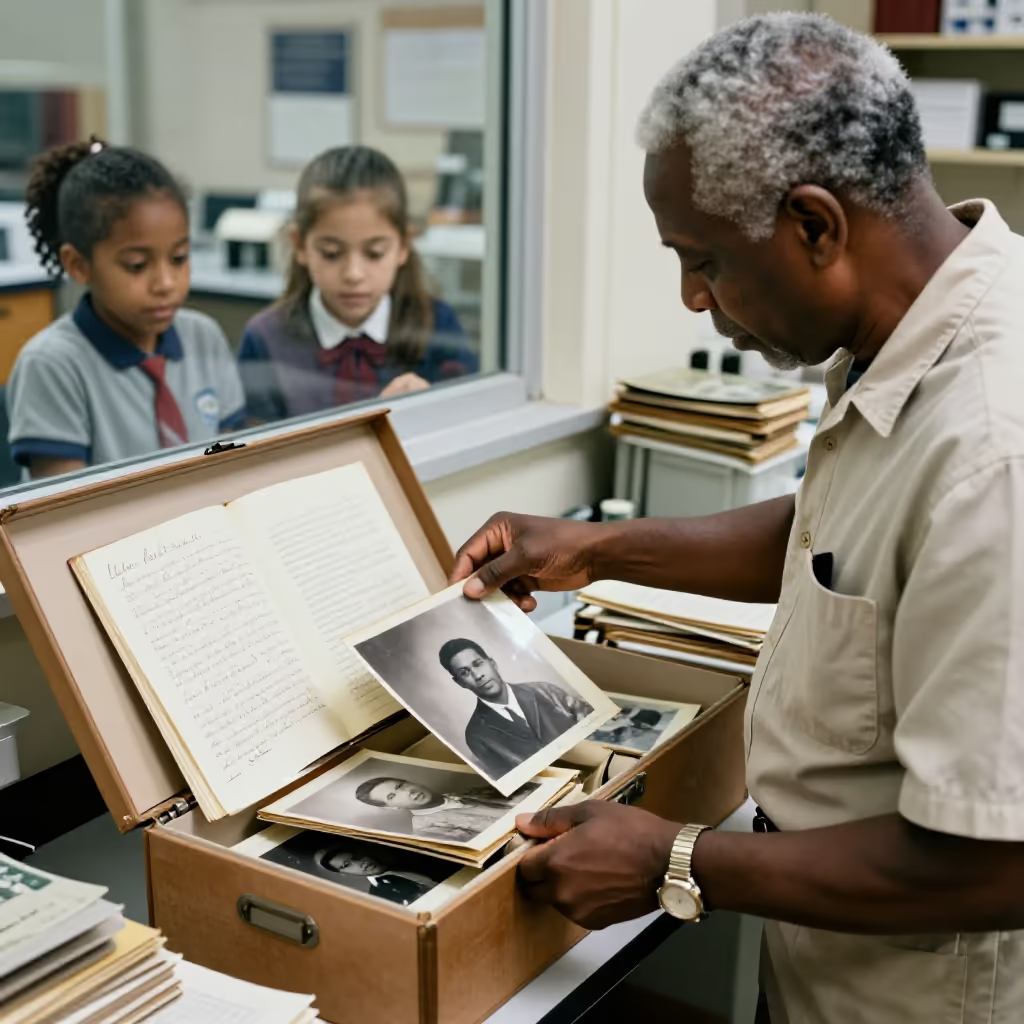
All the people who will live in the future; later generations. Often something is preserved or documented for posterity.
example
Der Künstler hoffte, dass seine Werke der Nachwelt erhalten bleiben.
The artist hoped that his works would be preserved for posterity.

Usage tips
Compound structure
The word is made up of 'nach' (later in time) and 'Welt' (world). So it literally describes the 'world that comes after us' or the entirety of future generations.
EXAMPLE
Historiker versuchen, wichtige Ereignisse für die Nachwelt festzuhalten.
Historians try to record important events for posterity.
Usage in a sentence
'Nachwelt' (posterity) is almost always used in the singular and with the definite article 'die'. It describes the entirety of future generations as a single, collective concept.
EXAMPLE
Manche Entscheidungen werden erst von der Nachwelt wirklich beurteilt.
Some decisions are only truly judged by posterity.
Typical collocations
'Nachwelt' (posterity) is often used in fixed expressions. Typical phrases are 'etwas für die Nachwelt erhalten' (to preserve something for posterity), 'etwas der Nachwelt hinterlassen' (to leave something to posterity), or 'etwas für die Nachwelt aufzeichnen' (to record something for posterity).
EXAMPLE
Der Dichter wollte seine Gedichte der Nachwelt hinterlassen.
The poet wanted to leave his poems to posterity.
Compare with
confusable
Nachwelt vs Zukunft
future
'die Zukunft' and 'die Nachwelt' both refer to a time that is still to come. 'Zukunft' means the coming time in general, or the later possibilities of a person or thing. 'Nachwelt' does not mean the time itself, but the people who will live later. The words can be confusing because both lie after the present. When you are talking about plans, opportunities, or coming events, 'Zukunft' fits. When it is about later generations, for example remembrance or preservation, 'Nachwelt' fits.
Nachwelt
Die alten Briefe werden im Museum aufbewahrt, damit die Nachwelt sie lesen kann.
The old letters are kept in the museum so that posterity can read them.
Zukunft
Nach der Ausbildung denkt Lena viel über ihre berufliche Zukunft nach.
After her vocational training, Lena thinks a lot about her professional future.