

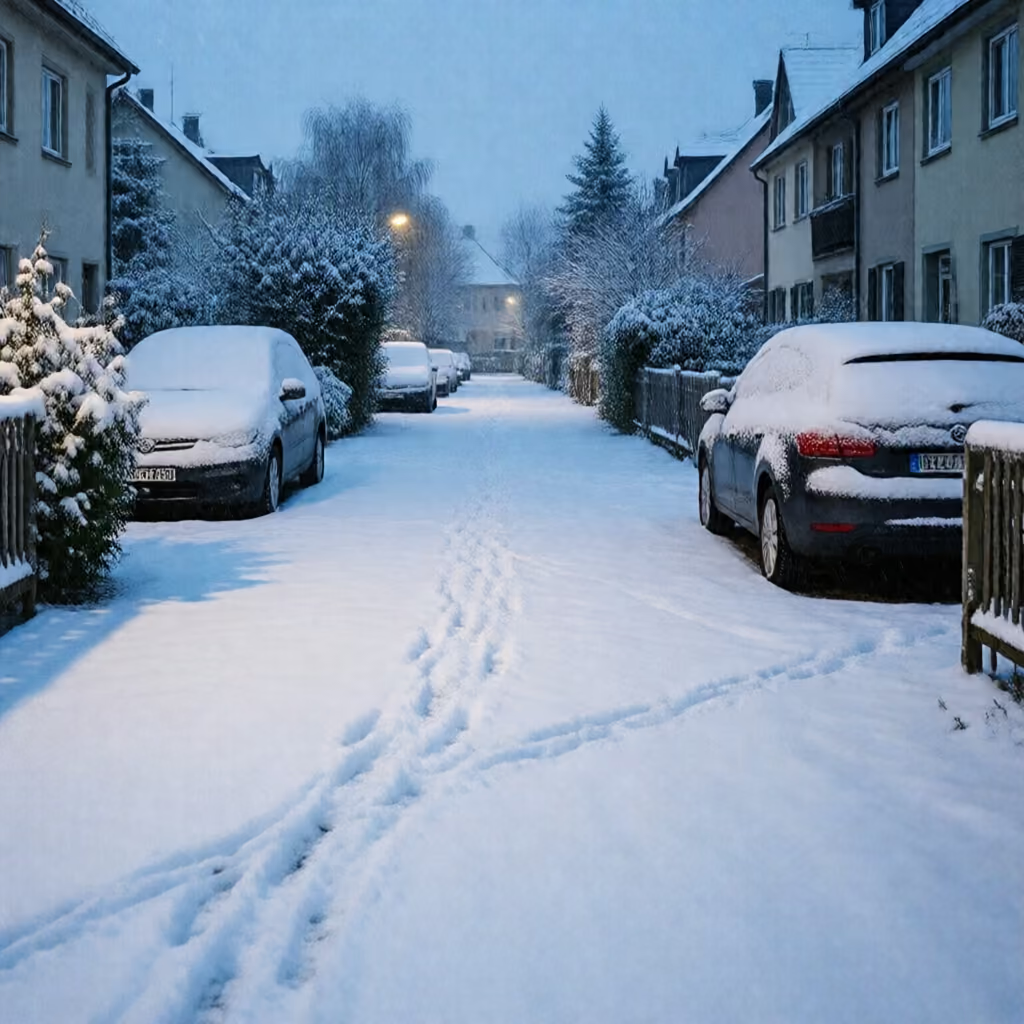
der Neuschnee
fresh snow
Snow that has fallen recently and may still be fresh and untouched.
EXAMPLE
Der Neuschnee bedeckte am Morgen die ganze Straße.
The fresh snow covered the entire street in the morning.
fresh snow
der Neuschnee
Loading your saved state.
fresh snow
Snow that has fallen recently and may still be fresh and untouched.
Der Neuschnee bedeckte am Morgen die ganze Straße.
The fresh snow covered the entire street in the morning.
| gender | masculine der |
|---|---|
| genitive | des Neuschnees |
| singular | plural | |
|---|---|---|
| nominative | der Neuschnee | – |
| accusative | den Neuschnee | – |
| dative | dem Neuschnee | – |
| genitive | des Neuschnees | – |
The article changes with the case; it is shown in colour.
'Neuschnee' (fresh snow) is made up of 'neu' (new) and 'Schnee' (snow). It therefore refers to snow that has recently fallen; 'neu' describes the current state of the snow here.
Nach dem starken Wind war vom Neuschnee kaum noch etwas zu sehen.
After the strong winds, there was hardly any fresh snow left to be seen.
'Neuschnee' (fresh snow) is often used with verbs such as 'fallen' (to fall), 'liegen' (to lie), 'schmelzen' (to melt), and 'räumen' (to clear). The phrase 'frischer Neuschnee' (freshly fallen snow) is also common.
In der Nacht ist so viel Neuschnee gefallen, dass die Straßen gesperrt wurden.
So much fresh snow fell overnight that the roads were closed.
'Neuschnee' (fresh snow) is used particularly often in weather reports and winter sports. In these contexts, the word often describes conditions on ski slopes, trails, or mountains.
Wegen des vielen Neuschnees herrschen heute gute Bedingungen für Skifahrer.
There are good conditions for skiers today thanks to all the fresh snow.