

nicken
to nod
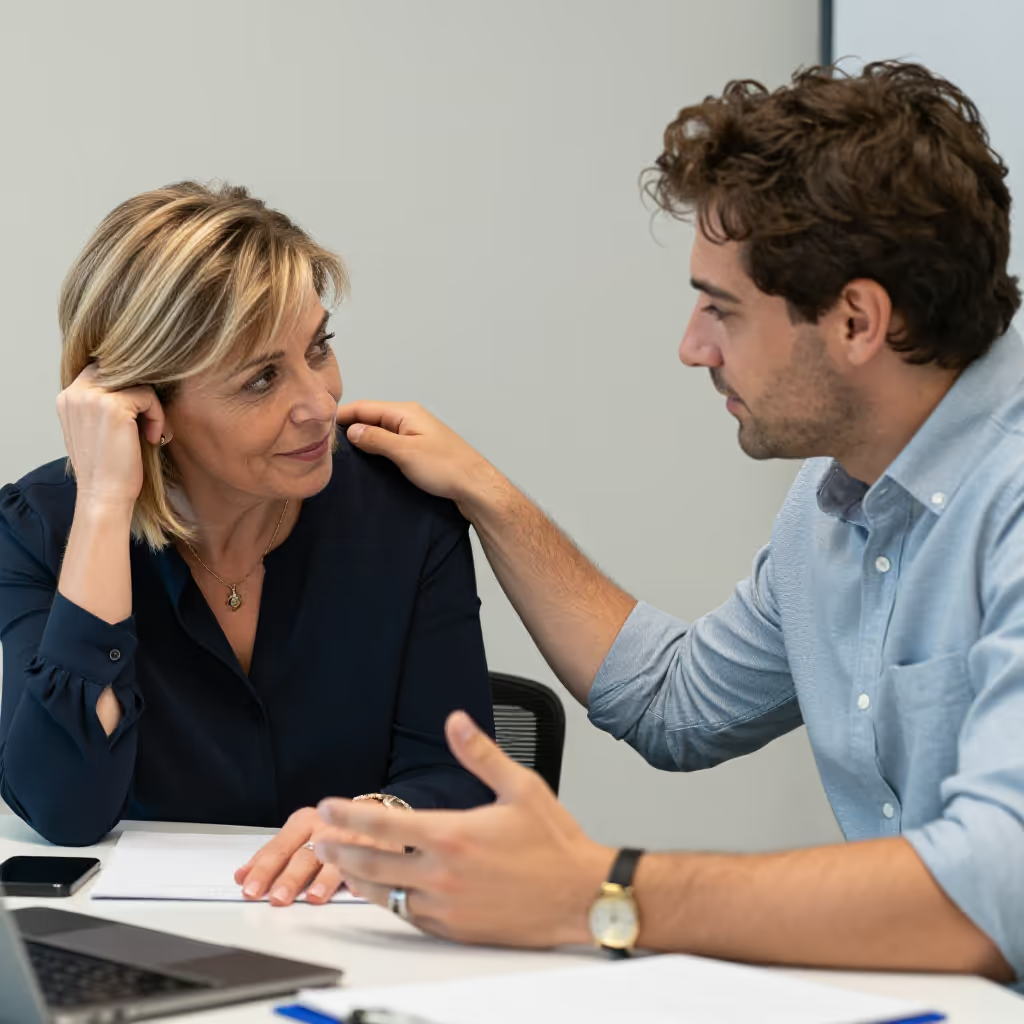
To briefly lower and raise the head, usually as a sign of agreement, greeting, or understanding.
Auf meine Frage, ob alles in Ordnung sei, nickte sie nur stumm.
When I asked whether everything was all right, she only nodded silently.


to nod
Loading your saved state.
to nod
To briefly lower and raise the head, usually as a sign of agreement, greeting, or understanding.
Auf meine Frage, ob alles in Ordnung sei, nickte sie nur stumm.
When I asked whether everything was all right, she only nodded silently.

Although 'nicken' (to nod) describes a movement, the perfect tense is always formed with the auxiliary verb 'haben' (to have), not with 'sein' (to be).
Er hat zur Begrüßung freundlich genickt.
He nodded kindly in greeting.
To express that you nod to a specific person (as a greeting or sign), you can combine the verb with 'zu': 'jemandem zunicken' (to nod to someone). The 'zu' is attached to the verb and emphasizes the direction.
Als sie den Raum betrat, nickte sie ihrem Kollegen kurz zu.
When she entered the room, she gave her colleague a brief nod.
To describe the manner of nodding, the verb is often combined with adverbs. Typical phrases are 'zustimmend nicken' (to nod in agreement), 'ermutigend nicken' (to nod encouragingly), or 'stumm nicken' (to nod silently).
Der Lehrer nickte zustimmend, als die Schülerin die richtige Antwort gab.
The teacher nodded in agreement when the student gave the correct answer.
When 'nicken' (to nod) means to point something out, the verb needs a preposition with a direction. Common phrases are 'in Richtung … nicken' (to nod in the direction of …) or 'zum/zur … nicken' (to nod toward the …).
Er sagte nichts, sondern nickte nur in Richtung der offenen Tür.
He said nothing, but only nodded toward the open door.
The meaning 'to let one's head sink from tiredness' can be recognized from context. Typical situations are long lectures, journeys, or sitting in front of the TV late in the evening.
Am Ende des langen Arbeitstages nickte sie vor dem Computer immer wieder.
At the end of the long workday, she kept nodding off in front of the computer.
to point out / indicate
'hinweisen' and 'nicken' can both mean that you draw attention to something. 'hinweisen' is more general: you can 'hinweisen' to something with words, with your hand, or with a signal. 'nicken' describes only a movement of the head. It can point to a person or a direction, but it often also means agreement. That is why learners may confuse the words. If the type of signal does not matter, or if someone is speaking, 'hinweisen' fits better. If the head movement is important, 'nicken' is more precise.

Der Fahrer nickte kurz zum Ausgang, weil wir dort aussteigen sollten.
The driver nodded briefly toward the exit because we were supposed to get off there.
Der Verkäufer weist mit der Hand auf das Schild neben der Tür hin.
The salesperson points with his hand to the sign next to the door.