abbrennen
to burn down
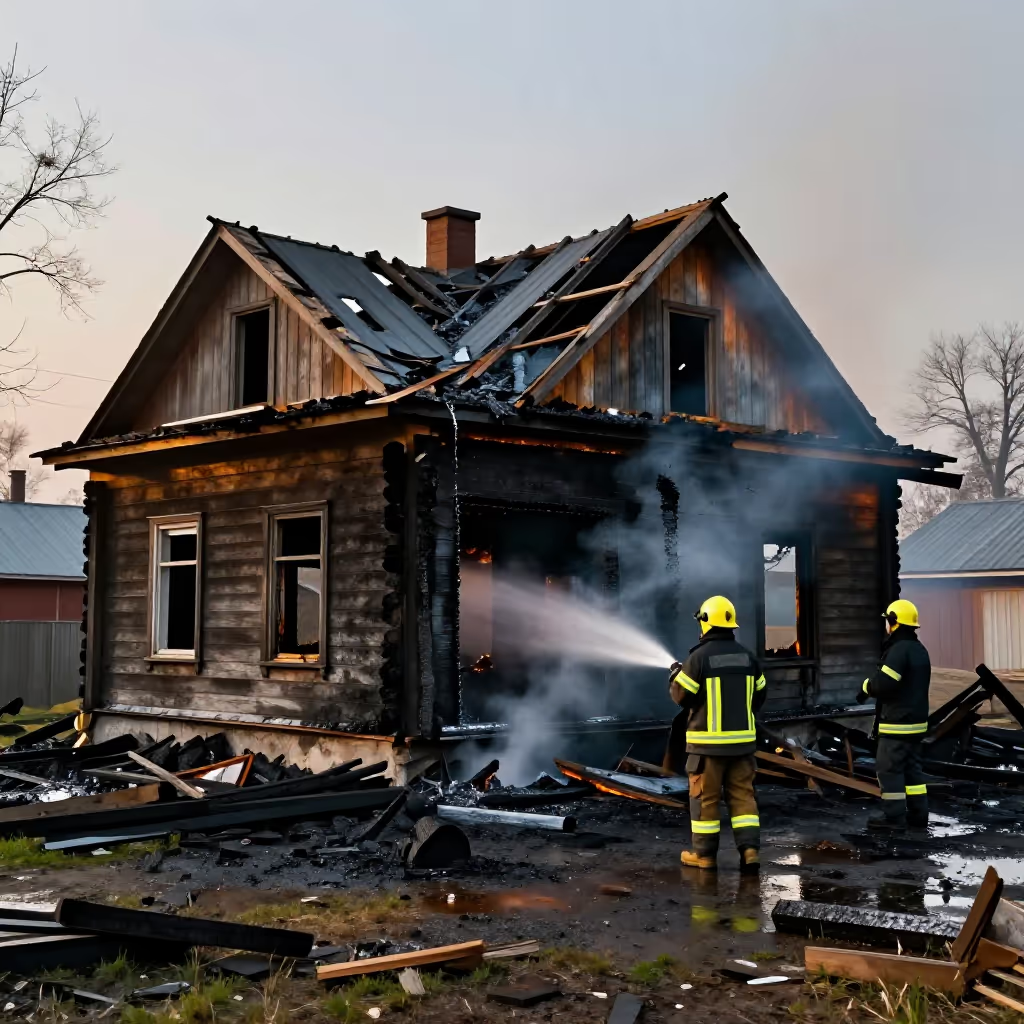
To be completely destroyed by fire; to burn down to the foundations. Usually used for buildings or forests.
Bei dem Großbrand ist die Lagerhalle vollständig abgebrannt.
In the major fire, the warehouse burned down completely.


to burn down / set off
Loading your saved state.
to burn down
To be completely destroyed by fire; to burn down to the foundations. Usually used for buildings or forests.
Bei dem Großbrand ist die Lagerhalle vollständig abgebrannt.
In the major fire, the warehouse burned down completely.
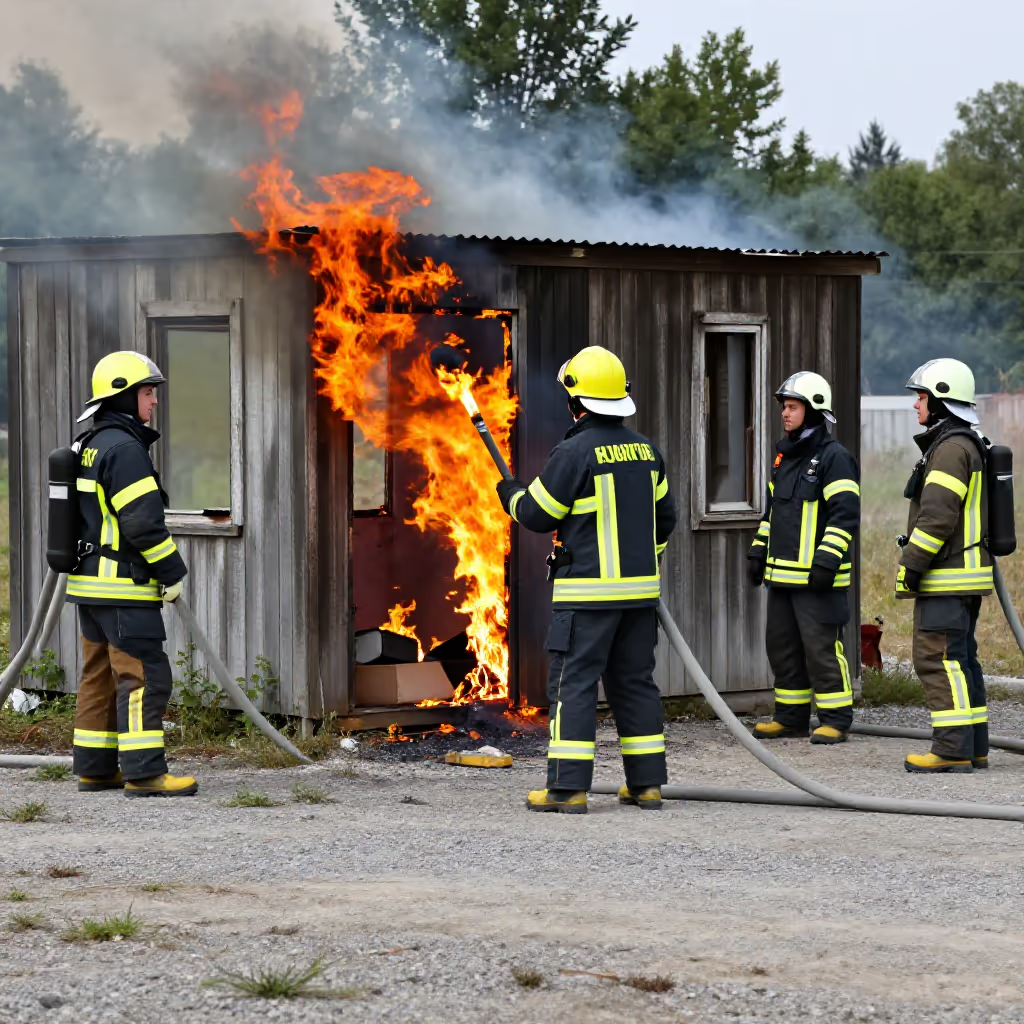
'Abbrennen' is a separable verb. The prefix 'ab-' stands at the end in a main clause, remains connected to the verb in a subordinate clause, and in the infinitive with 'zu', 'zu' is placed in the middle.
Die alte Fabrik brannte letzte Nacht komplett ab.
The old factory burned down completely last night.
The auxiliary verb in the perfect tense depends on the meaning. When something burns by itself (meaning 1), you use 'sein'. When someone actively lights something (meanings 2 and 4), you use 'haben'.
Die Scheune ist leider vollständig abgebrannt.
Unfortunately, the barn burned down completely.
When something burns down on its own, it is the subject of the sentence. When a person deliberately burns something down, that person is the subject and the thing that burns is the accusative object.
Der ganze Wald brannte ab.
The whole forest burned down.
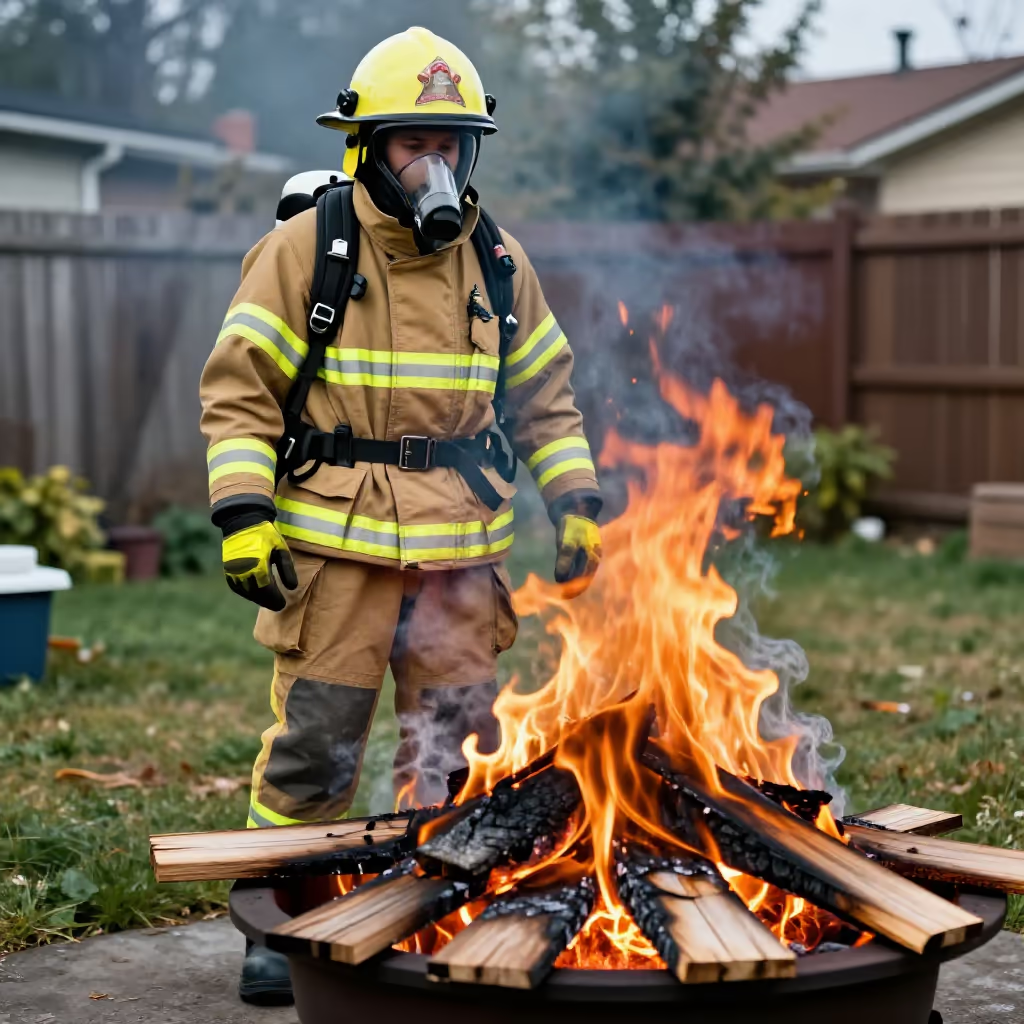
In the meaning of 'zünden' (to ignite/set off), 'abbrennen' is used almost exclusively with fireworks. Typical combinations are 'ein Feuerwerk abbrennen' (to set off fireworks), 'eine Rakete abbrennen' (to set off a rocket), or 'einen Böller abbrennen' (to set off a firecracker).
Bitte brennen Sie das Feuerwerk nur an einem sicheren Ort ab.
Please set off the fireworks only in a safe place.
The form 'abgebrannt sein' (to be broke) is a very common colloquial expression. It means that you currently have no money left at all.
Ich würde gerne mit ins Kino kommen, aber ich bin am Ende des Monats immer total abgebrannt.
I would like to come to the movies, but at the end of the month I'm always totally broke.
to burn
'brennen' and 'abbrennen' both have to do with fire. 'brennen' generally says that something is in flames or is being damaged by fire. 'abbrennen' is stronger and often means that something is completely or almost completely destroyed by fire. You can say: 'Ein Haus brennt' (a house is burning) while the fire is still there. If afterward almost nothing is left, 'abbrennen' fits better. Learners may confuse the words because both describe a fire. The important point is: 'brennen' describes the state, while 'abbrennen' often describes the complete result or a deliberate destruction by fire.

Nach dem großen Feuer ist die alte Scheune fast vollständig abgebrannt.
After the big fire, the old barn has burned down almost completely.
In der Küche brennt ein Topflappen, und Anna ruft sofort Hilfe.
A pot holder is burning in the kitchen, and Anna immediately calls for help.