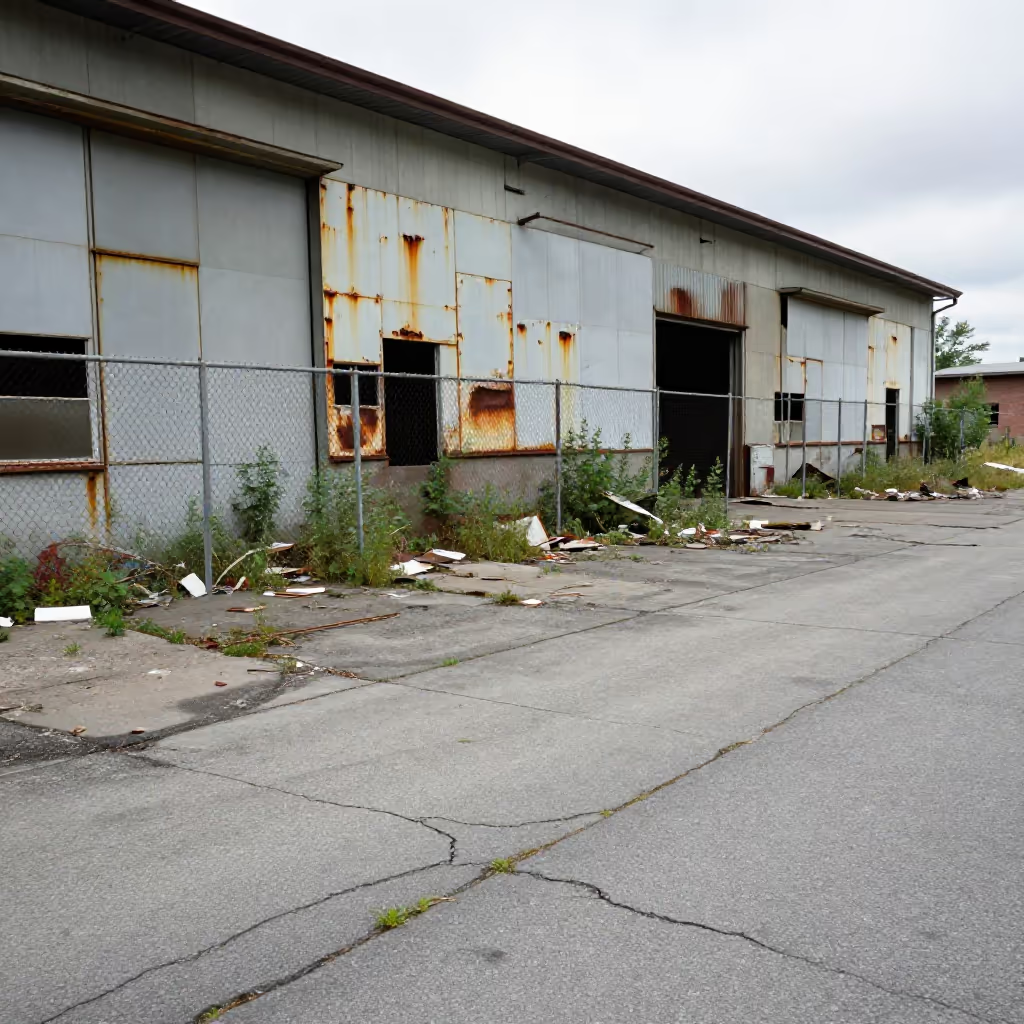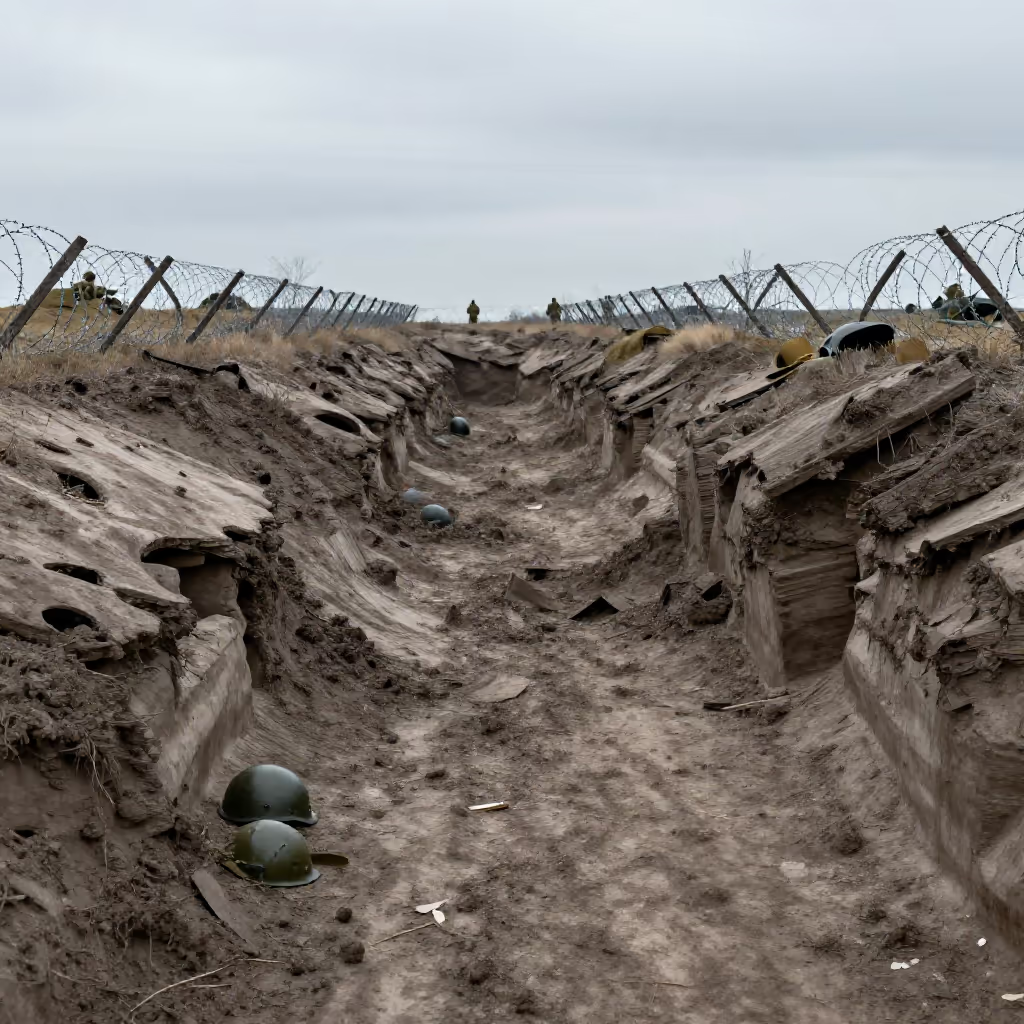
An area between the front lines of two hostile powers that is controlled by neither side.
example
Im Ersten Weltkrieg war das Niemandsland zwischen den Schützengräben ein extrem gefährlicher Ort.
In the First World War, the no man's land between the trenches was an extremely dangerous place.

Usage tips
Compound word
The word is made up of 'Niemand' (nobody; in the genitive: 'Niemands') and 'Land' (land). So it literally means 'the land of no one'. This basic idea helps you understand all of its meanings.
EXAMPLE
Die alte Fabrikruine liegt auf einem vergessenen Stück Niemandsland.
The old factory ruin is located on a forgotten piece of no man's land.
Figurative meaning
'Niemandsland' (no man's land) is very often used figuratively for unclear states or areas. For example, people speak of a 'rechtliches Niemandsland' (legal no man's land; an unclear legal situation) or an 'emotionales Niemandsland' (emotional no man's land).
EXAMPLE
Start-ups agieren oft in einem rechtlichen Niemandsland, bis neue Gesetze geschaffen werden.
Start-ups often operate in a legal no man's land until new laws are created.
Context clues
You can recognize the literal, military meaning from the context of war and history, e.g. 'Front' (front line) or 'Schützengraben' (trench). The figurative meanings refer either to abstract areas, e.g. 'rechtlich' (legal) or 'politisch' (political), or to concrete but abandoned places, e.g. 'Industriebrache' (industrial wasteland).
EXAMPLE
Der Soldat musste nachts das Niemandsland durchqueren.
The soldier had to cross no man's land at night.
Compare with
confusable
Niemandsland vs Grenzgebiet
border region
'Grenzgebiet' and 'Niemandsland' can both mean an area between two sides or categories. A 'Grenzgebiet' lies on a border or describes a transition between two areas. It is not necessarily empty or dangerous. 'Niemandsland' sounds stronger: it often means an area between front lines that no one controls, or, figuratively, a very unclear area. It can also mean an abandoned region. Learners may confuse the words because both describe something 'in between'. 'Grenzgebiet' is more neutral, while 'Niemandsland' fits when something seems uncontrolled, abandoned, or very unclear.
Niemandsland
Nach der Schließung der Fabrik wirkte das Gelände wie ein Niemandsland.
After the factory closed, the site looked like a no man's land.
Grenzgebiet
Im Grenzgebiet zwischen Deutschland und Polen arbeiten viele Menschen in beiden Ländern.
In the border region between Germany and Poland, many people work in both countries.