


die Note
grade
An evaluation of school, university, or other performance, usually in the form of a number or a word.
EXAMPLE
Ich habe in der letzten Klausur eine sehr gute Note geschrieben.
I got a very good grade on the last exam.
grade / note
Loading your saved state.
grade
An evaluation of school, university, or other performance, usually in the form of a number or a word.
Ich habe in der letzten Klausur eine sehr gute Note geschrieben.
I got a very good grade on the last exam.
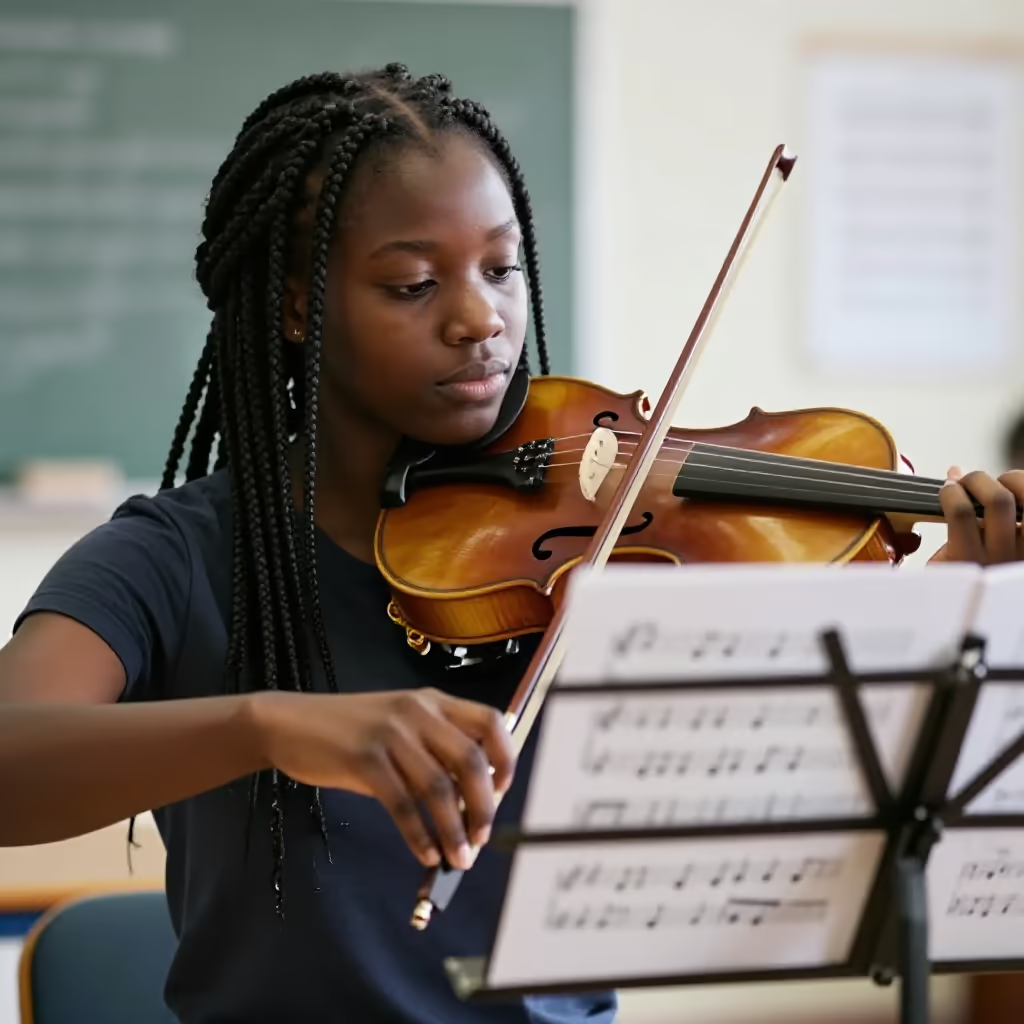
note
A symbol in music that determines the pitch and duration of a sound.
Er kann keine Noten lesen, aber spielt fantastisch Klavier.
He can't read music, but he plays the piano fantastically.

note / nuance
A special feature, a characteristic trait, or a nuance that distinguishes something from something else.
Das Parfüm hat eine leicht holzige Note.
The perfume has a slightly woody note.

note
A short written message, a memo, or an official diplomatic letter.
Die Regierung überreichte dem Botschafter eine Protestnote.
The government handed the ambassador a note of protest.

banknote
A technical or outdated term for a banknote, that is, a paper bill.
Im Museum war eine alte 1000-Mark-Note ausgestellt.
An old 1000-mark banknote was on display in the museum.
The most common meanings of 'Note' are easy to recognize from context. In connection with school and university, it means a grade; in the context of music, a musical note; and when describing smells or tastes, a nuance.
Für eine gute Note in Deutsch muss man viel lesen.
For a good grade in German, you have to read a lot.
In connection with school grades, certain verbs are used frequently: you can 'bekommen' (get), 'erhalten' (receive), or 'schreiben' (get/write) a grade. Teachers, on the other hand, 'geben' (give) or 'verteilen' (hand out) grades.
Ich hoffe, ich bekomme eine gute Note in der Prüfung.
I hope I get a good grade on the exam.
When it comes to musical notes, the typical verbs are 'Noten lesen' (to read music), 'Noten spielen' (to play notes), or 'Noten schreiben' (to write notes). A person who produces a note with their voice 'trifft' (hits) the note.
Er kann Noten lesen, seit er sechs Jahre alt ist.
He has been able to read music since he was six years old.
To describe a nuance or a characteristic trait, 'Note' is almost always accompanied by an adjective. Typical examples are 'eine persönliche Note' (a personal touch), 'eine süße Note' (a sweet note), or 'eine sportliche Note' (a sporty touch).
Er verleiht seinen Gerichten immer eine persönliche Note.
He always gives his dishes a personal touch.
As a written message, 'Note' is a formal term. It is mainly used in diplomacy, e.g. 'Protestnote' (note of protest), or in administrative language.
Der Botschafter überreichte eine diplomatische Note.
The ambassador handed over a diplomatic note.
The term 'Note' for a paper bill ('Banknote') is outdated. Today, you find it almost only in historical texts or when people are talking about old currencies.
Mein Großvater hatte noch eine 100-Mark-Note in seiner Sammlung.
My grandfather still had a 100-mark banknote in his collection.
F
Das F and die Note can both refer to a result in an examination. “Das F” specifically means a very poor or failing letter grade in some grading systems, while “Note” is the general term for an evaluation. Use “F” only in this grading system; otherwise, “Note” is usually the appropriate term.

In Deutschland bekam er für die Prüfung die Note fünf.
In Germany, he received a grade of five on the exam.
In diesem amerikanischen Notensystem bekam er für die Prüfung ein F.
In this American grading system, he received an F on the exam.