

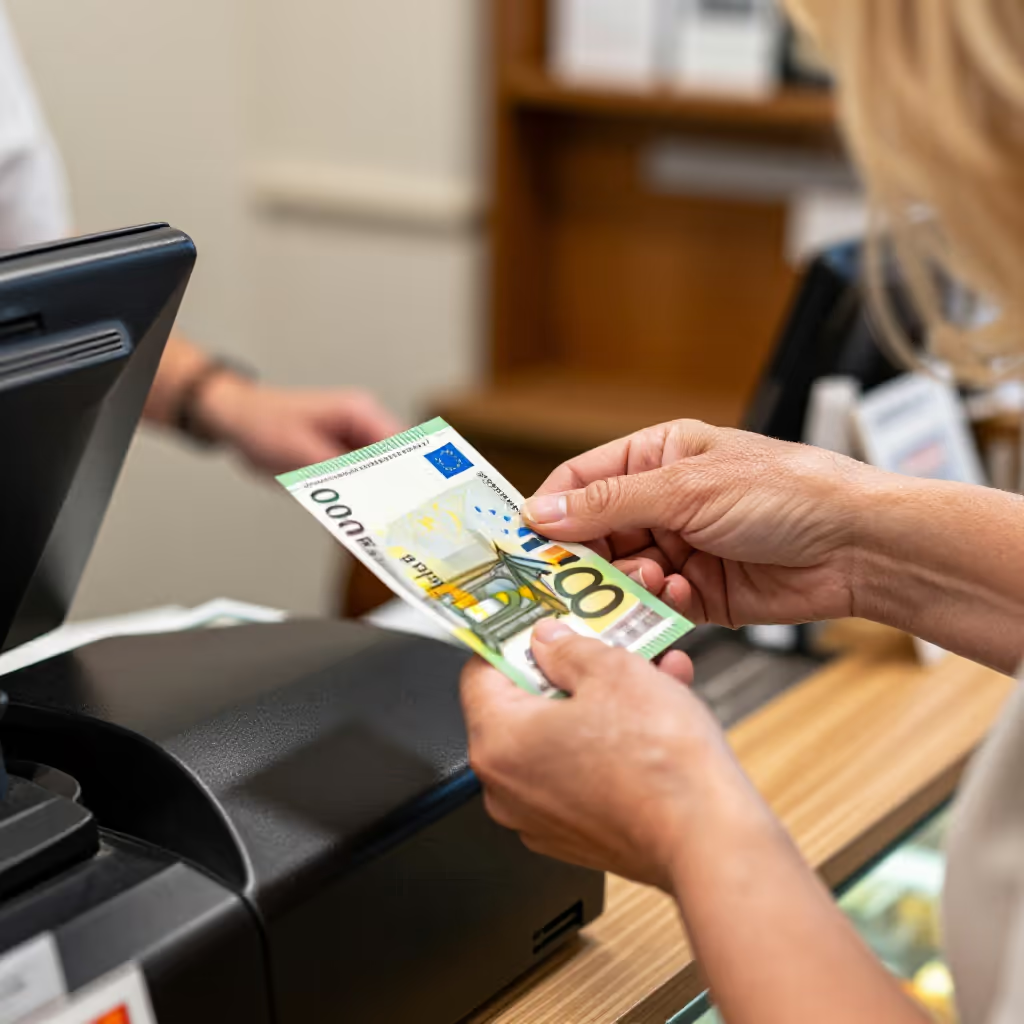
An official means of payment made of paper or a paper-like material that has a specific face value. It is also referred to as a banknote.
example
Er bezahlte den Einkauf mit einem Fünfzig-Euro-Schein.
He paid for the shopping with a fifty-euro note.
Usage tips
Word composition
The word is composed of 'Geld' (money) and 'Schein' (note/bill). In this context, 'Schein' means 'note' or 'piece of paper', so a 'Geldschein' is literally a “money paper.”
EXAMPLE
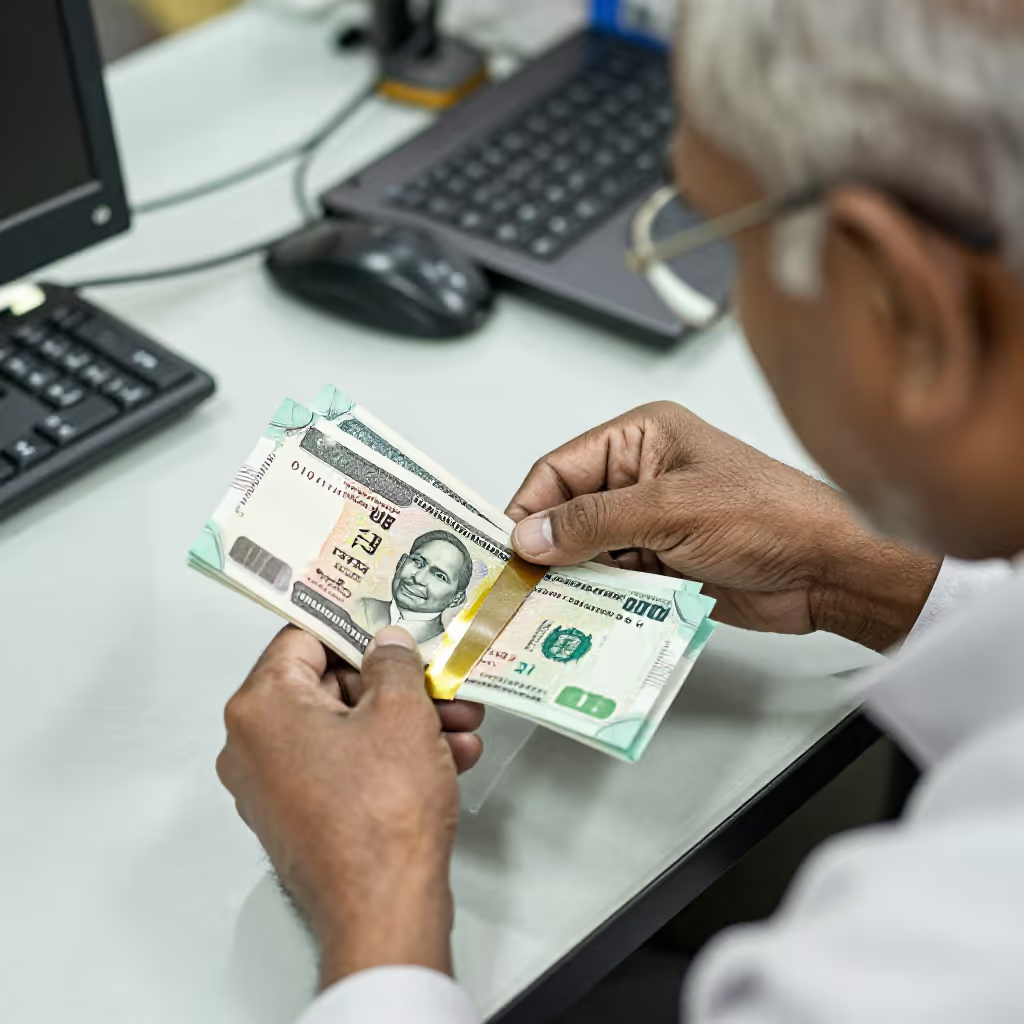
Er zog einen zerknitterten Geldschein aus seiner Hosentasche.
He pulled a crumpled banknote out of his trouser pocket.
Sentence structure with face value
To indicate the value of a note, a fixed construction is used: 'ein [Zahl]-Euro-Schein' (a [number]-euro note). Note that the number and 'Euro' are joined into one word in German.
EXAMPLE
Kannst du mir einen Zwanzig-Euro-Schein wechseln?
Can you change a twenty-euro note for me?
Typical collocations
Common verbs used with 'Geldschein' (banknote) include 'einen Geldschein wechseln' (to change a banknote), 'einen Geldschein aus dem Automaten ziehen' (to withdraw a banknote from the machine), or 'mit einem Geldschein bezahlen' (to pay with a banknote).
EXAMPLE
Der Automat gibt nur neue Geldscheine aus.
The machine only dispenses new banknotes.
Compare with
synonym
Geldschein vs Note
grade / note
'die Note' and 'der Geldschein' can both mean paper money with a certain value. 'Geldschein' is the normal everyday word. 'Note' in this meaning is technical or outdated and is used much less often. When you are simply talking about paying or cash, 'Geldschein' sounds more natural. 'Note' is more likely to be found in special or older texts.
Geldschein
Beim Bäcker bezahlt sie mit einem Geldschein und bekommt Münzen zurück.
At the bakery, she pays with a banknote and gets coins back.
Note
In dem alten Buch war eine Note aus der Zeit vor dem Euro abgebildet.
An old book showed a note from the time before the euro.