

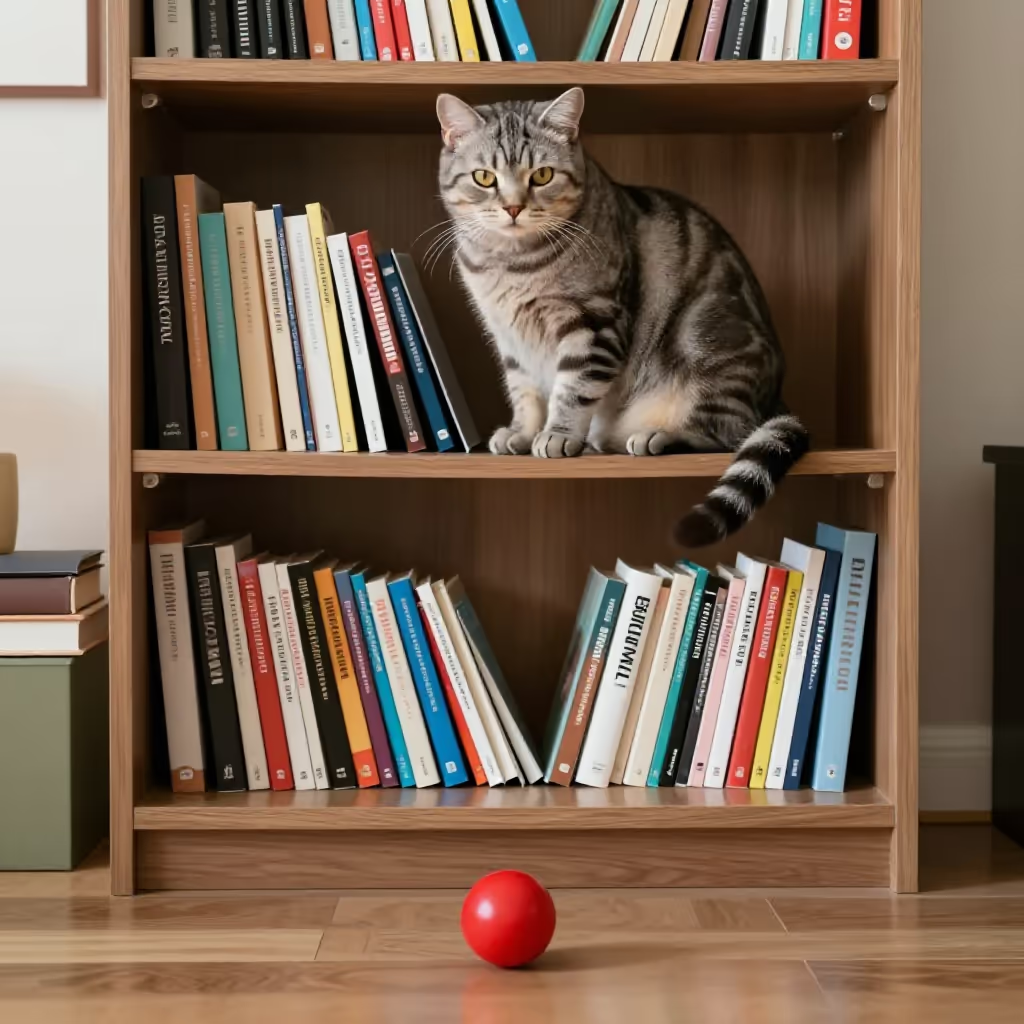
oben
above / up
At a higher place or position; the opposite of below/down.
EXAMPLE
Das Buch, das du suchst, liegt ganz oben im Regal.
The book you're looking for is right at the top of the shelf.
above / up
Loading your saved state.
above / up
At a higher place or position; the opposite of below/down.
Das Buch, das du suchst, liegt ganz oben im Regal.
The book you're looking for is right at the top of the shelf.
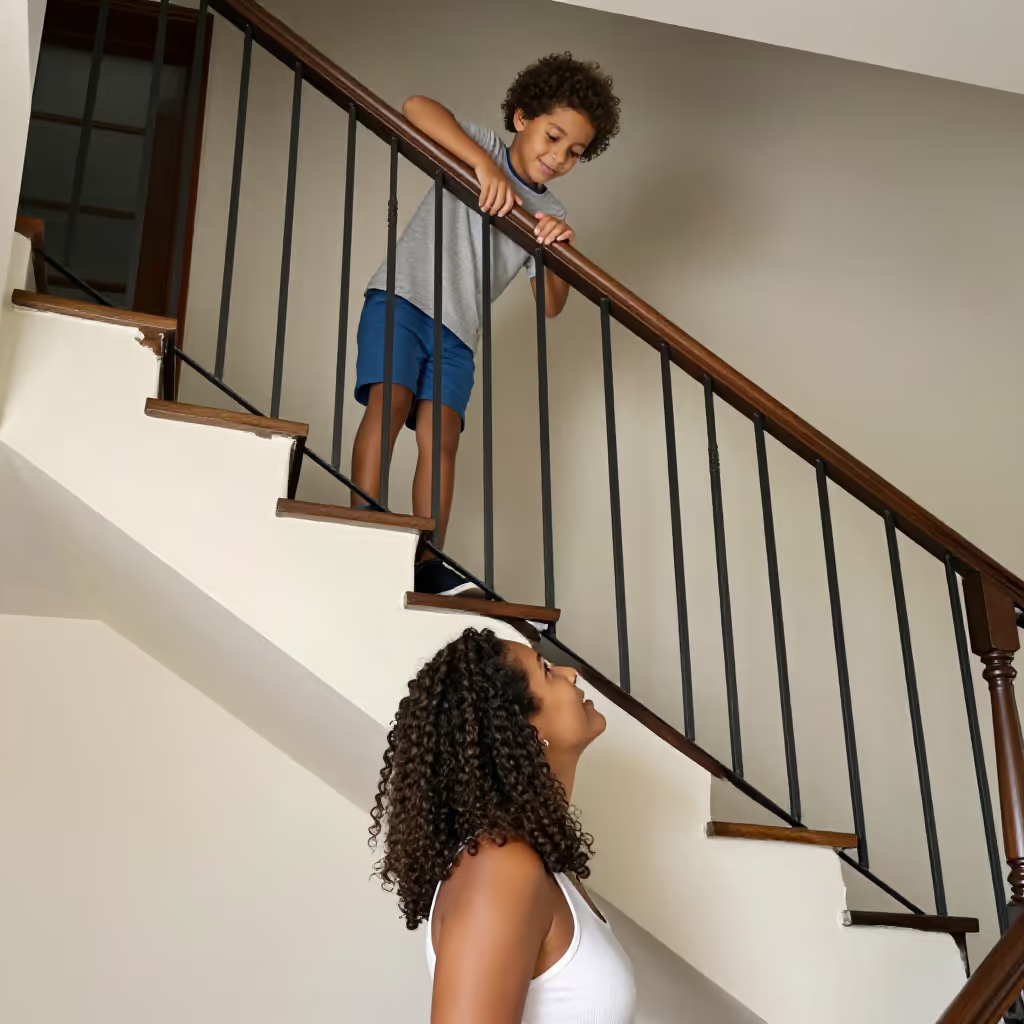
upstairs
On a higher floor of a building.
Meine Großeltern wohnen oben im vierten Stock.
My grandparents live upstairs on the fourth floor.
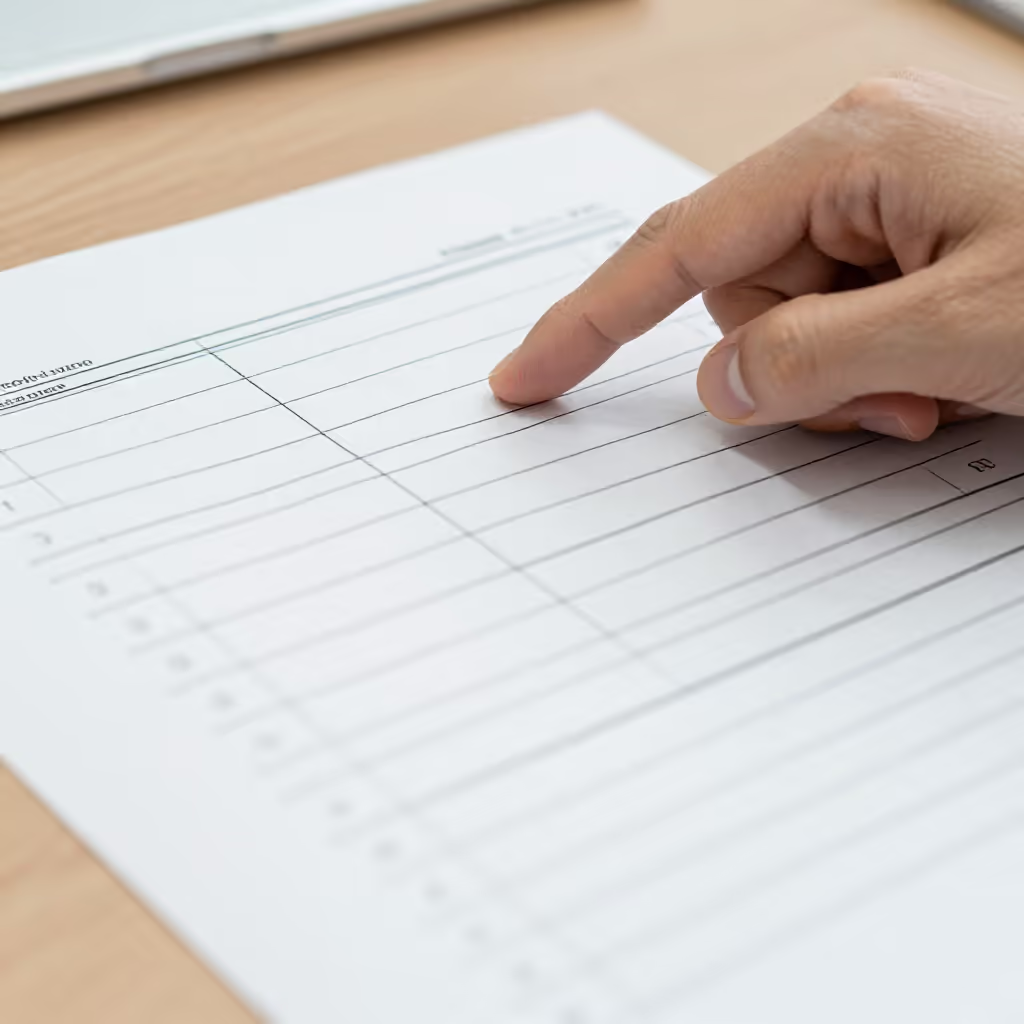
at the top
At the beginning of a page, list, or document.
Deine Adresse schreibst du bitte oben links auf den Brief.
Please write your address at the top left of the letter.

from above
Coming from a higher position or from an authority.
Die Anweisung kam direkt von oben.
The instruction came directly from above.

upward / up
Into a higher direction or position.
Der Aufzug fährt nach oben.
The elevator is going up.
Here you have to distinguish between position (Where?) and direction (Where to?). 'Oben' (above/up) describes a position. For movement upward, you have to use 'nach oben' (upward/up).
Meine Wohnung ist ganz oben im Haus.
My apartment is right at the top of the building.
'Oben' (above/up) is part of a system of adverbs. For position, there are 'oben' (above/up) and 'unten' (below/down). For direction, there are 'nach oben' (upward/up) and 'nach unten' (downward/down). For origin, there are 'von oben' (from above) and 'von unten' (from below).
Der Keller ist unten im Haus.
The basement is downstairs in the house.
'Oben' (above/up) is related to the prefix 'ober-', which means 'upper'. You can find it in many words, such as 'Obergeschoss' (upper floor), 'Oberlippe' (upper lip), or 'Oberarzt' (senior physician/consultant).
Wir wohnen im dritten Obergeschoss.
We live on the third upper floor.
The expression 'von oben' (from above) can literally mean 'from a higher place'. But it is also often used figuratively for instructions from an authority (e.g. boss, government).
Der Befehl kam direkt von oben, wir können nichts dagegen tun.
The order came directly from above; we can't do anything about it.
'Oben' (at the top) is used very often to describe a position on a page, screen, or in a document. Typical phrases are 'oben links' (top left), 'oben rechts' (top right), or 'wie oben erwähnt' (as mentioned above).
Die Seitenzahl finden Sie immer oben auf der Seite.
You will always find the page number at the top of the page.
about it / above it
Both words can describe a higher position. Darüber explicitly refers to a particular reference object and means above it, whereas oben only indicates a higher area. Use darüber when it is clear what something is above, and oben when the general location is sufficient.
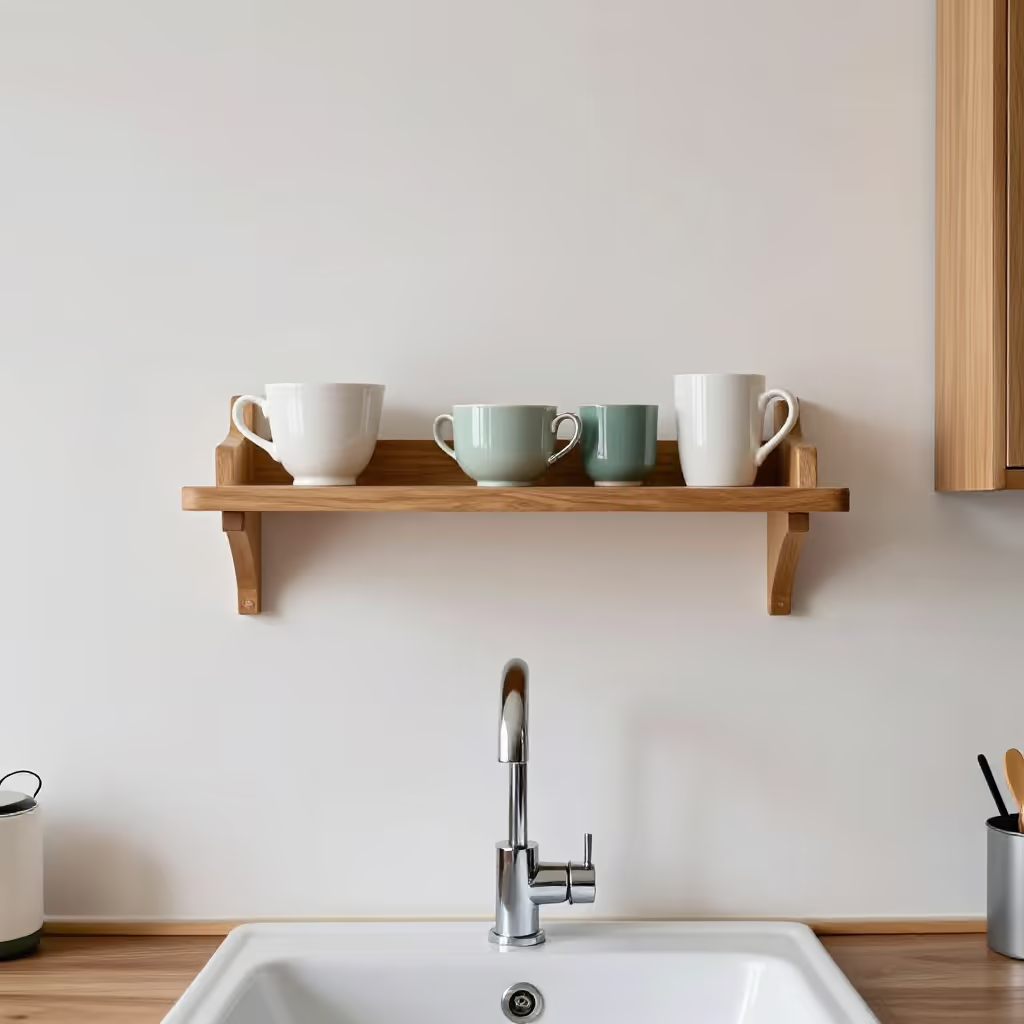
Das Bild hängt im Flur, und oben ist noch eine kleine Lampe angebracht.
The picture is hanging in the hallway, and there’s another small lamp up above.
Über dem Sofa hängt ein Bild, und darüber befindet sich eine kleine Lampe.
There’s a picture hanging above the sofa, and a small lamp is above it.