

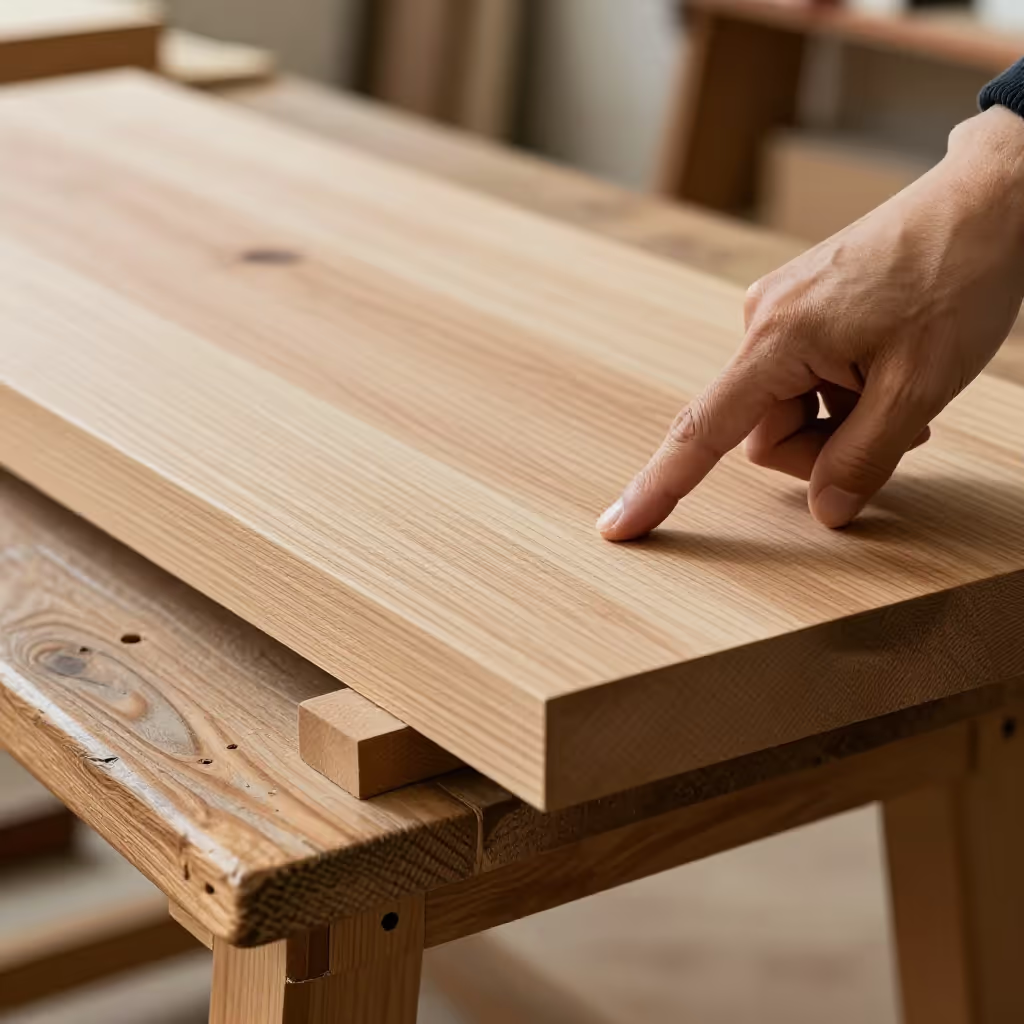
die Oberseite
top side
The upper surface or side of an object, as opposed to the underside.
EXAMPLE
Die Oberseite des Blattes ist dunkelgrün und glänzend.
The top side of the leaf is dark green and shiny.
top side
Loading your saved state.
top side
The upper surface or side of an object, as opposed to the underside.
Die Oberseite des Blattes ist dunkelgrün und glänzend.
The top side of the leaf is dark green and shiny.
The word is clearly made up of 'ober,' a form of 'oben' (above/on top), and 'Seite' (side). So it literally describes the upper side of something.
Bitte wische die Oberseite des Tisches ab.
Please wipe the top side of the table.
To say what a top side belongs to, you usually use the genitive or a 'von' construction. The genitive form often sounds somewhat more formal.
Die Oberseite des Buches war mit Staub bedeckt.
The top side of the book was covered with dust.
The word is often used for flat objects. Typical examples are the top side of a table, a leaf, a roof, or a hand.
Die Oberseite seiner Hand war von der Sonne verbrannt.
The back of his hand was sunburned.
surface
Oberfläche refers to the outer area or layer of an object, regardless of its direction. Oberseite specifically means the side facing upward, as opposed to the underside. Oberfläche is suitable for the entire outer area; Oberseite is used for the upper surface.
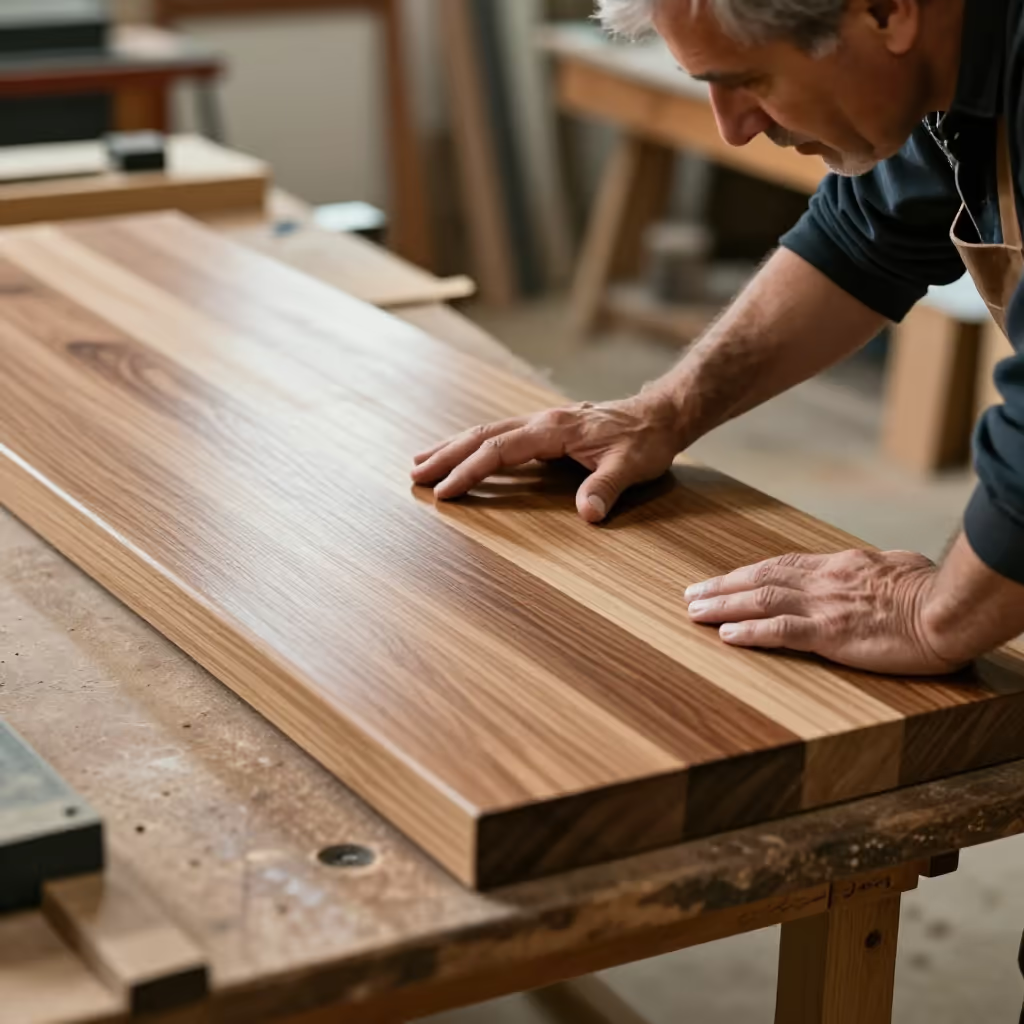
Die Oberseite des Koffers ist durch den Regen nass geworden.
The top of the suitcase got wet in the rain.
Die Oberfläche des Koffers ist auf mehreren Seiten zerkratzt.
The surface of the suitcase is scratched in several places.