


das Objekt
object
A material object; a thing that one can see and touch.
EXAMPLE
Auf dem Tisch lag ein seltsames, metallisches Objekt.
There was a strange, metallic object lying on the table.
object
Loading your saved state.
object
A material object; a thing that one can see and touch.
Auf dem Tisch lag ein seltsames, metallisches Objekt.
There was a strange, metallic object lying on the table.

property
A piece of real estate, such as a house, an apartment, or a plot of land, that is offered for sale or rent.
Der Immobilienmakler zeigte uns gestern drei interessante Objekte.
The real estate agent showed us three interesting properties yesterday.
object
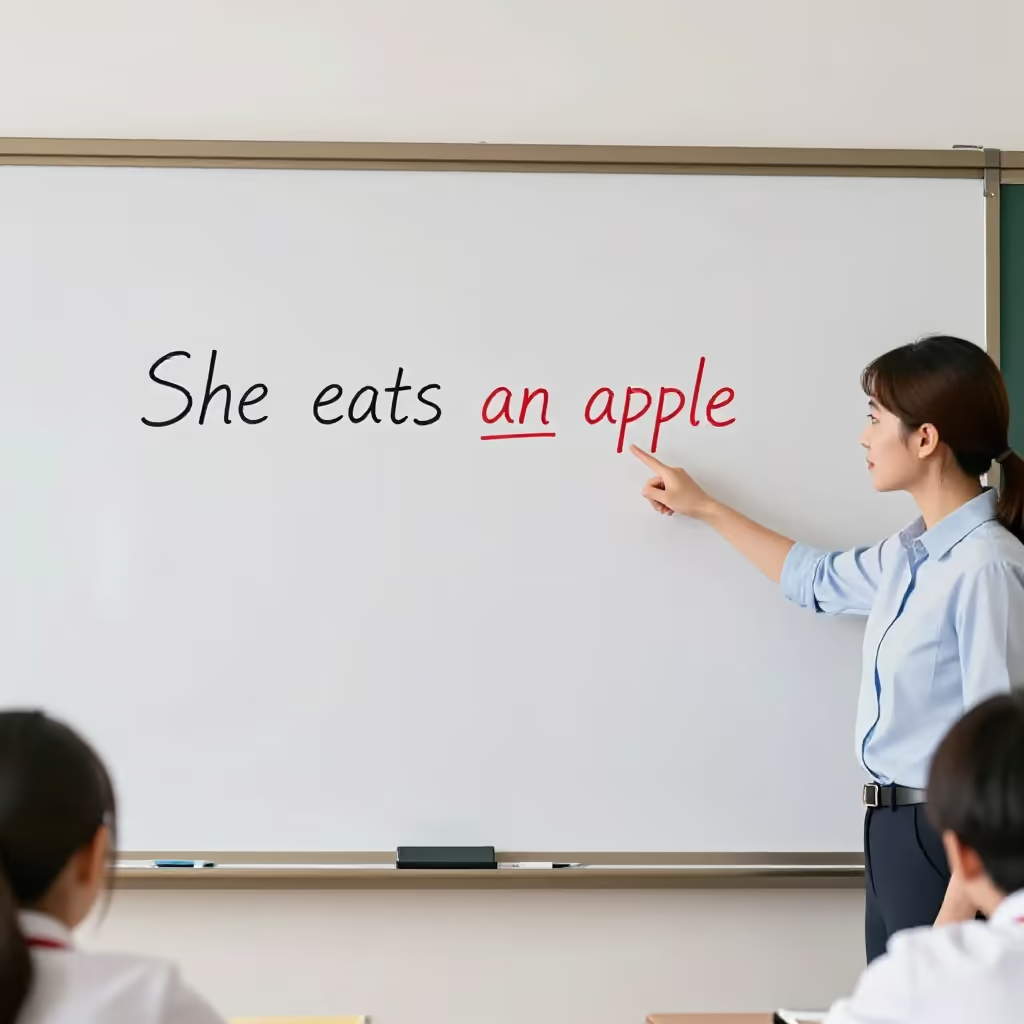
In grammar, the part of a sentence that the action of the verb relates to and that is not the subject.
Im Satz „Der Junge liest ein Buch“ ist „ein Buch“ das Akkusativobjekt.
In the sentence 'The boy is reading a book', 'a book' is the accusative object.
object
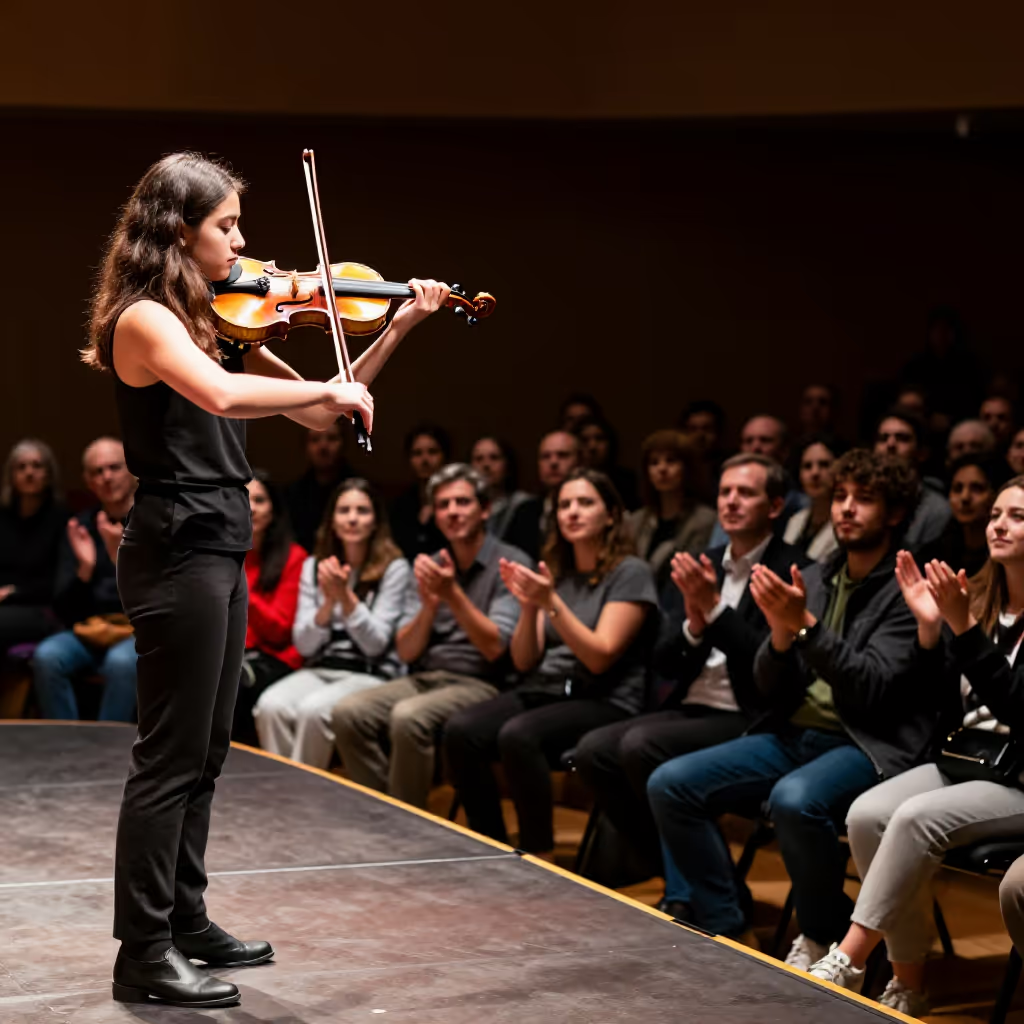
A person or thing that is the target of feelings, thoughts, or actions.
Seit Wochen war er das Objekt ihrer Begierde.
For weeks, he had been the object of her desire.

object
In computer science, especially in object-oriented programming, a concrete instance of a class with certain properties and methods.
Um auf die Daten zuzugreifen, muss man zuerst ein Objekt der Datenbank-Klasse erstellen.
To access the data, you first have to create an object of the database class.
The meaning of 'Objekt' (object) depends strongly on the context. In everyday language, it is a physical object; in real estate, a house or apartment; in grammar, a part of a sentence; and in computer science, a programming element.
Der Makler hat uns ein schönes Objekt am Stadtrand angeboten.
The agent offered us a beautiful property on the outskirts of town.
In everyday speech, 'Objekt' (object) is often used for unclear, strange, or technical-looking items. It often sounds more formal or detached than 'Ding' (thing) or 'Sache' (thing/matter).
Die Polizei untersucht ein unbekanntes Flugobjekt.
The police are investigating an unidentified flying object.
In the real estate context, 'Objekt' (property) is often used with certain verbs. Typical phrases are 'ein Objekt besichtigen' (to view a property), 'ein Objekt mieten' (to rent a property), or 'ein Objekt kaufen' (to buy a property).
Wir möchten das Objekt am Wochenende besichtigen.
We would like to view the property at the weekend.
When 'Objekt' (object) is mentioned in a linguistic context, it is almost always about grammar. Signal words here are 'Satz' (sentence), 'Verb' (verb), 'Akkusativ' (accusative), 'Dativ' (dative), or 'Genitiv' (genitive).
Kannst du das Objekt in diesem Satz bestimmen?
Can you identify the object in this sentence?
When a person or thing is the target of feelings, 'Objekt' (object) is often used in fixed expressions. Common ones are 'Objekt der Begierde' (object of desire), 'Objekt des Interesses' (object of interest), or 'Objekt der Forschung' (object of research).
Das neue Auto wurde schnell zum Objekt seiner Begierde.
The new car quickly became the object of his desire.
In computer science, you can recognize this meaning by typical words from programming. These include 'Klasse' (class), 'Methode' (method), 'Instanz' (instance), or 'Variable' (variable).
Jedes Objekt in dieser Programmiersprache hat spezifische Eigenschaften.
Every object in this programming language has specific properties.
thing / matter
Sache is a general term for an unspecified thing. Objekt refers to a clearly defined material object and sounds more factual. When the exact type is unimportant or unknown, Sache is suitable; for an individually considered object, Objekt is more appropriate.
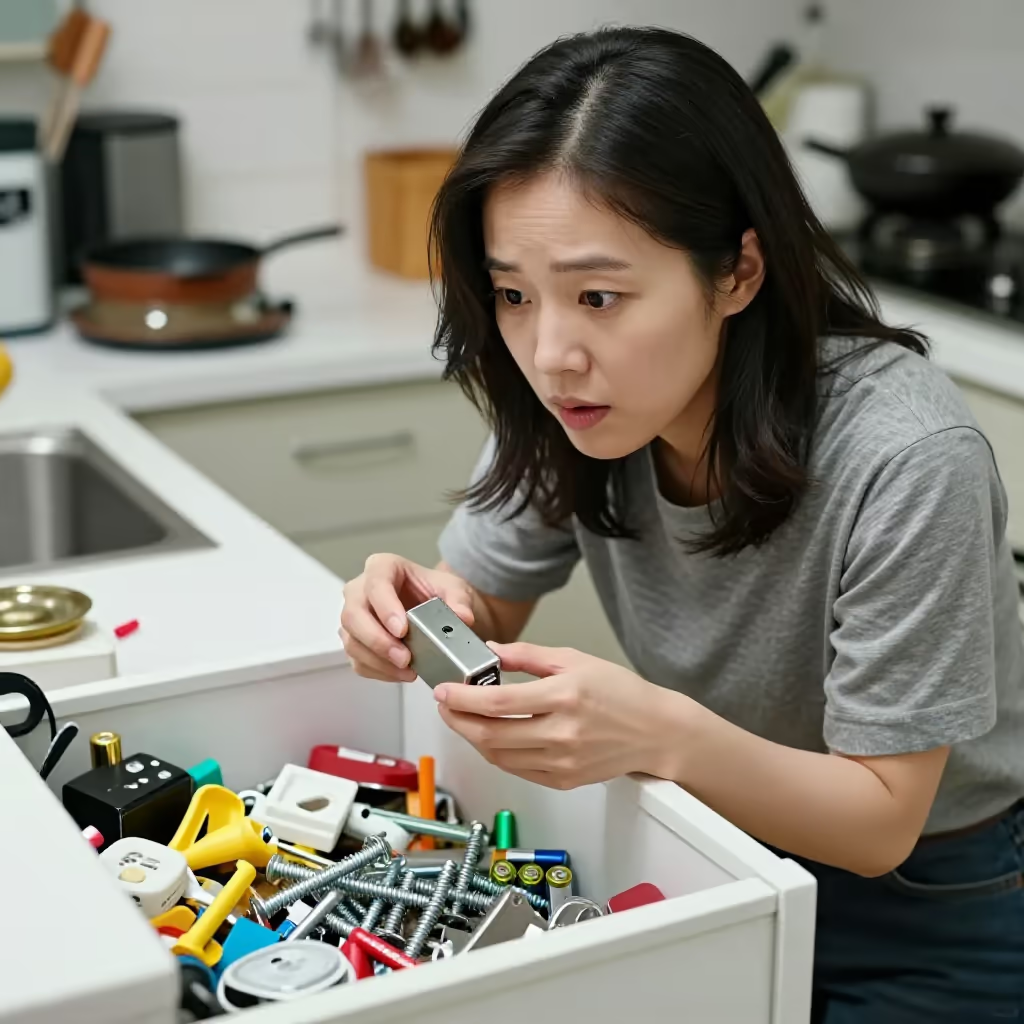
Im Karton lag ein seltsames Objekt aus glänzendem Metall.
There was a strange object made of shiny metal in the box.
Im Karton lag eine seltsame Sache, die niemand kannte.
There was a strange thing in the box that nobody recognized.