

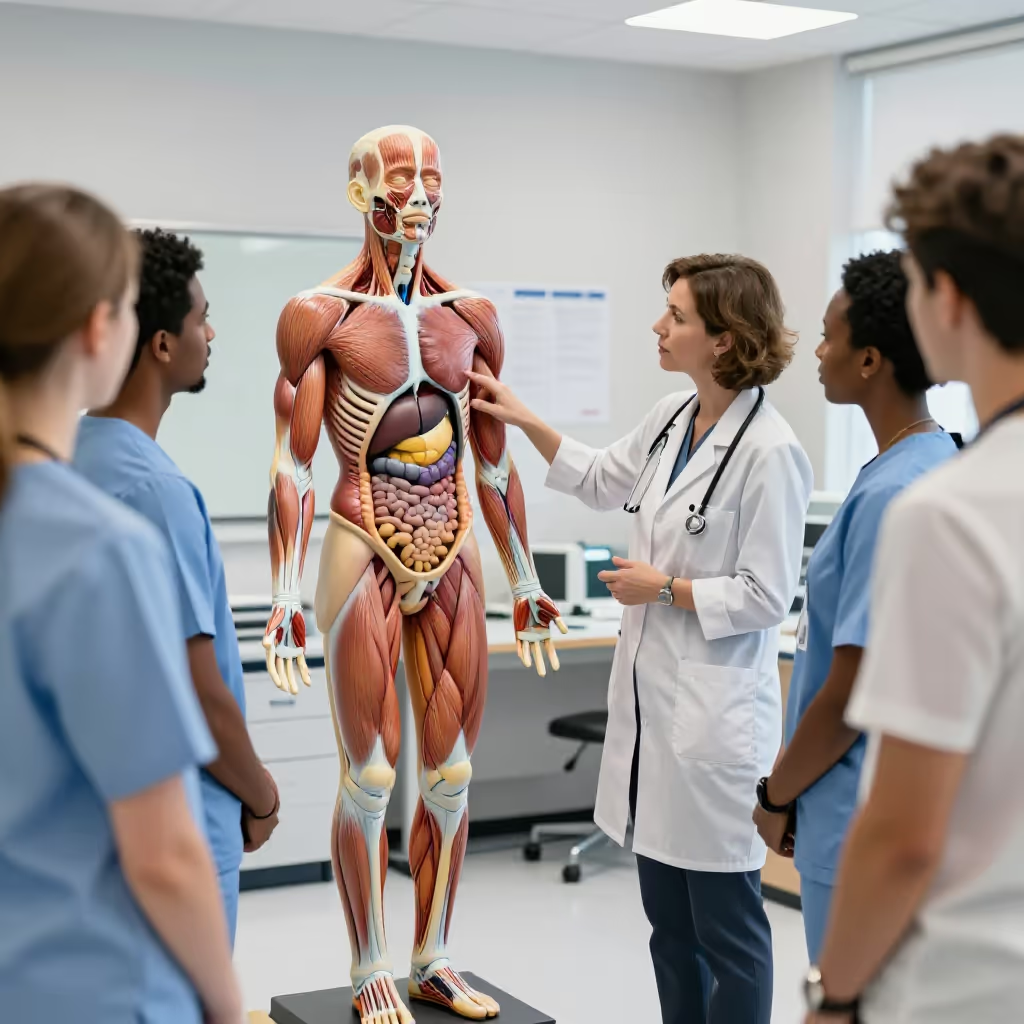
der Körper
body
The entire physical structure of a human or animal, including all organs, bones, and muscles.
EXAMPLE
Nach dem Sport tut mein ganzer Körper weh.
After exercising, my whole body hurts.
body
Loading your saved state.
body
The entire physical structure of a human or animal, including all organs, bones, and muscles.
Nach dem Sport tut mein ganzer Körper weh.
After exercising, my whole body hurts.
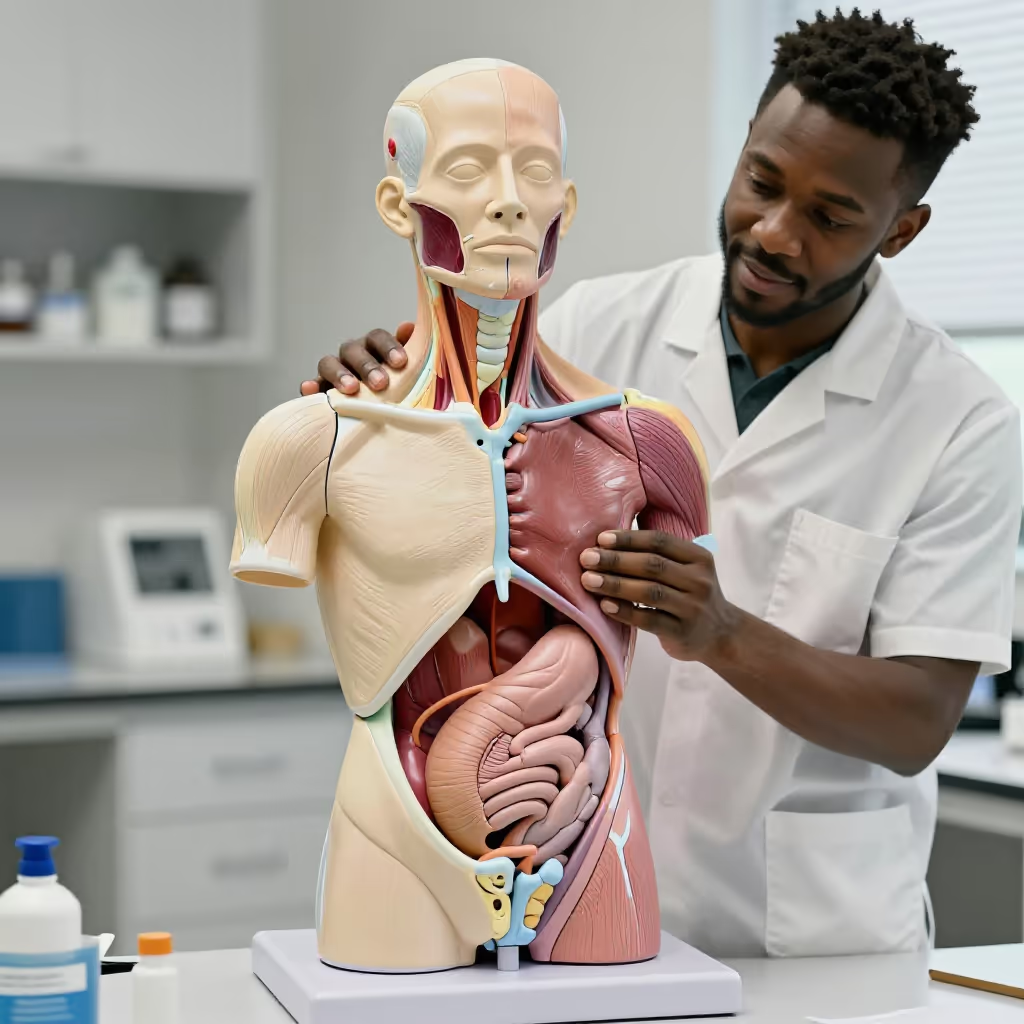
torso
The trunk of a human or animal, meaning the central part without the head, arms, and legs.
Das T-Shirt ist am Körper sehr eng geschnitten.
The T-shirt is cut very tight around the torso.
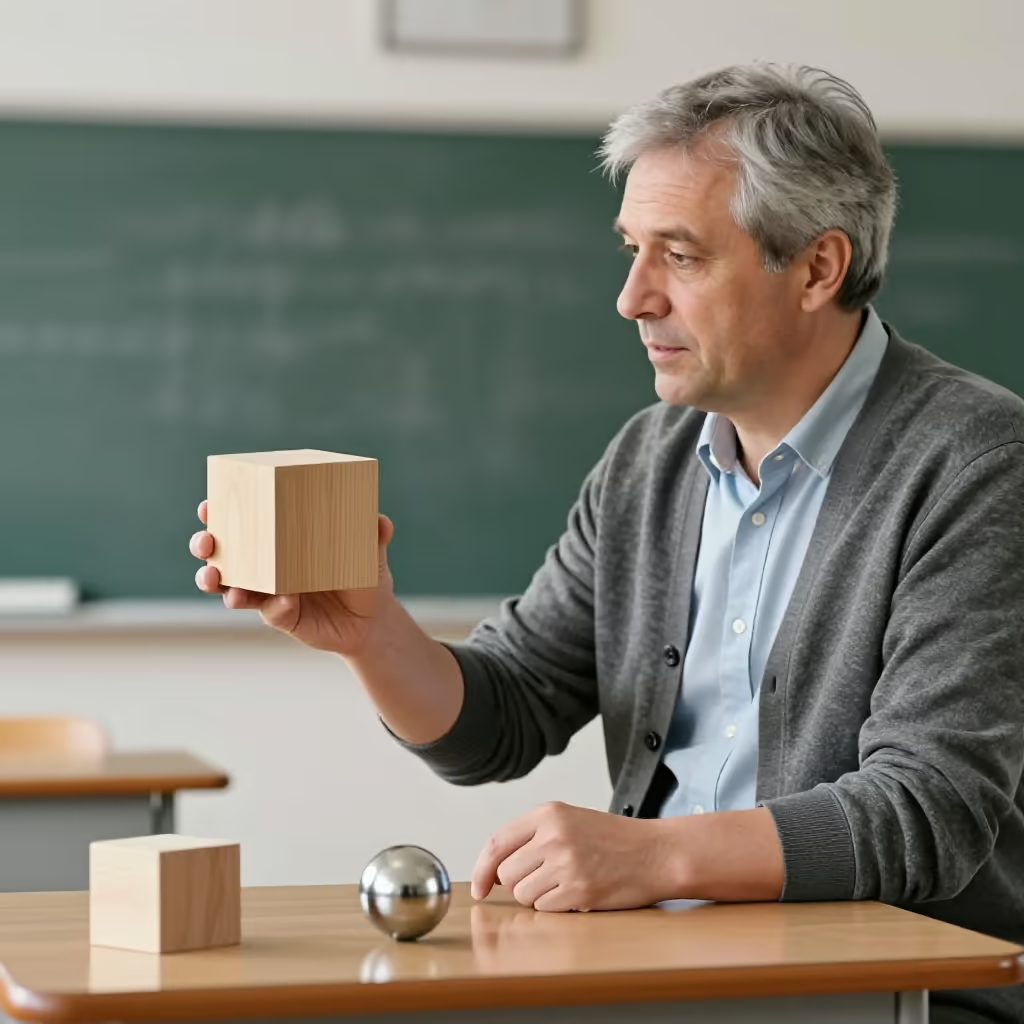
solid / body
In physics or geometry, an object with a particular shape and mass that occupies space.
Ein Würfel ist ein geometrischer Körper.
A cube is a geometric solid.

body
In wine, the term for the fullness and intensity of the taste and mouthfeel.
Dieser Rotwein hat einen vollen Körper und einen langen Abgang.
This red wine has a full body and a long finish.
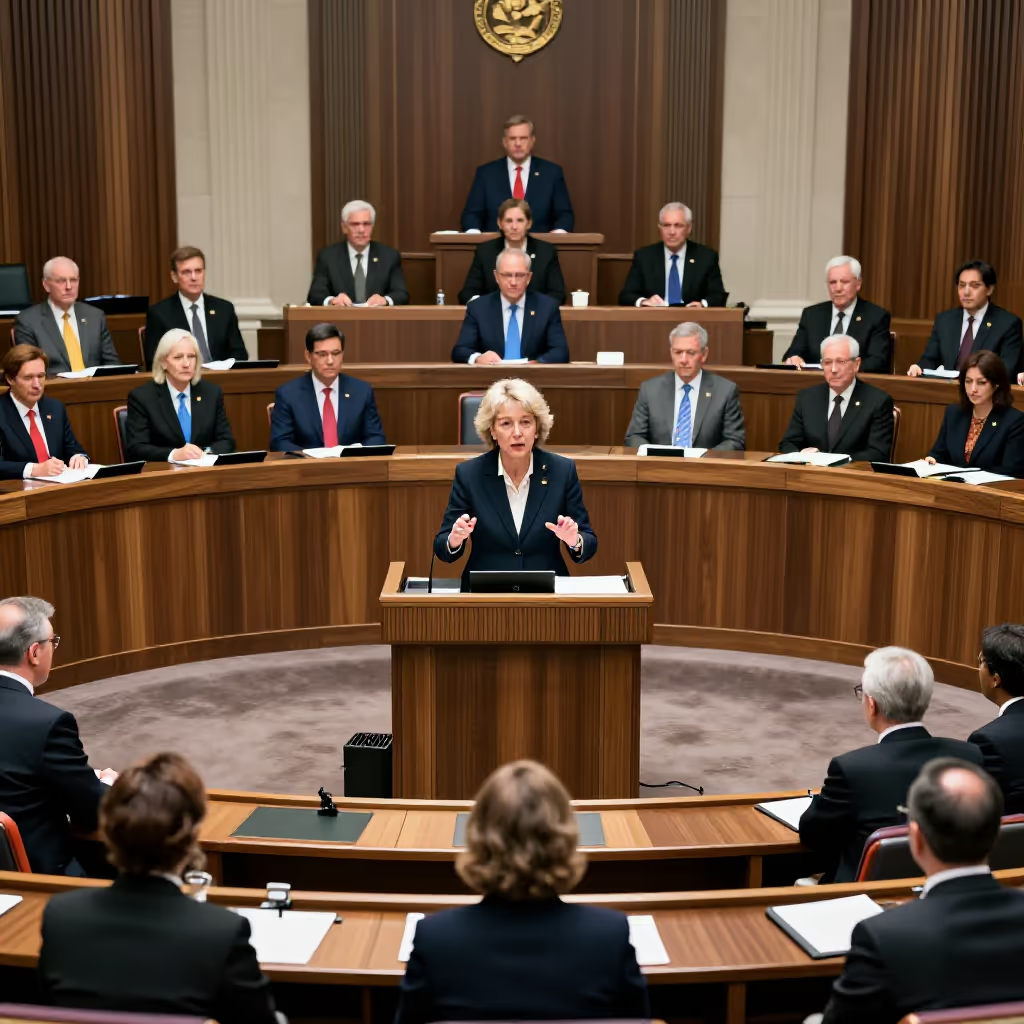
body
An organized group of people with a shared function, often in a political or institutional context. This meaning is rather rare and formal.
Die gesetzgebenden Körper des Staates trafen sich zur Abstimmung.
The state's legislative bodies met for the vote.
The noun 'der Körper' (body) is the basis for other important words. The adjective 'körperlich' (physical) describes anything related to the body, and the verb 'verkörpern' (to embody) means to represent or symbolize something.
Körperliche Arbeit kann sehr anstrengend sein.
Physical work can be very exhausting.
Pay attention to the prepositions. German uses 'im Körper' (in the body) for things that are inside (e.g., organs), and 'am Körper' (on the body) for things that are on the surface (e.g., clothing, jewelry).
Das Herz ist ein wichtiges Organ im Körper.
The heart is an important organ in the body.
Common expressions are 'auf seinen Körper achten' (to take care of one's body), 'den Körper fit halten' (to keep the body fit), or 'mit dem ganzen Körper zittern' (to tremble with one's whole body).
Es ist wichtig, auf seinen Körper zu achten und sich gesund zu ernähren.
It is important to take care of your body and eat healthily.
In mathematics or physics, you can recognize this meaning from words like 'geometrisch' (geometric), 'fest' (solid), 'flüssig' (liquid), or 'Himmelskörper' (celestial body). The context here is always scientific or technical.
Wasser ist ein flüssiger Körper.
Water is a liquid body.
When 'Körper' (body) is used in connection with wine, it refers to its taste and fullness. Typical adjectives here are 'voll' (full), 'kräftig' (strong/full-bodied), or 'leicht' (light).
Dieser Rotwein hat einen kräftigen Körper.
This red wine has a strong body.
The meaning 'organized group' is very formal and is used almost only in legal or political texts. You will hardly hear this meaning in everyday life.
Das Parlament ist der gesetzgebende Körper eines Landes.
Parliament is the legislative body of a country.
meat / flesh
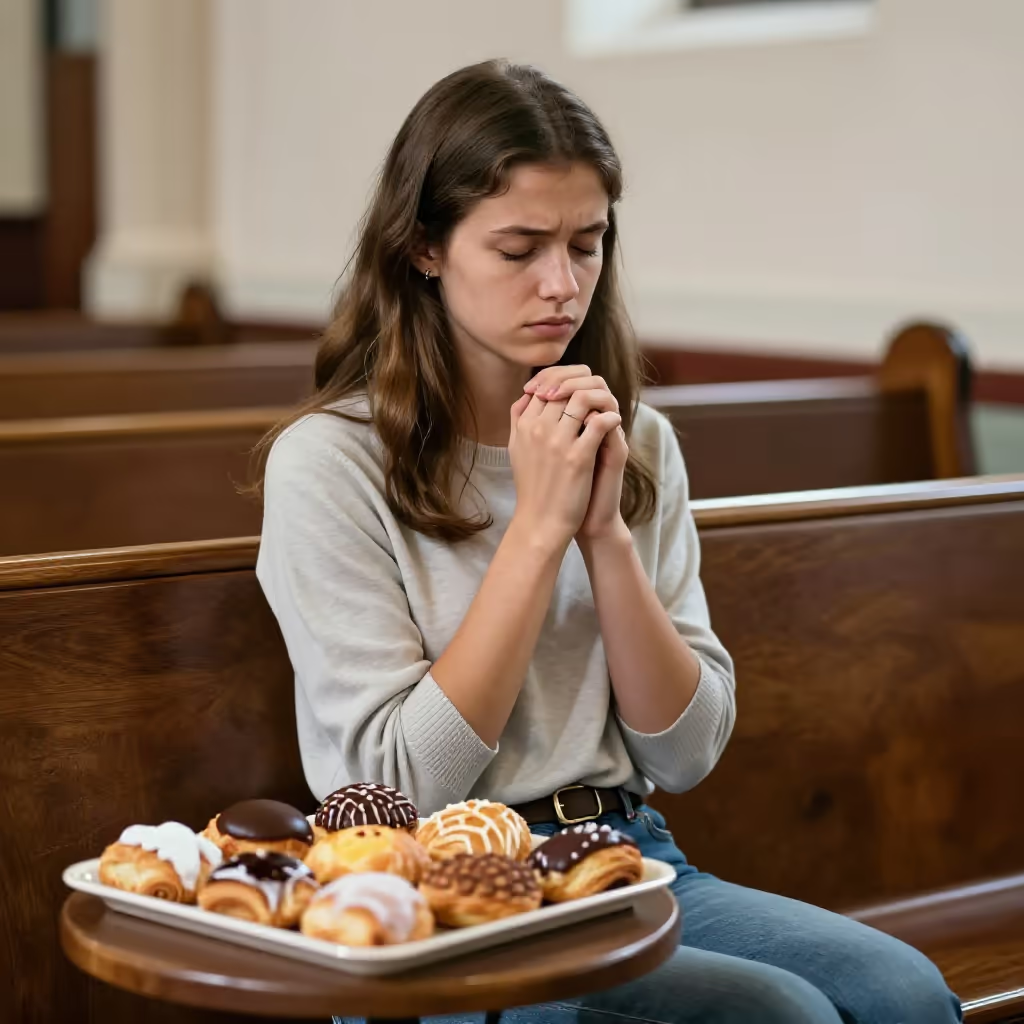
Körper is the neutral term for the entire physical structure of a person. Fleisch can also refer to the human body, but it often contrasts the body with the mind or soul in a judgmental or religious way, emphasizing physical desires.
Nach der langen Wanderung braucht der Körper eine Pause.
After the long hike, the body needs a rest.
In der Predigt heißt es, das Fleisch verlange nach Bequemlichkeit.
The sermon says that the flesh longs for comfort.