

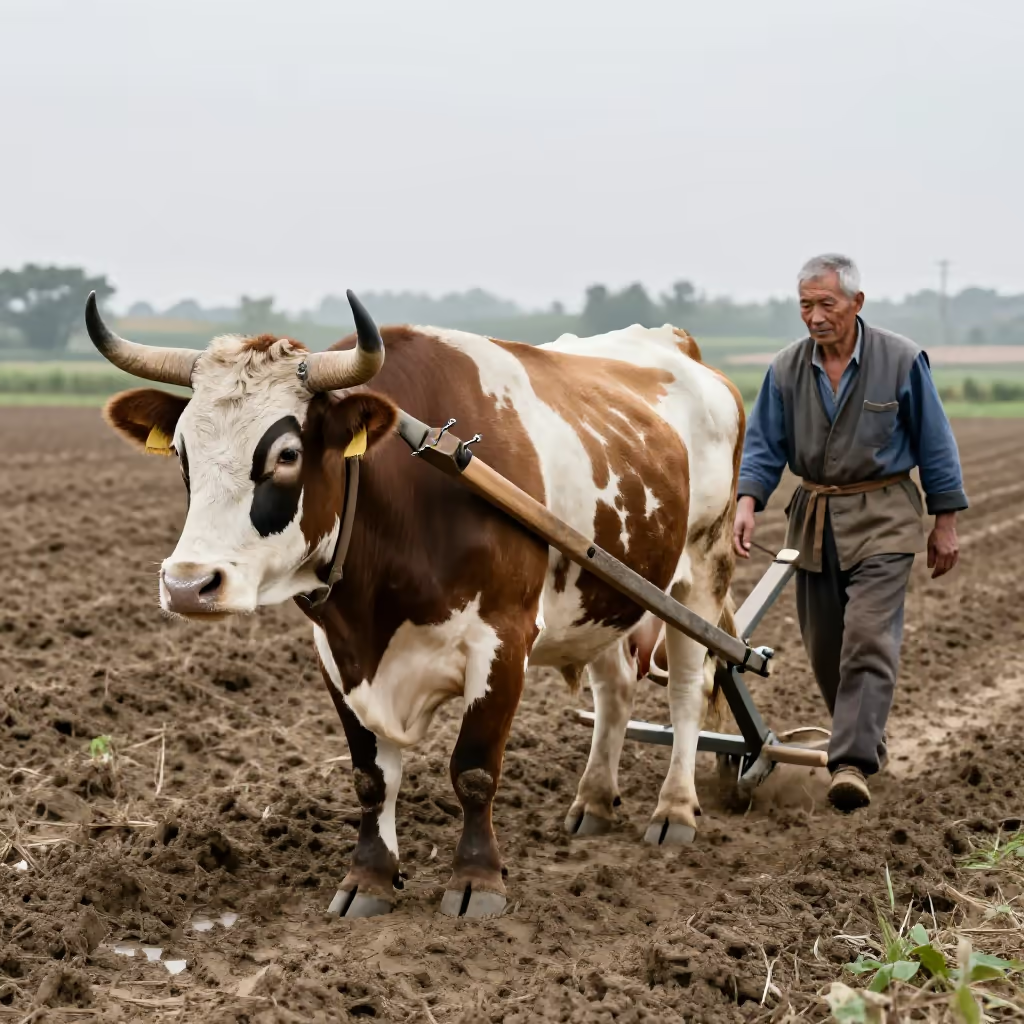
der Ochse
ox
A castrated male bovine that was often used in the past as a draft and work animal in agriculture.
EXAMPLE
Früher zogen Ochsen den Pflug über das Feld.
In the past, oxen pulled the plow across the field.
ox
Loading your saved state.
ox
A castrated male bovine that was often used in the past as a draft and work animal in agriculture.
Früher zogen Ochsen den Pflug über das Feld.
In the past, oxen pulled the plow across the field.

idiot / oaf
An insult for a stupid, clumsy, or simple-minded person.
Du Ochse, jetzt hast du schon wieder das Glas umgestoßen!
You idiot, now you've knocked over the glass again!

to be completely stumped
An idiom meaning that someone is at a loss, does not understand a problem, or does not know how to begin a task.
Ich habe die Anleitung gelesen, aber ich stehe immer noch wie der Ochse vorm Berg.
I read the instructions, but I'm still completely stumped.
'Der Ochse' (the ox) belongs to the N-declension. This means that the noun takes the ending '-n' or '-en' in all cases except the nominative singular. This is a common source of mistakes.
Der Bauer spannt den Ochsen vor den Wagen.
The farmer hitches the ox to the cart.
As an insult, 'Ochse' (idiot / oaf) is used to describe a person as stupid, slow, or clumsy. It is often used in direct address when you are annoyed with someone.
Sei nicht so ein Ochse und denk nach, bevor du handelst!
Don't be such an idiot, and think before you act!
The idiom 'wie der Ochse vorm Berg stehen' (to be completely stumped) is a fixed unit. It is almost always used with the verb 'stehen' (to stand) to express that someone is completely at a loss.
Bei dieser Matheaufgabe stehe ich wirklich wie der Ochse vorm Berg.
With this math problem, I'm really completely stumped.
donkey
Both words can be used as insults for a stupid or clumsy person. Esel often emphasizes stupidity, stubbornness, or a clumsy mistake, whereas Ochse usually sounds coarser and harsher. Esel fits a more ordinary reproach; Ochse can be used for a particularly coarse, direct insult.

Du Ochse, du hast die Tür schon wieder offen gelassen.
You oaf, you left the door open again.
Du Esel, du hast die Tür schon wieder offen gelassen.
You idiot, you left the door open again.