

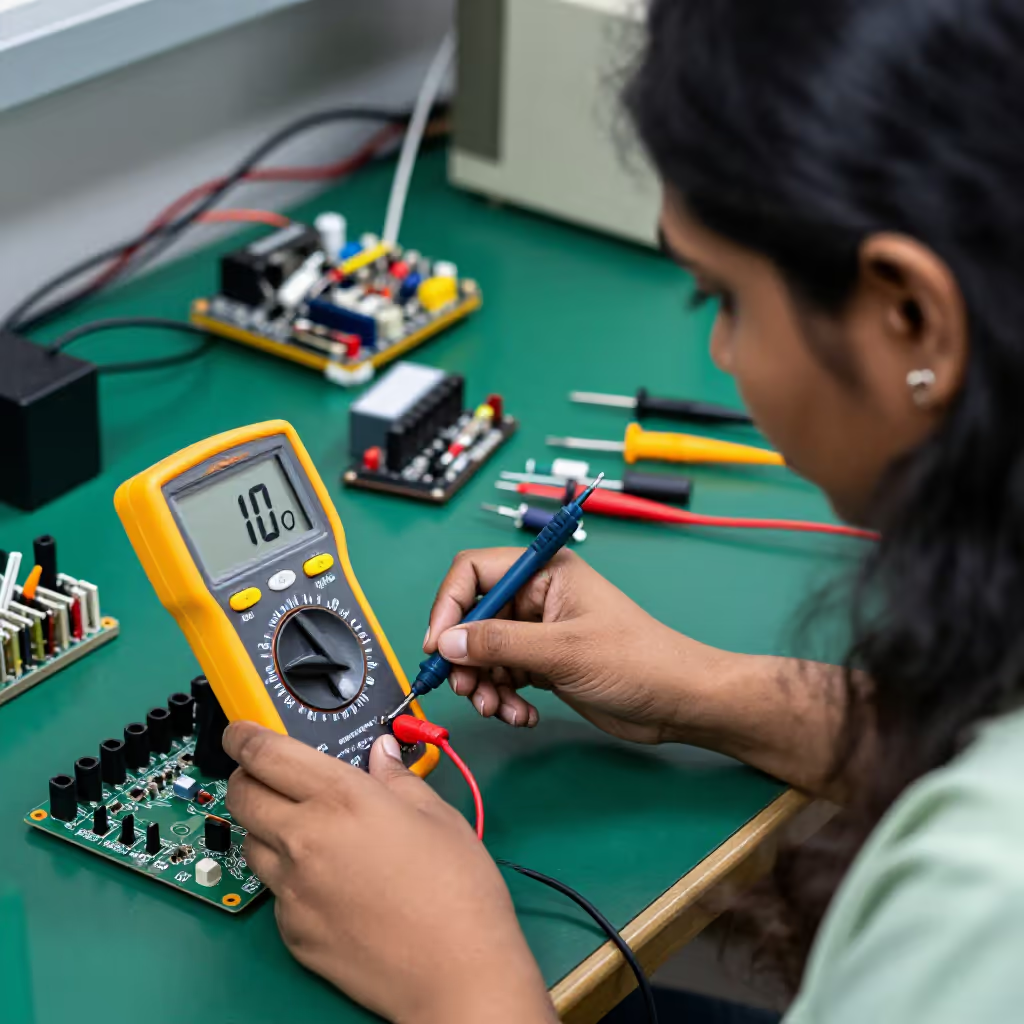
das Ohm
ohm
The physical unit of measurement for electrical resistance. The symbol is the Greek omega (Ω).
EXAMPLE
Diese Glühbirne hat einen Widerstand von 200 Ohm.
This light bulb has a resistance of 200 ohms.
ohm
Loading your saved state.
ohm
The physical unit of measurement for electrical resistance. The symbol is the Greek omega (Ω).
Diese Glühbirne hat einen Widerstand von 200 Ohm.
This light bulb has a resistance of 200 ohms.
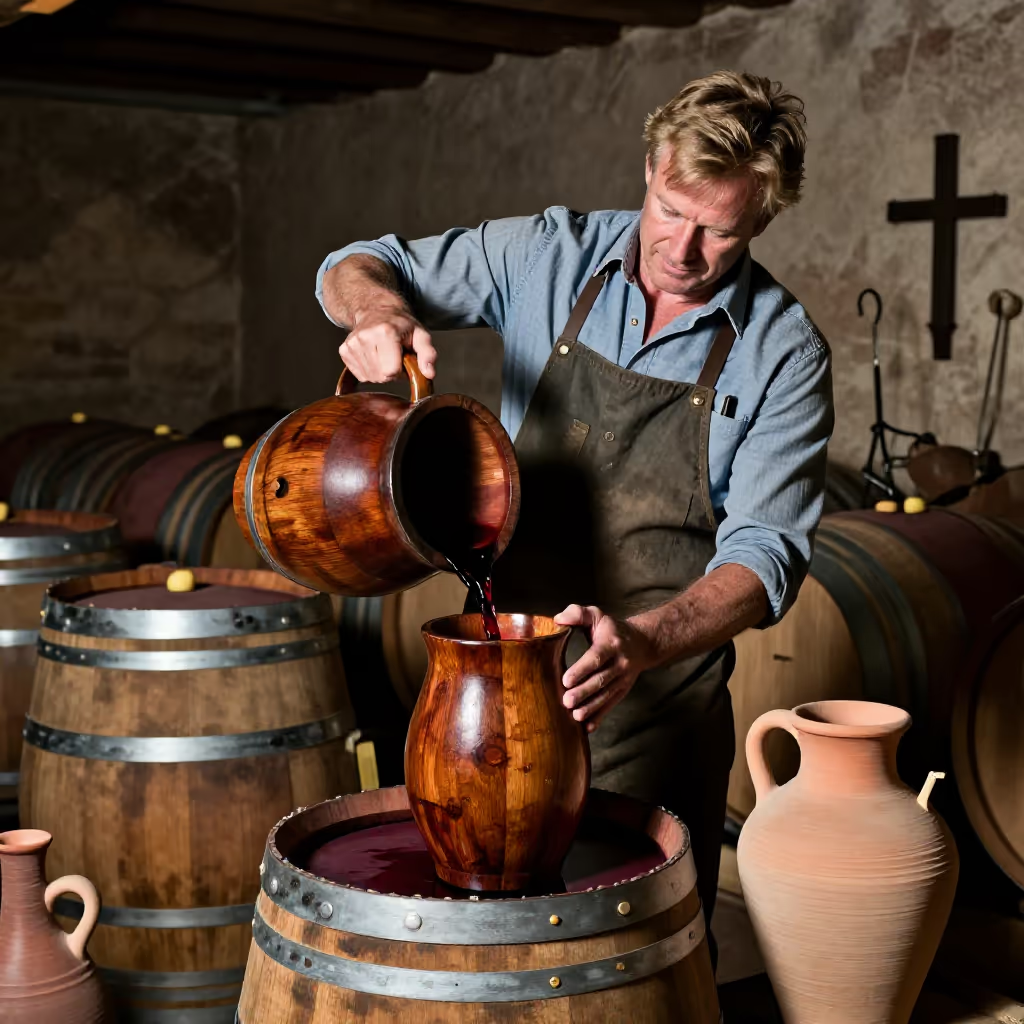
ohm
An old unit of liquid capacity, no longer used today, especially for wine, whose size varied by region (approx. 130-180 liters).
Der Winzer verkaufte den Wein fassweise in der alten Einheit Ohm.
The winegrower sold the wine by the barrel in the old unit of ohms.
When 'Ohm' (ohm) is used as a unit of measurement together with a number, it remains unchanged in the plural. So you say 'zehn Ohm' (ten ohms), not 'zehn Ohme'.
Der Widerstand hat einen Wert von 500 Ohm.
The resistance has a value of 500 ohms.
In technical and physics texts, the Greek symbol omega (Ω) is almost always used for 'Ohm' (ohm). It is important to recognize this symbol.
Auf dem Gerät steht: R = 150 Ω.
The device says: R = 150 Ω.
This meaning of 'Ohm' (ohm) occurs exclusively in the technical language of physics and electrical engineering. Typical words in its context are 'Widerstand' (resistance), 'Spannung' (voltage), and 'Strom' (current).
Um den Widerstand in Ohm zu berechnen, teilt man die Spannung durch die Stromstärke.
To calculate the resistance in ohms, you divide the voltage by the current.
The meaning as a unit of liquid capacity is outdated today. You only find it in historical texts, often in connection with wine or other liquids.
In dem alten Dokument war von einem Fass mit 10 Ohm Wein die Rede.
The old document mentioned a barrel with 10 ohms of wine.