

oft
often
At many different times; frequently or several times.
EXAMPLE
Wir gehen oft zusammen ins Kino.
We often go to the movies together.
often
Loading your saved state.
often
At many different times; frequently or several times.
Wir gehen oft zusammen ins Kino.
We often go to the movies together.

often
In many cases; typically or usually.
Oft sind es die kleinen Gesten, die am meisten bedeuten.
Often, it is the small gestures that mean the most.
As an adverb, 'oft' (often) can stand in different positions in the sentence. If it is in position 1, the verb follows directly. If it appears within the sentence, it usually comes after the verb and the subject.
Oft denke ich an unsere Reise zurück.
Often I think back to our trip.
The comparative form of 'oft' (often) is 'öfter' (more often). This form is used very frequently to express that something happens 'even more frequently' or 'several times'.
Früher war ich nur selten hier, aber jetzt komme ich öfter.
I used to be here only rarely, but now I come more often.
You can strengthen or weaken 'oft' (often) with other words. Typical combinations are 'sehr oft' (very often), 'ganz oft' (very often), or 'nicht so oft' (not so often).
Wir gehen nicht so oft aus, weil wir kleine Kinder haben.
We don't go out that often because we have small children.
much / a lot
Viel and oft can both be used with regular actions. Viel emphasizes the extent or intensity of an activity, while oft emphasizes the number of times it occurs. Use viel when someone does something for a long time or intensely, and oft when it happens repeatedly.
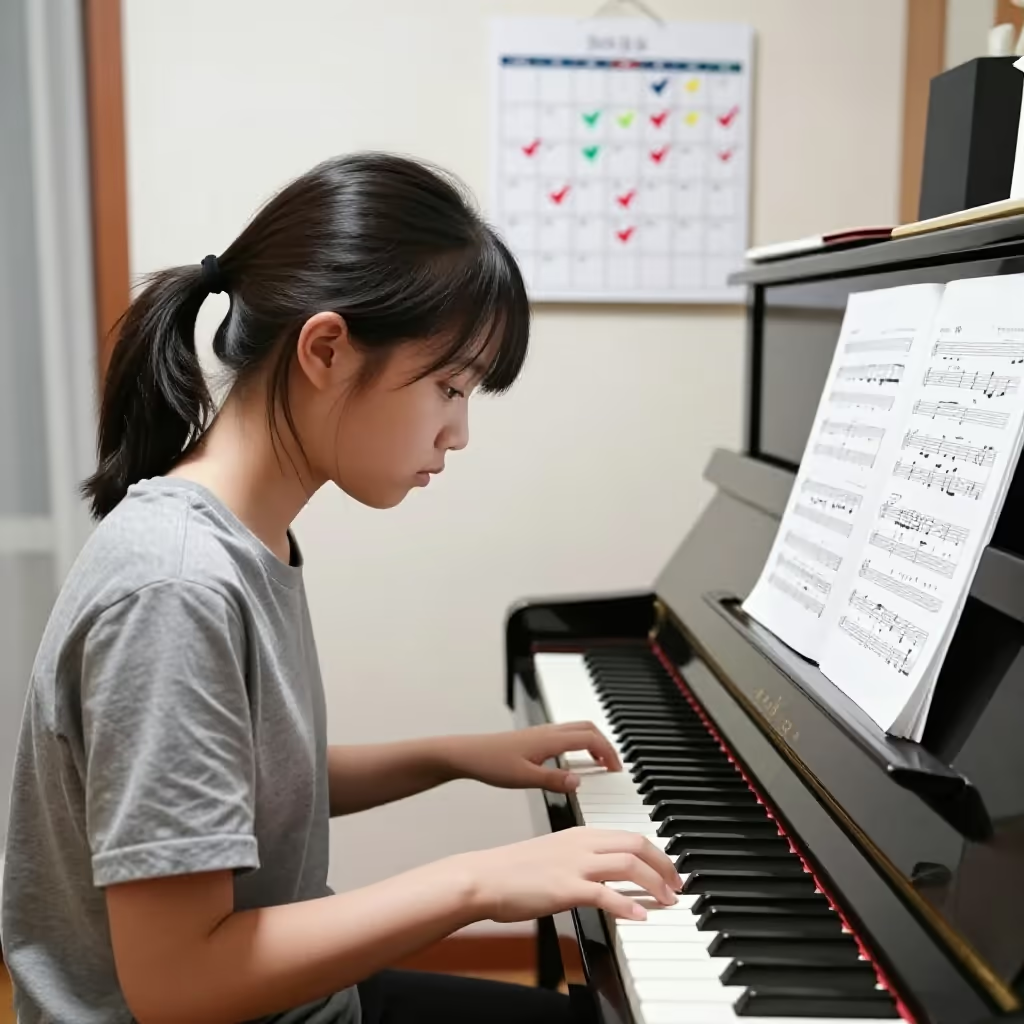
Lena liest vor dem Schlafengehen oft nur ein kurzes Kapitel.
Lena often reads just a short chapter before going to bed.
Lena liest in den Ferien viel, weil sie gern lange in Büchern bleibt.
Lena reads a lot during the holidays because she enjoys spending a long time immersed in books.