


viel
much / a lot of
Describes a large amount of something uncountable.
EXAMPLE
Für das Rezept brauchst du viel Geduld.
You need a lot of patience for the recipe.
much / a lot
Loading your saved state.
much / a lot of
Describes a large amount of something uncountable.
Für das Rezept brauchst du viel Geduld.
You need a lot of patience for the recipe.
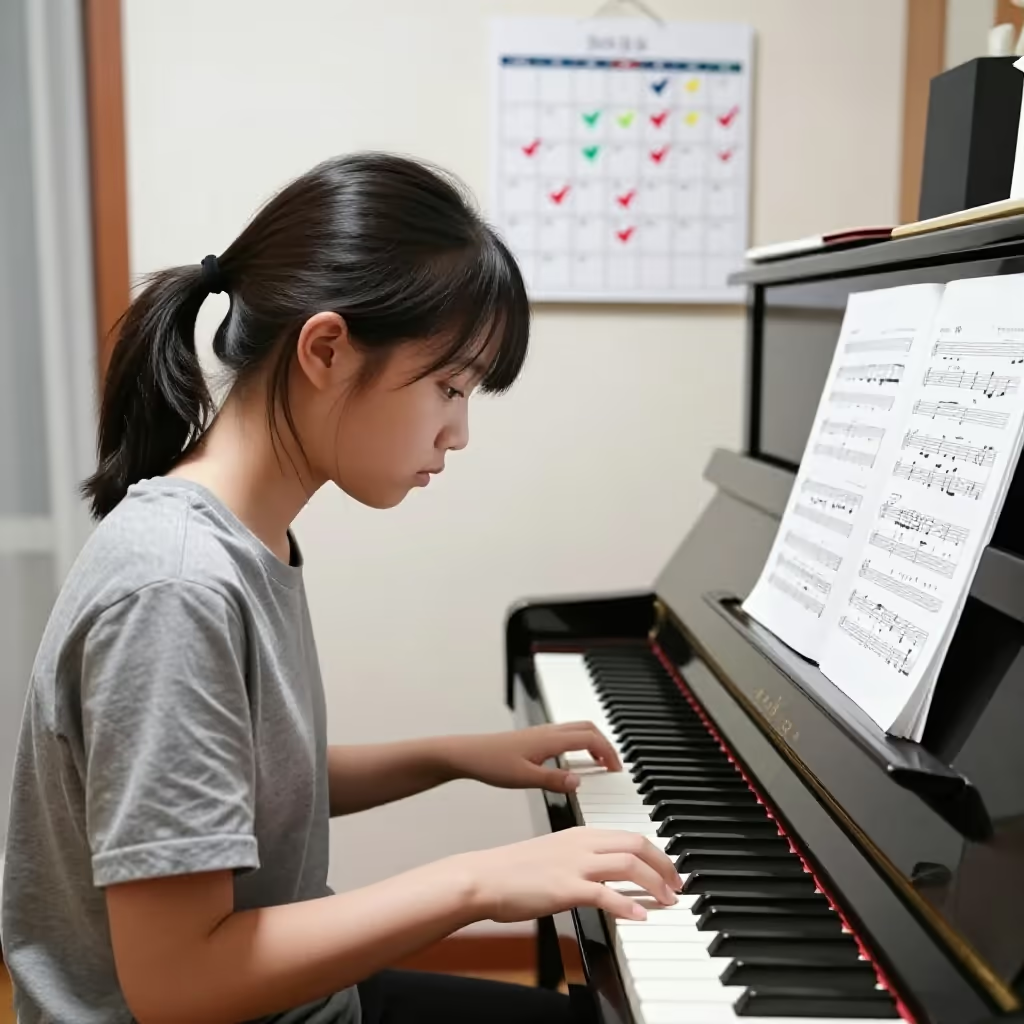
a lot
Used as an adverb to describe the frequency or intensity of an action.
Er reist sehr viel für seine Arbeit.
He travels a lot for his work.

much
Used as a pronoun to refer to a large, indefinite amount.
Von dem, was er sagte, habe ich nicht viel verstanden.
I didn't understand much of what he said.

much
Used to intensify comparisons and means 'to a much greater degree'.
Dieses Auto ist viel schneller als das alte.
This car is much faster than the old one.
'Viel' (much / a lot of) is used for things that cannot be counted individually. These include abstract concepts, liquids, or materials.
Ich wünsche dir viel Glück für die Prüfung.
I wish you lots of luck for the exam.
Before an uncountable noun in the singular, 'viel' is usually not declined. However, when 'viel' is used as a pronoun without a noun, it is declined.
Ich habe viel Arbeit zu erledigen.
I have a lot of work to do.
To intensify a comparison, place 'viel' before the comparative form of an adjective. It then means 'to a great degree'.
Mein neues Handy ist viel besser als das alte.
My new phone is much better than the old one.
As an adverb, 'viel' describes how intensely or frequently an action is performed. In this function, it always remains unchanged.
Sie liest sehr viel in ihrer Freizeit.
She reads a lot in her free time.
very
With verbs, sehr and viel can both express a strong degree, but they are not freely interchangeable. Sehr usually indicates high intensity, while viel often indicates high frequency or a large amount. Which form fits also depends on the verb’s usual collocation.

Seit dem Umzug telefoniert Lea viel mit ihren Freunden.
Lea has been talking to her friends on the phone a lot since moving.
Seit dem Umzug vermisst Lea ihre Freunde sehr.
Lea has really missed her friends since moving.