

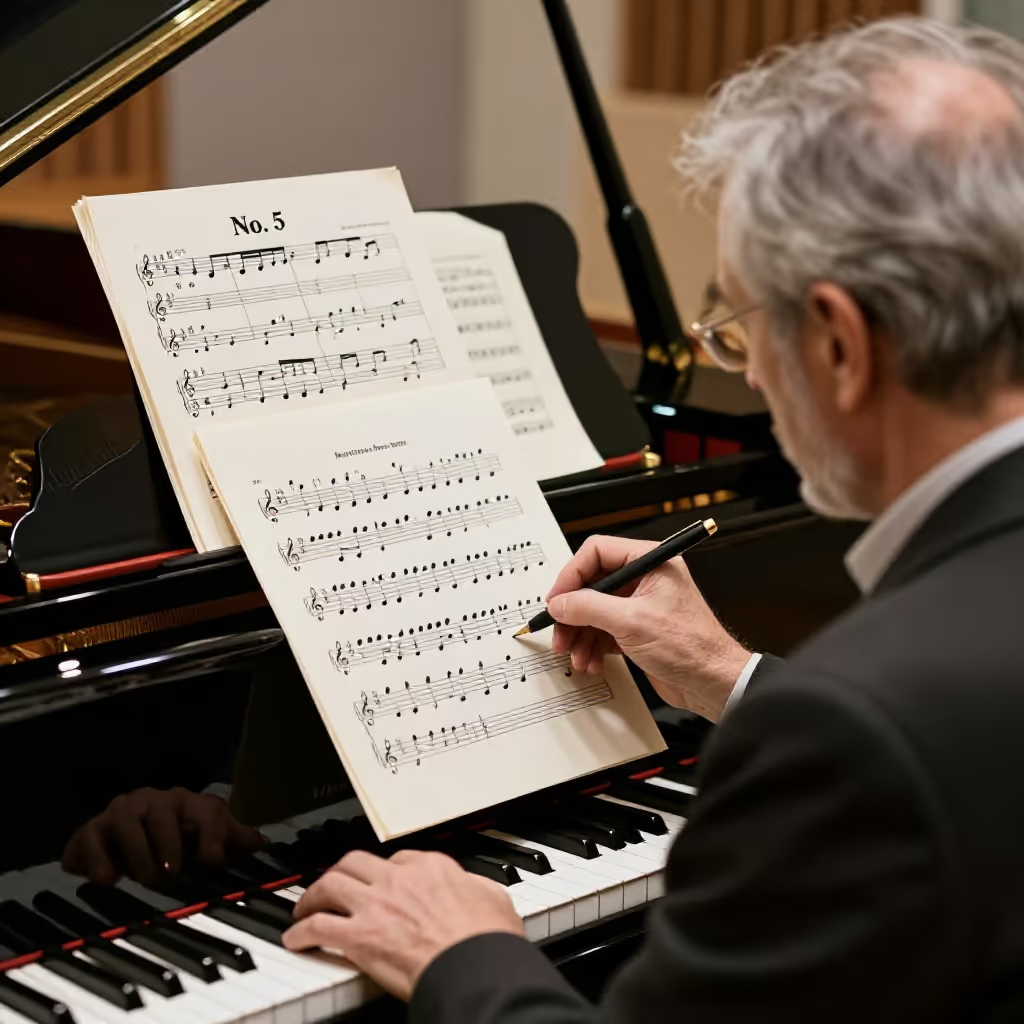
das Opus
opus
An artistic work, especially a musical composition, often given a number in order to place it within the sequence of a composer's works.
Beethovens neunte Sinfonie ist sein Opus 125.
Beethoven's Ninth Symphony is his Opus 125.

opus
Loading your saved state.
opus
An artistic work, especially a musical composition, often given a number in order to place it within the sequence of a composer's works.
Beethovens neunte Sinfonie ist sein Opus 125.
Beethoven's Ninth Symphony is his Opus 125.
'Opus' is a Latin word and means 'Werk' (work). It is used in many European languages for artistic or scholarly works.
Dieses Buch ist das wichtigste Opus des Autors.
This book is the author's most important opus.
In a musical context, 'Opus' is almost always combined with a number, the so-called opus number (abbreviation: op.). It is used to catalog a composer's works.
Chopins Nocturne op. 9 Nr. 2 ist weltberühmt.
Chopin's Nocturne op. 9 No. 2 is world-famous.
When 'Opus' is used for a non-artistic work such as a long report or a complicated project, this is often a humorous exaggeration. It emphasizes the great effort or complexity of the work.
Mein Kollege hat mir sein 300-seitiges Opus zur neuen Büroordnung geschickt.
My colleague sent me his 300-page opus on the new office rules.
piece
'das Stück' and 'das Opus' can both mean an artistic work, especially in music. 'Stück' is the normal and broad word: you can use it for a piece of music or a play. 'Opus' is much more specific and sounds more technical or elevated. In music, it often appears with a number and classifies a work by a composer. Learners may confuse the words because both occur in musical contexts. In everyday language, however, 'Stück' is almost always more natural. 'Opus' fits especially in classical music or when you deliberately want to sound formal.

Das Opus 27 von Beethoven steht auf dem Programm.
Beethoven's Opus 27 is on the program.
Im Konzert spielt die Band heute ein neues Stück.
At the concert today, the band is playing a new piece.