

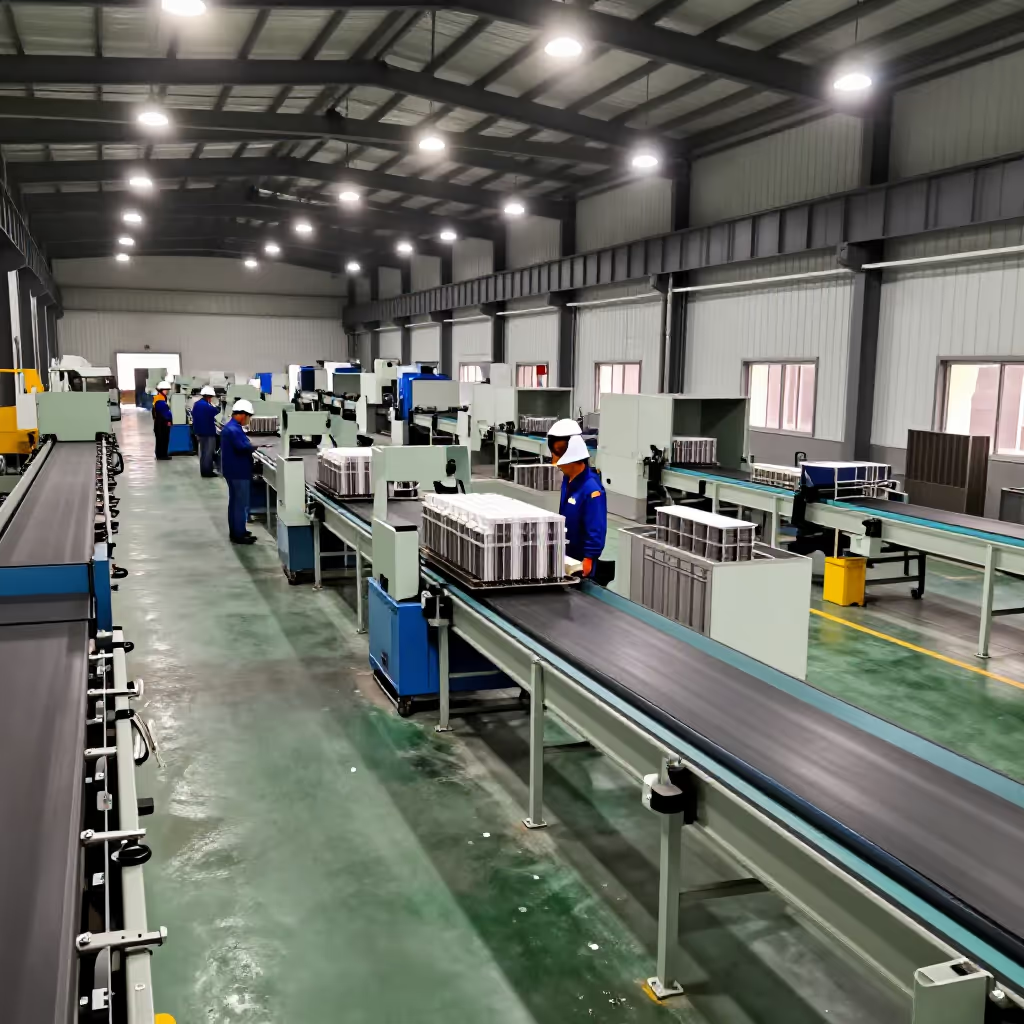
das Werk
plant
A large industrial facility where products are manufactured or processed; a factory.
EXAMPLE
Mein Vater hat 30 Jahre lang im selben Werk gearbeitet.
My father worked at the same plant for 30 years.
plant / work
Loading your saved state.
plant
A large industrial facility where products are manufactured or processed; a factory.
Mein Vater hat 30 Jahre lang im selben Werk gearbeitet.
My father worked at the same plant for 30 years.

work
A creative result from art, literature, or music, for example a book, a painting, or a composition.
Die Mona Lisa ist das berühmteste Werk von Leonardo da Vinci.
The Mona Lisa is Leonardo da Vinci's most famous work.
works
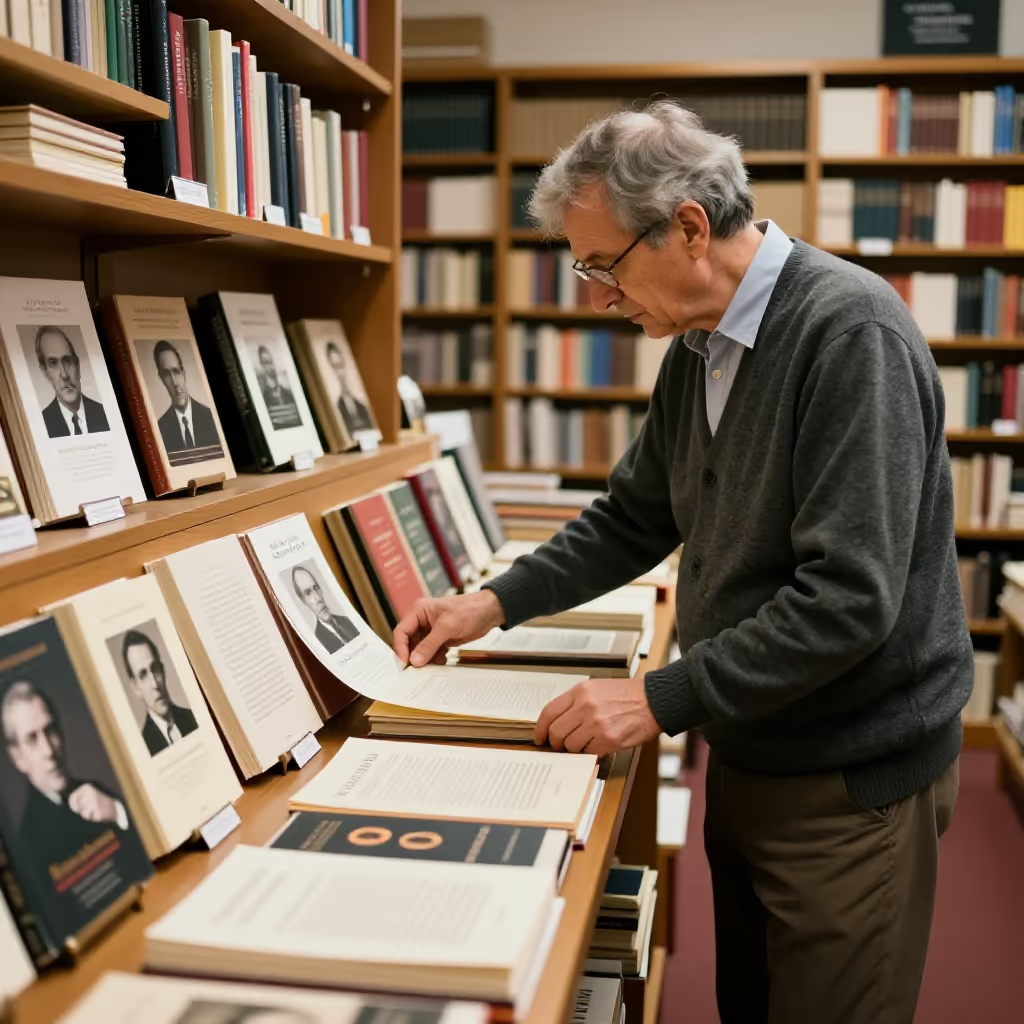
The complete body of work by an artist, writer, or composer.
Ich habe das gesamte Werk von Hermann Hesse gelesen.
I have read the complete works of Hermann Hesse.

to get to work
To begin a piece of work or a task.
Genug geredet, jetzt machen wir uns ans Werk!
Enough talking; now let's get to work!

to be at work
To be active or working, often secretly and with a negative or mysterious intention.
Bei diesem Einbruch waren eindeutig Profis am Werk.
Professionals were clearly at work in this burglary.
The noun 'das Werk' (plant/work) is related to the verb 'wirken' (to work, to have an effect). This connection to the idea of creating and working appears in all its meanings.
Dieses Medikament wirkt sehr schnell.
This medication works very quickly.
'Das Werk' has two very different main meanings: a factory or an artistic product. The context (industry vs. culture) always makes clear what is meant.
Das Auto wird in einem großen Werk in Bayern gebaut.
The car is built in a large plant in Bavaria.
In the meaning of 'Fabrik' (factory), 'Werk' is often used with verbs like 'arbeiten' (to work), 'schließen' (to close), 'eröffnen' (to open), or 'besichtigen' (to tour/visit). It also often appears with the name of the company.
Er arbeitet seit 20 Jahren im BMW-Werk in München.
He has worked at the BMW plant in Munich for 20 years.
When referring to an artistic product, typical verbs are 'schaffen' (to create), 'veröffentlichen' (to publish/release), 'interpretieren' (to interpret), or 'analysieren' (to analyze). It is often combined with adjectives like 'berühmt' (famous), 'spät' (late), or 'unvollendet' (unfinished).
Der Autor hat gerade sein neustes Werk veröffentlicht.
The author has just published his newest work.
The idiom 'sich ans Werk machen' (to get to work) means to begin a piece of work. It is a reflexive construction that always takes the preposition 'an' with the accusative (ans = an das).
Wir haben genug geplant, lasst uns endlich ans Werk machen!
We've planned enough; let's finally get to work!
The phrase 'am Werk sein' (to be at work) describes that someone is active, often unseen. It frequently has a negative or mysterious connotation, as if something suspicious is happening.
Die Polizei ist sicher, dass hier Einbrecher am Werk waren.
The police are sure that burglars were at work here.
work
Arbeit and Werk can both refer to a created artistic result. Arbeit sounds more neutral and can also mean the process of making it or the specific piece, while Werk emphasizes the finished result as an independent creation. Use Werk when the artistic significance of the result is the focus.
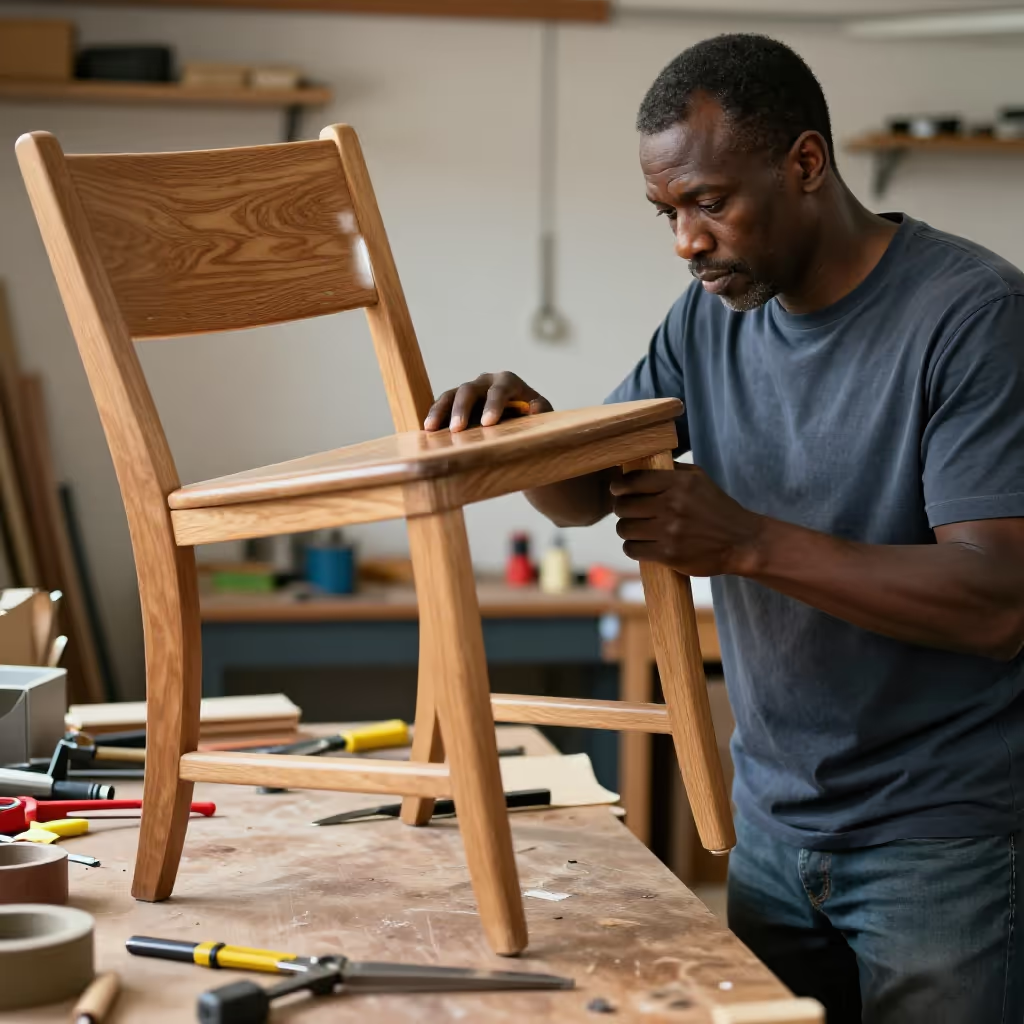
Das Werk des Malers hängt jetzt im Stadtmuseum.
The painter’s work is now on display at the city museum.
Die Arbeit an dem Gemälde ist nach drei Monaten endlich fertig.
The work on the painting is finally finished after three months.