
das Organ
organ
A specialized part of a living organism that consists of different tissues and performs one or more specific functions.
Das Herz ist das zentrale Organ des Blutkreislaufs.
The heart is the central organ of the circulatory system.

organ
Loading your saved state.
organ
A specialized part of a living organism that consists of different tissues and performs one or more specific functions.
Das Herz ist das zentrale Organ des Blutkreislaufs.
The heart is the central organ of the circulatory system.
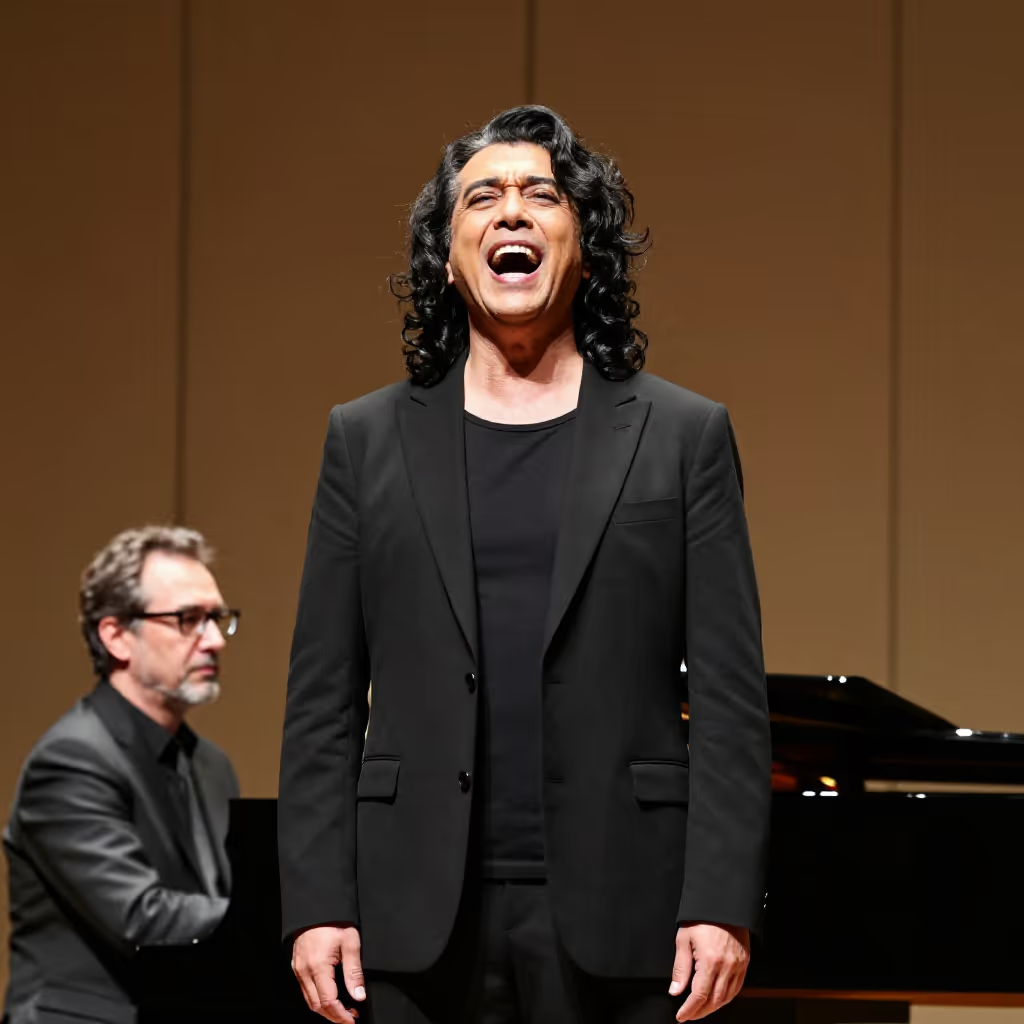
Although 'das Organ' (organ) and the English 'organ' often mean the same thing, there is one important exception: the musical instrument is called 'die Orgel' in German.
In der Kirche spielte sie auf einer alten Orgel.
In the church, she played an old organ.
The word 'Organ' (organ/body) is the basis for other important words such as 'organisieren' (to organize), 'Organisation' (organization), and 'organisch' (organic). They all share the idea of a structured unit, whether in the body, in society, or in nature.
Wir müssen ein Treffen für nächste Woche organisieren.
We have to organize a meeting for next week.
You can easily recognize the meaning of 'Organ' (organ/body) from the context. In a medical or biological context, it refers to a body part. In political or legal texts, it means an institution. In a media context, it means a publication, and in connection with music or speaking, it refers to the voice.
Die Leber ist ein lebenswichtiges Organ.
The liver is a vital organ.
In a medical context, 'Organ' (organ) is often combined with adjectives like 'innere' (internal) or 'lebenswichtige' (vital). Common verbs are 'ein Organ spenden' (to donate an organ) or 'ein Organ transplantieren' (to transplant an organ).
Nach dem Unfall wurden seine inneren Organe untersucht.
After the accident, his internal organs were examined.
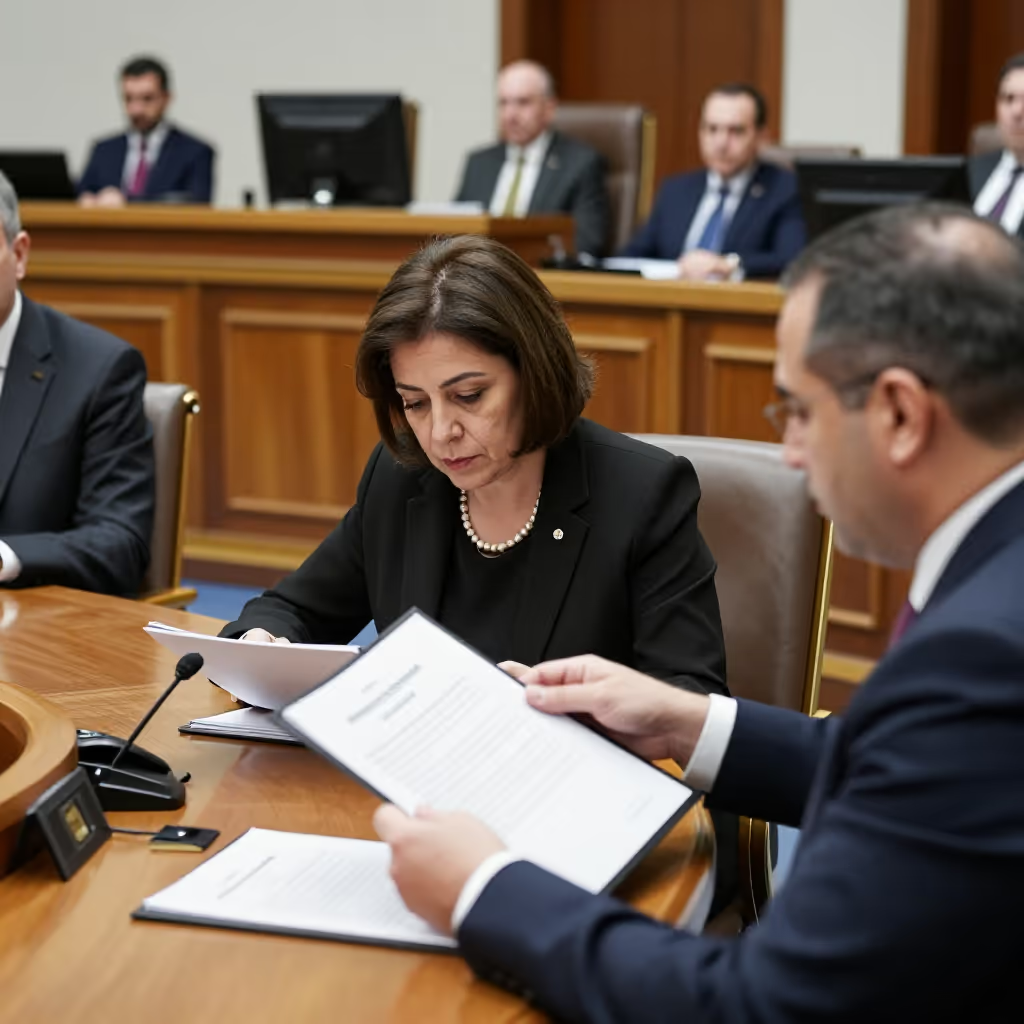
When an institution is meant, 'Organ' (body/organ) often appears in connection with legal or state-related terms. Typical combinations are 'unabhängiges Organ' (independent body), 'staatliches Organ' (state body), or 'Organ der Rechtsprechung' (body of the judiciary).
Der Rechnungshof ist ein unabhängiges Kontrollorgan des Staates.
The court of auditors is an independent supervisory body of the state.
place / position
'die Stelle' and 'das Organ' can both refer to an official institution or function within a larger organization. 'die Stelle' is more general and more common in everyday language, for example for an office or a responsible authority. 'das Organ' sounds more formal and means an institution or person that has a specific official task within a system, for example in the state or in an association. They can be confused because both can stand for responsibility. In normal everyday situations, 'Stelle' often fits; in official or legal texts, 'Organ' is more precise.

Der Vorstand ist ein wichtiges Organ des Vereins.
The board is an important body of the association.
Die richtige Stelle hat mir erklärt, welche Unterlagen ich brauche.
The right office explained to me which documents I need.