

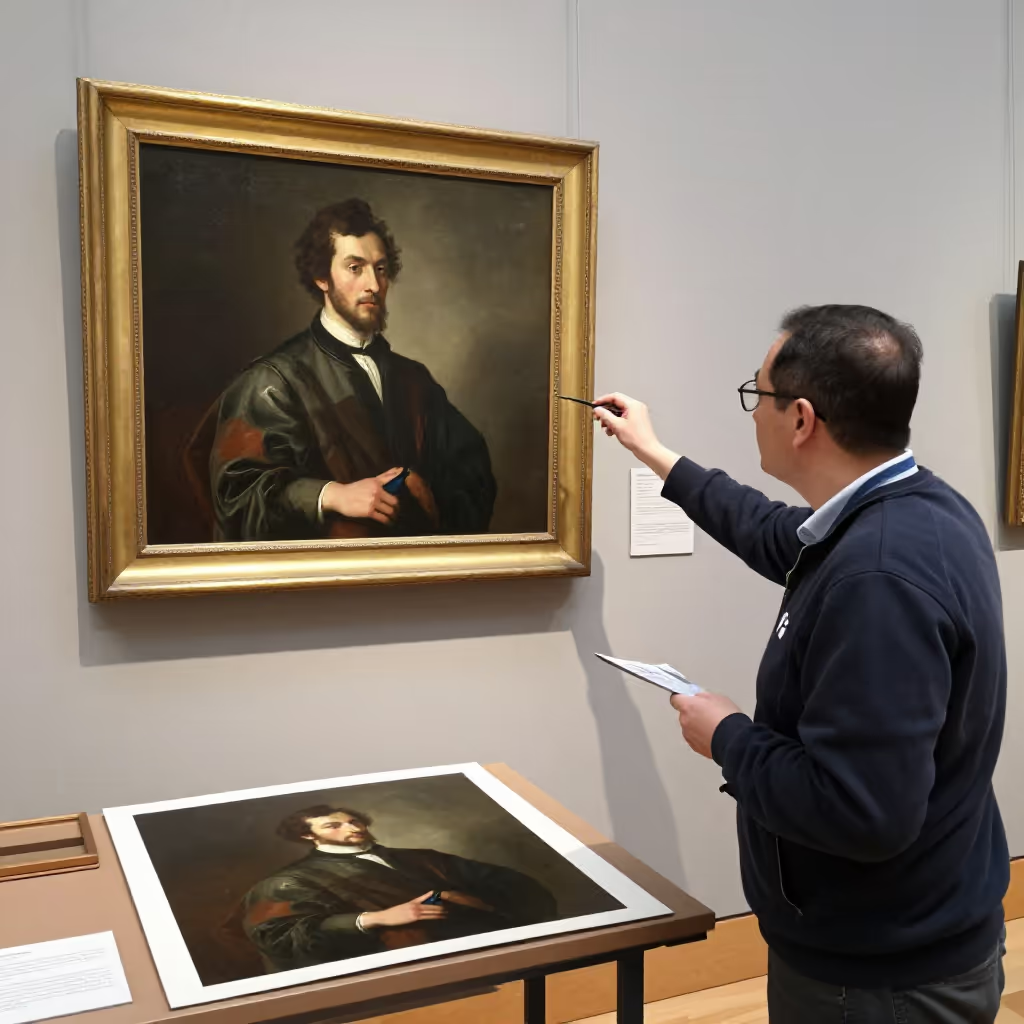
original
Original, genuine; not a copy or forgery.
EXAMPLE
Das ist kein Nachdruck, sondern eine originale Ausgabe von 1850.
This is not a reprint, but an original edition from 1850.
Loading your saved state.
Original, genuine; not a copy or forgery.
Das ist kein Nachdruck, sondern eine originale Ausgabe von 1850.
This is not a reprint, but an original edition from 1850.

original / creative
Especially creative, imaginative, and novel; not copied from others.
Sie hatte eine sehr originelle Idee für das Geburtstagsgeschenk.
She had a very original idea for the birthday present.

really
Colloquially used as an adverb to intensify a statement; really, actually.
Ich habe ihn original eine Stunde lang nicht verstanden.
I really didn't understand him for a full hour.
The meaning of 'original' depends on the noun it describes. If it refers to works of art or documents, it means 'echt' (genuine). If it refers to ideas or gifts, it means 'kreativ' (creative).
Er besitzt ein originales Manuskript des Autors.
He owns an original manuscript by the author.
In the meaning 'echt' (genuine), 'original' is often used in connection with products and their condition. Typical phrases are 'original verpackt' (in original packaging), 'originale Ersatzteile' (original spare parts), or 'im Originalzustand' (in original condition).
Das Handy wird in der originalen Verpackung geliefert.
The phone is delivered in its original packaging.
The use of 'original' as an intensifying adverb is purely colloquial. You should avoid it in formal texts or conversations.
Ich hab dem original fünfmal erklärt, wie es geht!
I literally explained to him five times how it works!
As a colloquial adverb, 'original' usually appears in the middle field of the sentence, directly before the part it is meant to emphasize. It functions similarly to 'wirklich' (really) or 'tatsächlich' (actually).
Der Film war original langweiliger als ich dachte.
The film was really more boring than I thought.
real / really
When talking about an object, echt and original can both mean that it is not counterfeit. Original, however, emphasizes that it is the original item and not a copy; echt more generally says that the object is authentic and not fake. Original is therefore especially suitable when referring to its provenance.
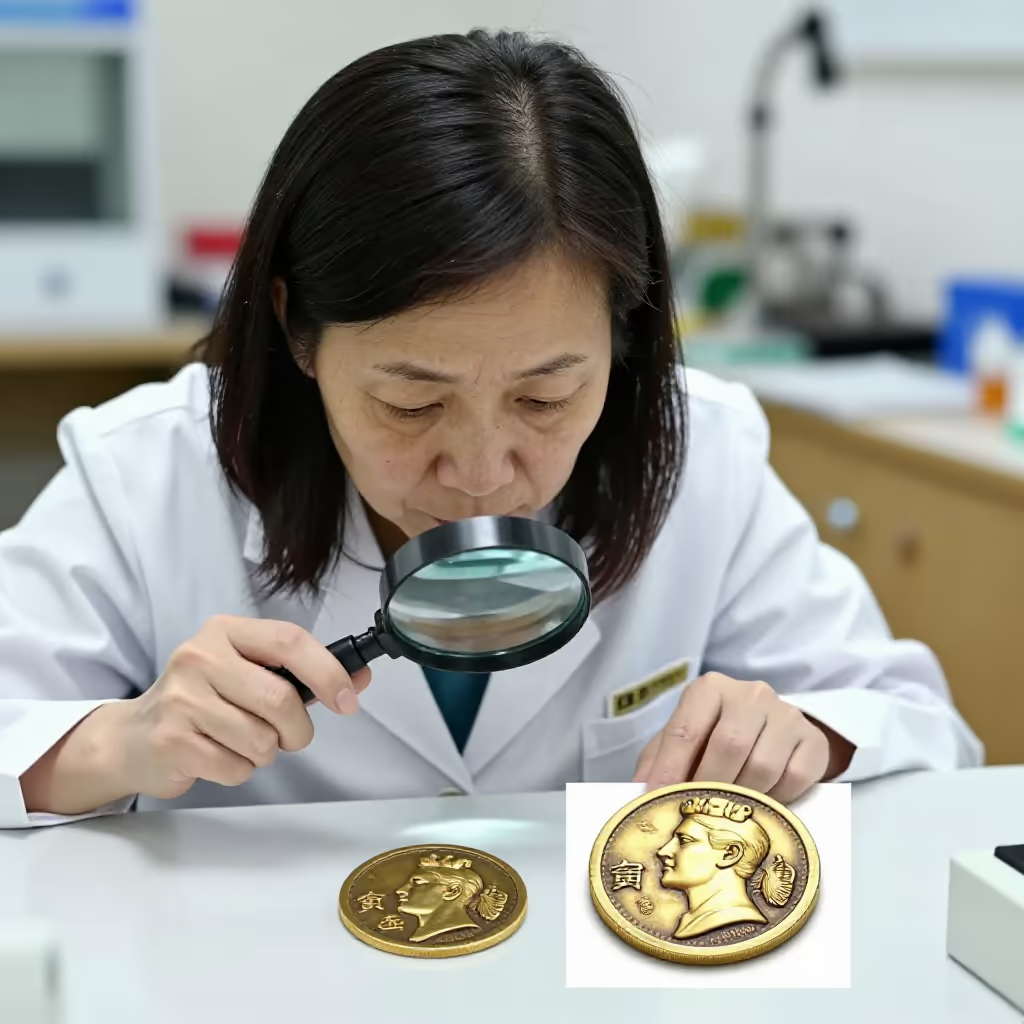
Das Gemälde im Museum ist das Original und keine spätere Kopie.
The painting in the museum is the original, not a later copy.
Die Tasche ist echt und keine Fälschung, auch wenn sie gebraucht ist.
The bag is genuine and not a fake, even though it is used.