
Refers to the beginning or the first state of something. It describes how something was at the start, before it changed.
example
Ursprünglich wollte ich Medizin studieren, habe mich dann aber für Jura entschieden.
Originally, I wanted to study medicine, but then I decided on law.
Usage tips
Word structure
The word contains the stem 'Ursprung' (origin). The prefix 'ur-' means 'right at the beginning' or 'original'. An 'Ursprung' is therefore the point at which something begins.
EXAMPLE
Der Ursprung des Konflikts liegt viele Jahre zurück.
The origin of the conflict lies many years in the past.
Context clue
The position in the sentence helps you recognize the meaning. If 'ursprünglich' (originally) stands at the beginning of the sentence, it usually means 'first' or 'initially'. If it stands directly before a noun, it describes that noun's original state.
EXAMPLE
Ursprünglich war das Haus viel kleiner.
Originally, the house was much smaller.
Sentence structure as an adverb
When 'ursprünglich' (originally) means 'initially', it often stands in position 1 in the sentence. The conjugated verb then follows directly in position 2. It often introduces a contrast that continues with 'aber' (but) or 'dann' (then).
EXAMPLE
Ursprünglich war ein Ausflug geplant, aber das Wetter war zu schlecht.
Originally, an outing was planned, but the weather was too bad.
Typical collocations
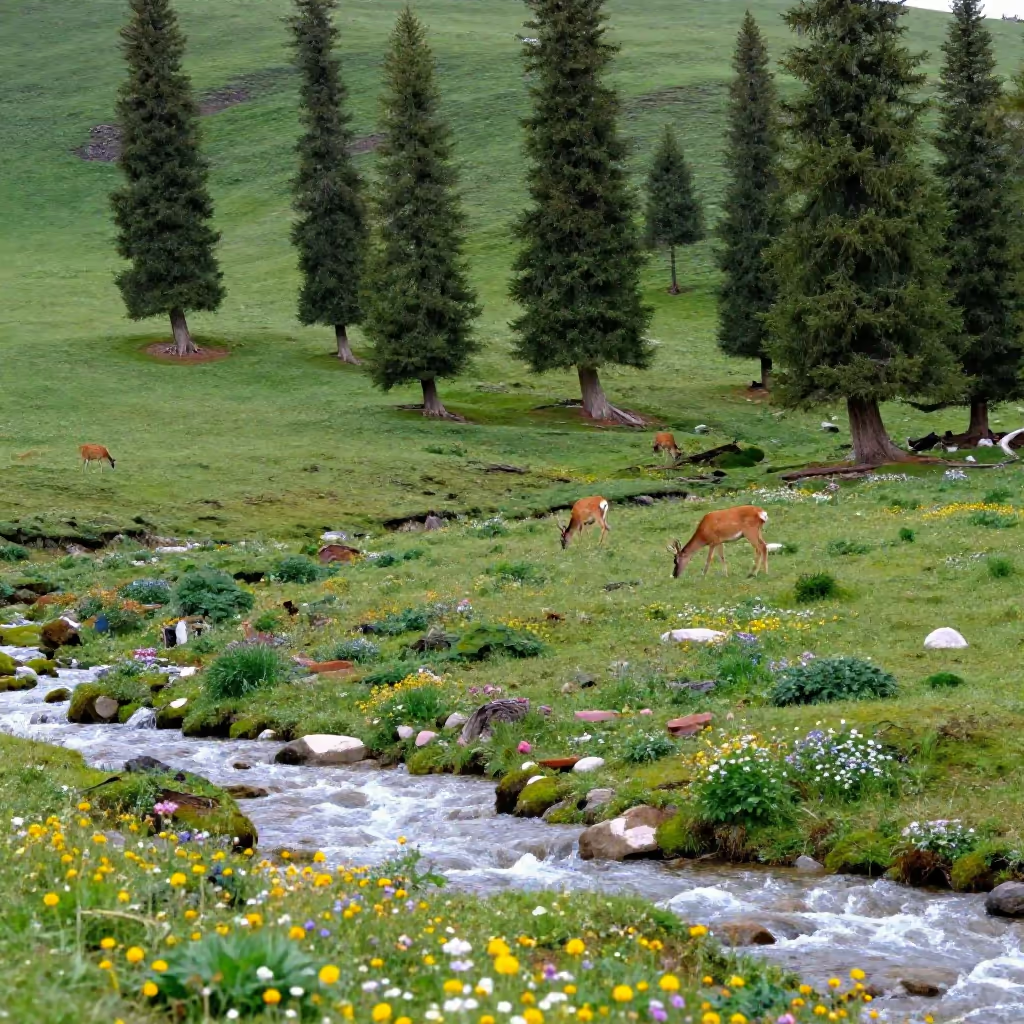
In the meaning of 'natürlich' (natural) or 'unverfälscht' (unaltered), the adjective is often combined with nouns from the areas of nature, culture, or food, e.g. 'eine ursprüngliche Landschaft' (a pristine landscape), 'ein ursprüngliches Dorf' (an original/traditional village), or 'der ursprüngliche Geschmack' (the original taste).
EXAMPLE
In den Alpen gibt es noch viele ursprüngliche Wälder.
In the Alps, there are still many pristine forests.
Compare with
near_synonym · confusable
ursprünglich vs natürlich
natural / of course
'natürlich' and 'ursprünglich' can both describe something as not artificial or not heavily changed. 'natürlich' is especially suitable when something comes from nature or seems unaffected. 'ursprünglich' focuses more on the beginning: it says how something was at first, before it changed. You can confuse the words when talking about an old or genuine state. As a guide: 'natürlich' is more about nature or genuineness, while 'ursprünglich' is more about the first state.
ursprünglich
Das Haus war ursprünglich eine kleine Schule, später wurde es zu Wohnungen umgebaut.
The house was originally a small school; later, it was converted into apartments.
natürlich
Im Laden kauft Lena nur natürliche Seife ohne künstlichen Duft.
At the store, Lena only buys natural soap without artificial fragrance.