

oval
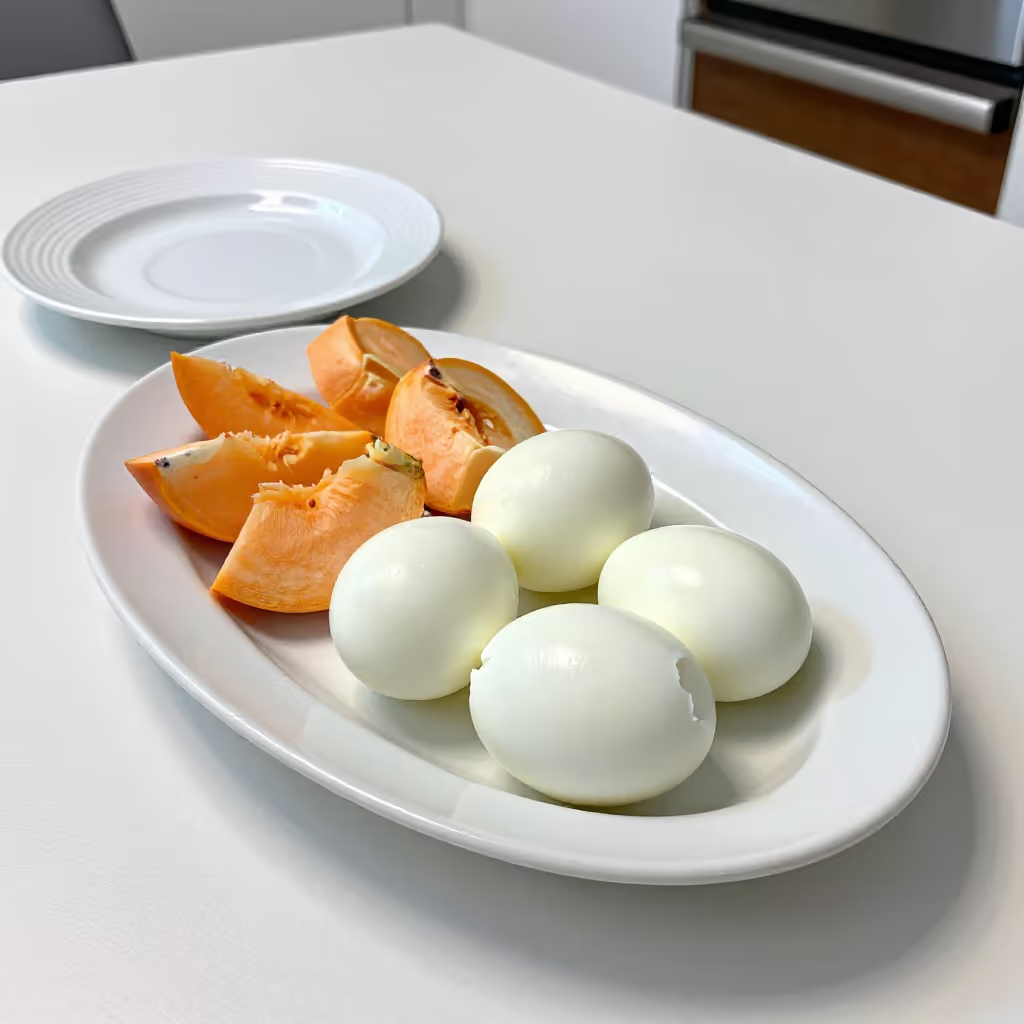
Describing a shape that resembles an elongated circle or the shape of an egg.
Der Tisch im Konferenzraum ist oval, damit alle gut miteinander reden können.
The table in the conference room is oval so that everyone can talk to each other easily.

Loading your saved state.
Describing a shape that resembles an elongated circle or the shape of an egg.
Der Tisch im Konferenzraum ist oval, damit alle gut miteinander reden können.
The table in the conference room is oval so that everyone can talk to each other easily.

The word 'oval' comes from the Latin word 'ovum', which means 'egg'. If you remember an egg, you can easily remember the shape.
Die Ostereier haben eine ovale Form.
The Easter eggs have an oval shape.
Like other adjectives, 'oval' can stand before a noun or be used with 'sein' (to be). When it stands before a noun, it is declined. When it comes after 'sein', it remains unchanged.
Sie hat einen ovalen Spiegel gekauft.
She bought an oval mirror.
'Oval' (oval) often describes the shape of certain objects or body parts. Typical combinations are 'ein ovales Gesicht' (an oval face), 'ein ovaler Tisch' (an oval table), or 'eine ovale Schale' (an oval bowl).
Die Schauspielerin ist für ihr ovales Gesicht bekannt.
The actress is known for her oval face.
round / about
'rund' and 'oval' both describe shapes without corners. That is why they can easily be confused. 'rund' fits a circle or a sphere: all sides look even. 'oval' fits an elongated, egg-shaped form. A plate can be 'rund' (round), while an egg is more 'oval'. If the shape seems equally wide and long, you say 'rund'. If it is longer than it is wide, you say 'oval'.

Für das Wohnzimmer hat sie einen ovalen Spiegel gekauft.
She bought an oval mirror for the living room.
Auf dem Tisch steht eine runde Schüssel mit Obst.
There is a round bowl of fruit on the table.