


der Pascha
pasha
A colloquial, derogatory term for a man who lets women wait on him and behaves in a bossy and self-indulgent way.
Hör auf, so ein Pascha zu sein und hilf mal im Haushalt mit!
Stop being such a pasha and help out around the house!

pasha
Loading your saved state.
pasha
A colloquial, derogatory term for a man who lets women wait on him and behaves in a bossy and self-indulgent way.
Hör auf, so ein Pascha zu sein und hilf mal im Haushalt mit!
Stop being such a pasha and help out around the house!

'Pascha' (pasha) is a weak noun (N-declension). This means it takes the ending '-n' in all cases except the nominative singular. So you say 'dem Paschan' or 'den Paschan'.
Sie hat ihrem Freund vorgeworfen, sich wie ein Pascha zu verhalten.
She accused her boyfriend of behaving like a pasha.
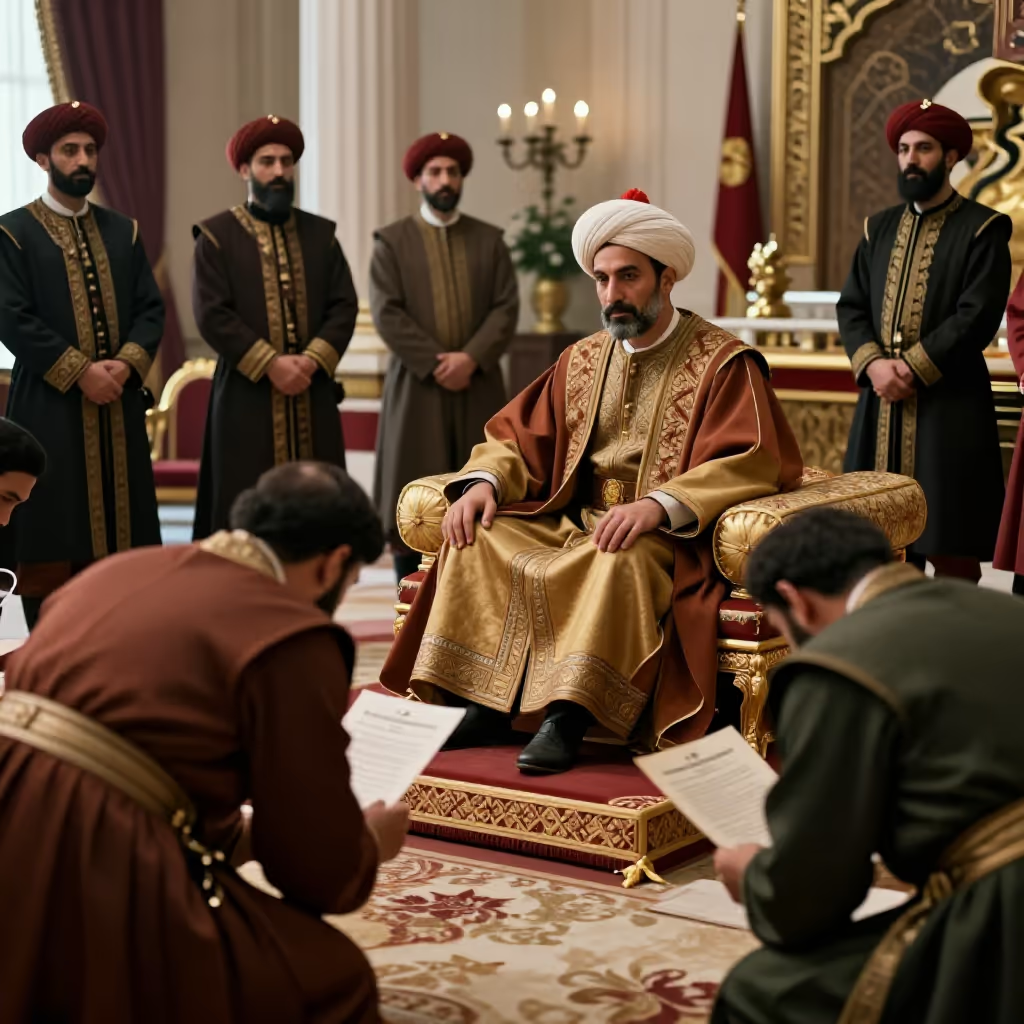
The modern, derogatory meaning derives from the historical title. It is based on the stereotypical image of an Oriental ruler who lives luxuriously and lets others wait on him.
Sein Verhalten erinnert an die Klischees über einen alten Pascha.
His behavior is reminiscent of the clichés about an old pasha.
The meaning is usually clearly separated by context. The historical meaning is found only in texts about the Ottoman Empire. In everyday language, the colloquial, negative meaning is always intended.
Mein Bruder ist ein totaler Pascha, er räumt nie auf.
My brother is a total pasha; he never cleans up.
In modern usage, 'Pascha' (pasha) is a colloquial insult. It is used to judge a man's behavior very negatively and should be avoided in formal situations.
Nenn mich nicht immer einen Pascha, nur weil ich mich ausruhe!
Don't always call me a pasha just because I'm resting!
governor
'Gouverneur' and 'Pascha' can both refer to a high political or military position, but they belong to different periods and contexts. 'Gouverneur' is a general term for someone who governs a territory, often on behalf of a government. 'Pascha' was a historical title in the Ottoman Empire, for example for high officials, governors, or generals. The words can be confused when talking about history and administration. Today, however, you need to be careful: 'Pascha' is also used in everyday language as a derogatory term for a bossy man, while 'Gouverneur' remains neutral.

Der Pascha hatte im Osmanischen Reich viel Macht und viele Soldaten unter sich.
The pasha had a lot of power in the Ottoman Empire and many soldiers under his command.
Im Geschichtsbuch steht, dass der Gouverneur die Provinz im Namen des Königs verwaltete.
The history book says that the governor administered the province in the king's name.