

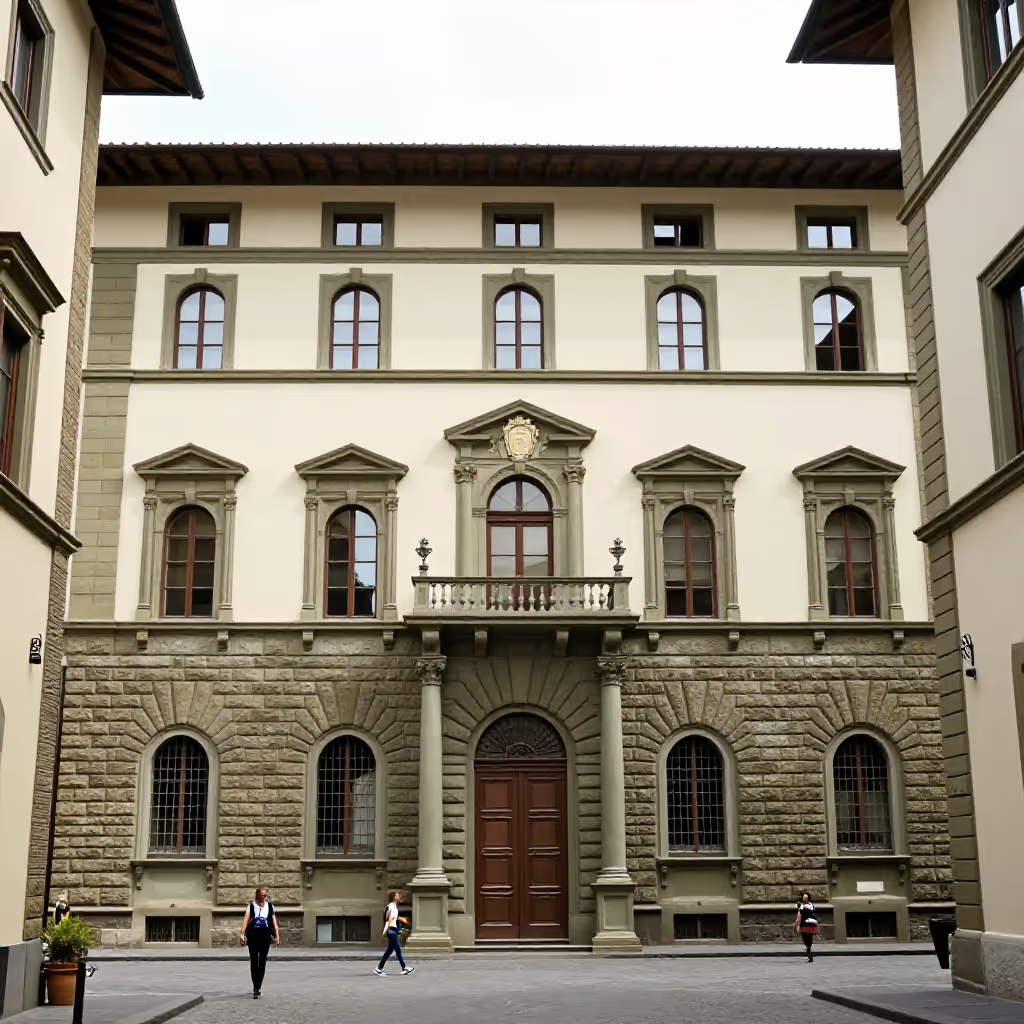
der Palazzo
palazzo
A large, splendid, palace-like building in Italy, often dating from the Renaissance or Baroque period.
Der Palazzo Pitti in Florenz beherbergt heute mehrere Museen.
The Palazzo Pitti in Florence now houses several museums.
palazzo
Loading your saved state.
palazzo
A large, splendid, palace-like building in Italy, often dating from the Renaissance or Baroque period.
Der Palazzo Pitti in Florenz beherbergt heute mehrere Museen.
The Palazzo Pitti in Florence now houses several museums.

'Palazzo' is a loanword from Italian and means 'palace' there. In German, it is used specifically for magnificent, historic city palaces in Italy.
Bei unserer Reise nach Venedig haben wir viele beeindruckende Palazzi gesehen.
On our trip to Venice, we saw many impressive palazzi.
In its original meaning, 'Palazzo' (palazzo) is almost always mentioned together with a proper name and an Italian city, for example 'Palazzo Pitti in Florenz' (Palazzo Pitti in Florence).
Der Palazzo Ducale in Urbino ist ein Meisterwerk der Renaissance-Architektur.
The Palazzo Ducale in Urbino is a masterpiece of Renaissance architecture.
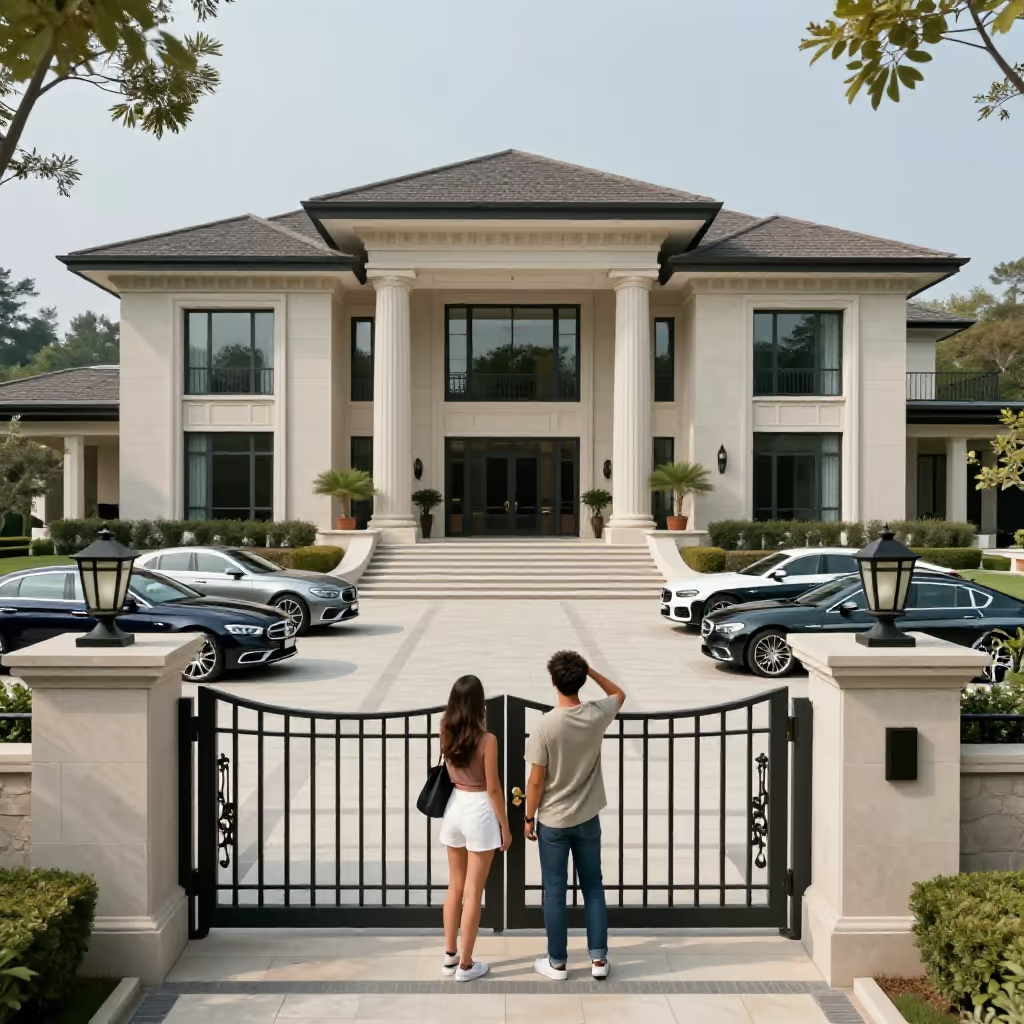
The figurative use for modern buildings is often slightly ironic or critical. It describes a building that is perceived as excessively large, showy, or inappropriate.
Er nannte das neue Einkaufszentrum abfällig einen „Konsum-Palazzo“.
He disparagingly called the new shopping center a 'Konsum-Palazzo' (consumer palazzo).
In the figurative meaning, 'Palazzo' (palazzo) is often part of compound words used to describe modern buildings, e.g., 'Glas-Palazzo' (glass palazzo), 'Büro-Palazzo' (office palazzo), or 'Beton-Palazzo' (concrete palazzo).
Die neue Unternehmenszentrale ist ein riesiger Glas-Palazzo am Flussufer.
The new corporate headquarters is a huge glass palazzo on the riverbank.
castle / lock
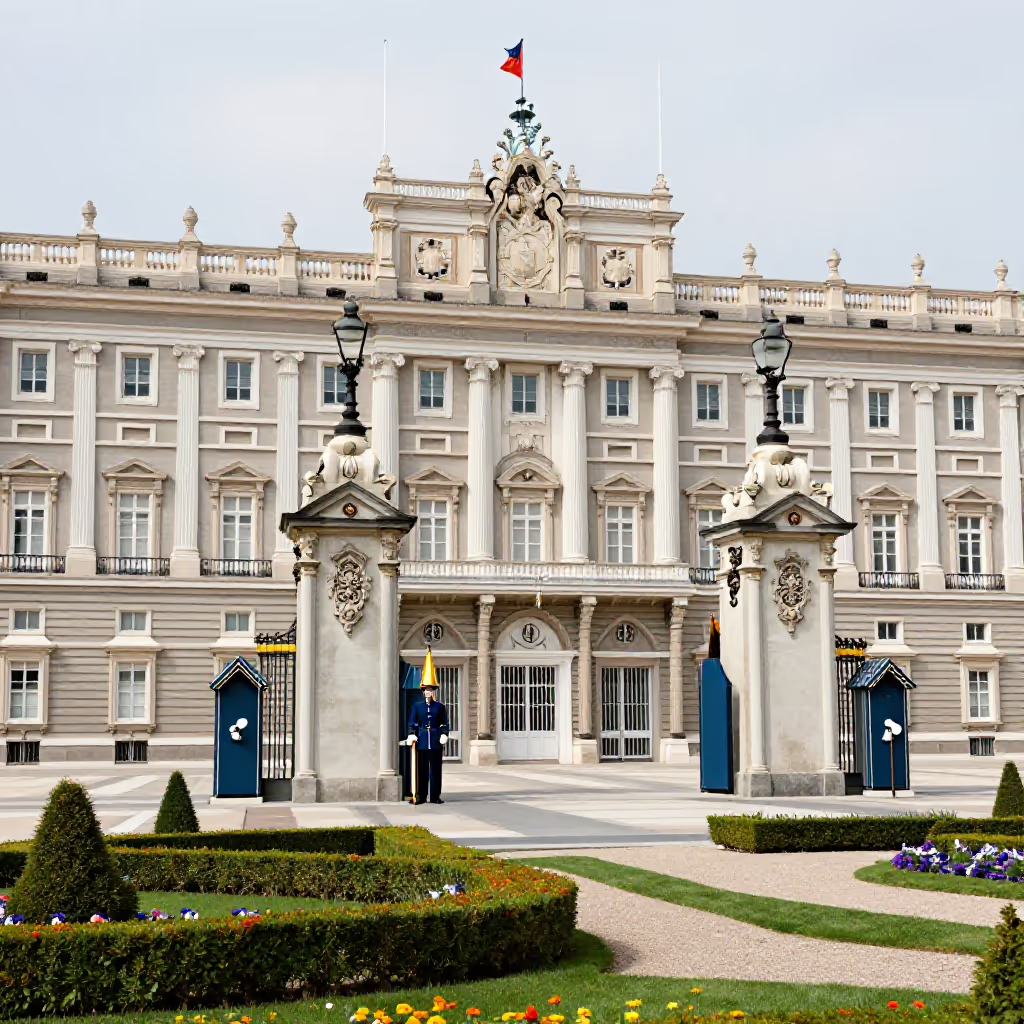
'Schloss' and 'Palazzo' can both refer to large, impressive buildings. In German, 'Schloss' is the normal word for a former residence of nobles or rulers. 'Palazzo' sounds more specific and is especially used for splendid buildings in Italy, often from earlier periods. You can also use 'Palazzo' figuratively for a very large or showy building. Learners may confuse the words because both sound connected to palaces and luxury. When talking generally about a German or European castle or palace, 'Schloss' is usually more natural; for an Italian grand building, 'Palazzo' is more precise.

In Venedig fotografiert Lisa einen Palazzo direkt am Kanal.
In Venice, Lisa photographs a palazzo right by the canal.
Am Morgen besuchen wir ein altes Schloss mit einem großen Park.
In the morning, we visit an old castle with a large park.