

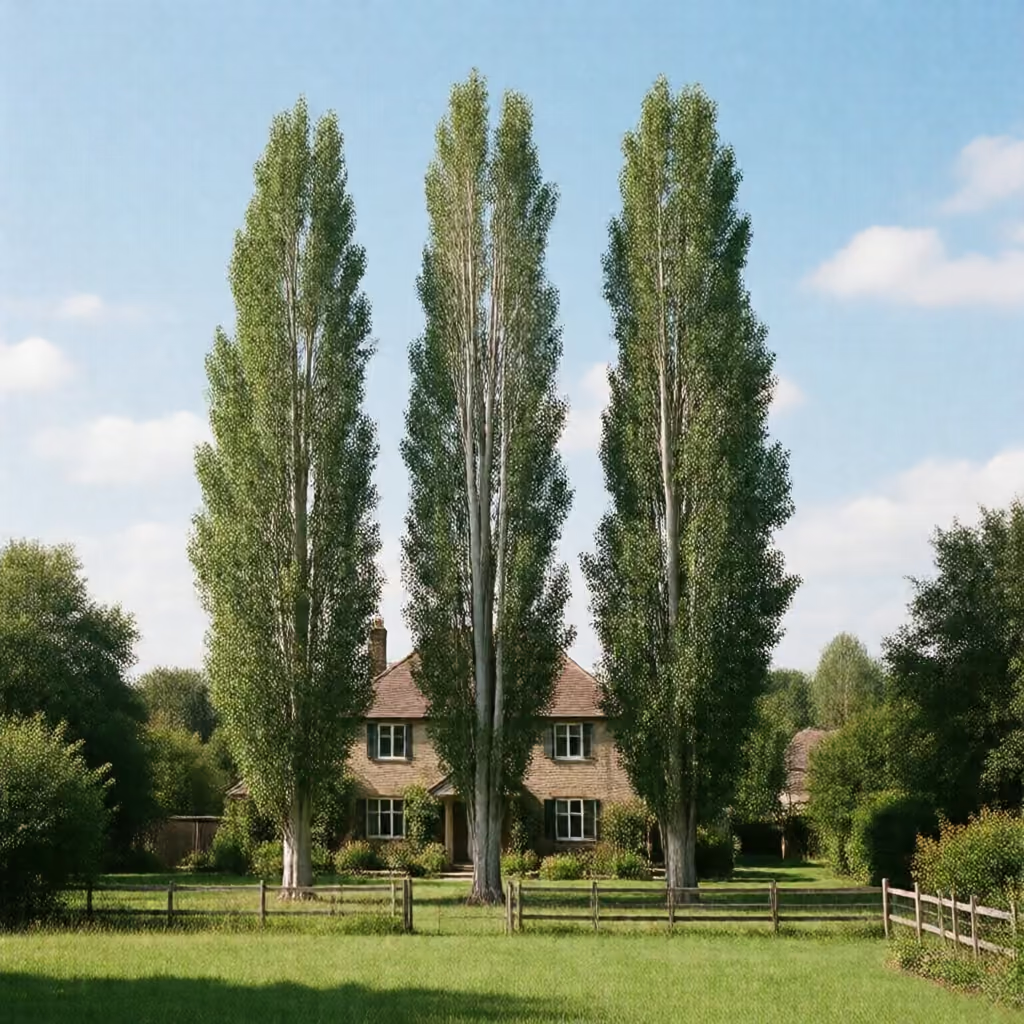
die Pappel
poplar
A fast-growing deciduous tree, usually with a slender trunk and an open crown; belonging to the genus Populus.
EXAMPLE
Hinter dem Haus stehen drei hohe Pappeln.
There are three tall poplars behind the house.
poplar
die Pappel, die Pappeln
Loading your saved state.
poplar
A fast-growing deciduous tree, usually with a slender trunk and an open crown; belonging to the genus Populus.
Hinter dem Haus stehen drei hohe Pappeln.
There are three tall poplars behind the house.
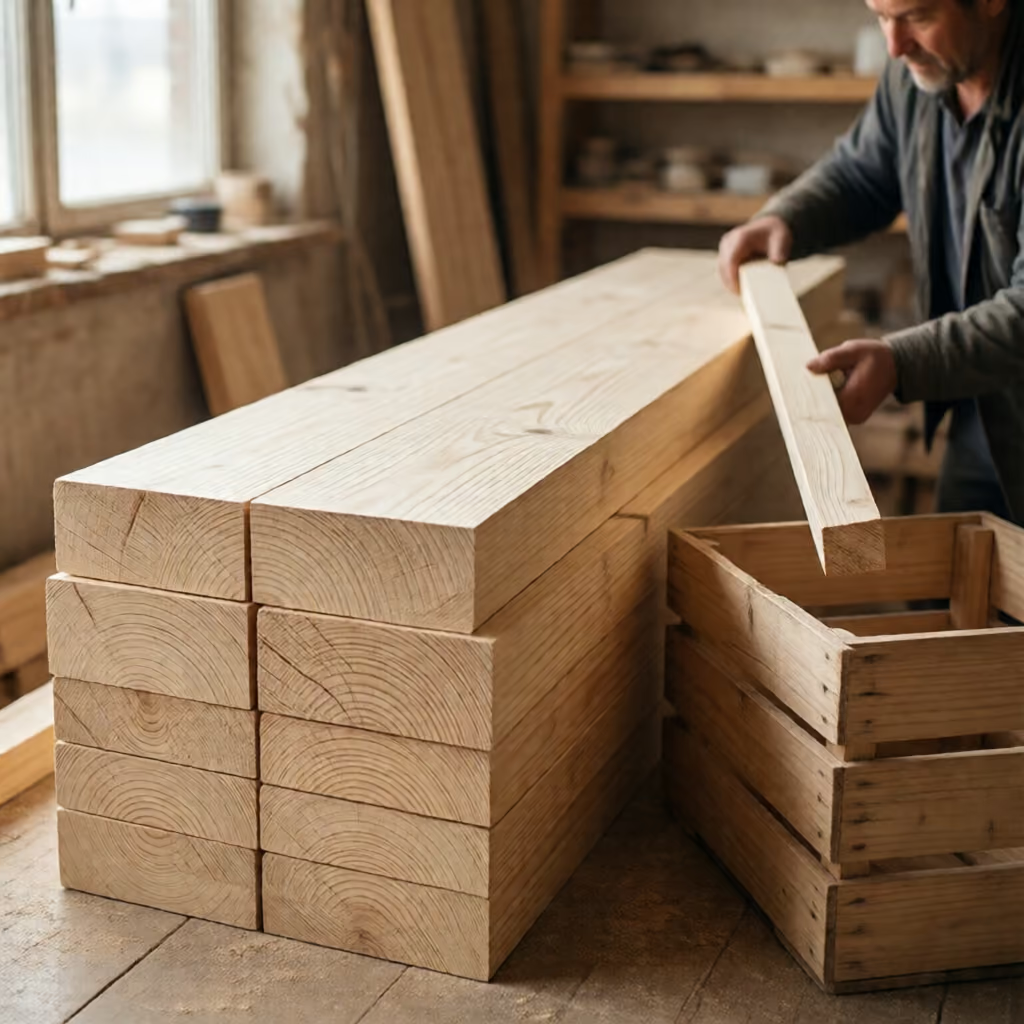
poplar wood
The light-colored, lightweight wood of this tree.
Für die leichte Kiste wurde Pappel verwendet.
Poplar was used for the lightweight crate.
| gender | feminine die |
|---|---|
| plural | die Pappeln |
| genitive | der Pappel |
| singular | plural | |
|---|---|---|
| nominative | die Pappel | die Pappeln |
| accusative | die Pappel | die Pappeln |
| dative | der Pappel | den Pappeln |
| genitive | der Pappel | der Pappeln |
The article changes with the case; it is shown in colour.
Whether „die Pappel“ (the poplar) refers to an individual tree or the wood can often be determined from the sentence context: When it refers to a tree, there are often details about its size or location; when it refers to wood, verbs such as „verwenden“ (to use) or references to an object are common.
Neben dem Feld steht eine besonders hohe Pappel.
There is a particularly tall poplar next to the field.
Die Rückwand des Schranks ist aus Pappel gefertigt.
The back panel of the cabinet is made of poplar.
Common expressions for the tree include „eine Pappel pflanzen“ (to plant a poplar), „eine Pappel fällen“ (to fell a poplar), and „eine Pappelallee“ (a poplar avenue).
Die Stadt will entlang des Weges mehrere Pappeln pflanzen.
The city wants to plant several poplars along the path.
In the meaning of a material, „Pappel“ (poplar) often appears with objects made from this lightweight wood.
Der Hersteller verwendet Pappel für leichte Möbel und Kisten.
The manufacturer uses poplar for lightweight furniture and crates.